



















Elevate Your Interiors
with Trendy Tiles Display
Tiles That Speak the Language of Design.
13th Jun, 2026
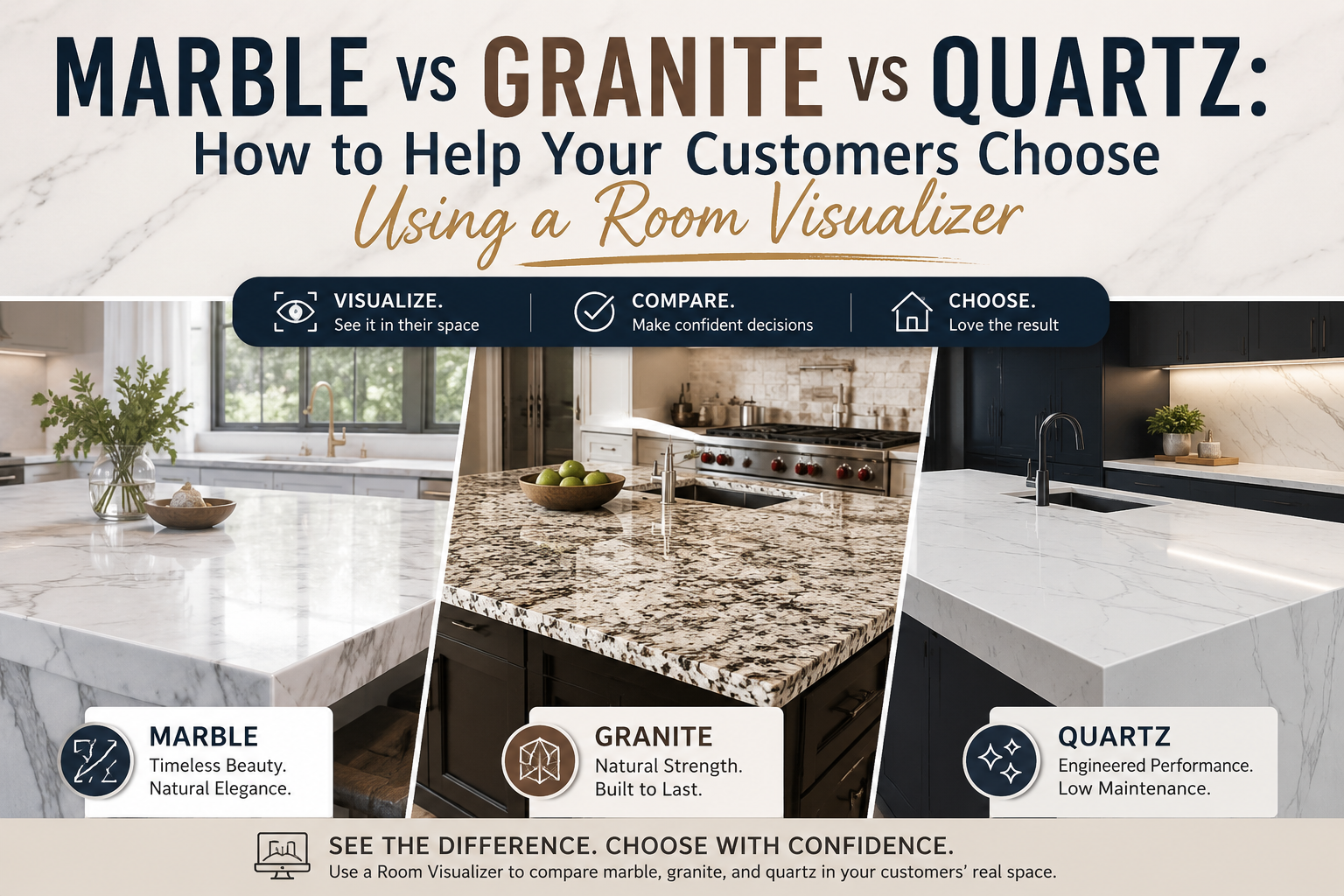
Marble vs granite vs quartz is one of the most-searched questions in home renovation and for good reason. These three materials look dramatically different, perform differently, require different maintenance, and suit different budgets and lifestyles. Yet most customers have to make this decision from a small sample swatch sitting on a showroom counter, with no real sense of how each material will actually look installed in their kitchen or bathroom.
This guide gives tile and stone retailers everything they need to guide customers through the marble vs granite vs quartz decision with confidence, including how a room visualizer transforms this comparison from guesswork into a clear, visual choice that customers make with certainty. The result is faster decisions, fewer returns, and customers who become advocates rather than returners.
Before a retailer or designer can help a customer choose, they need to understand what each material actually offers and where the genuine differences lie in the stone selection guide conversation.
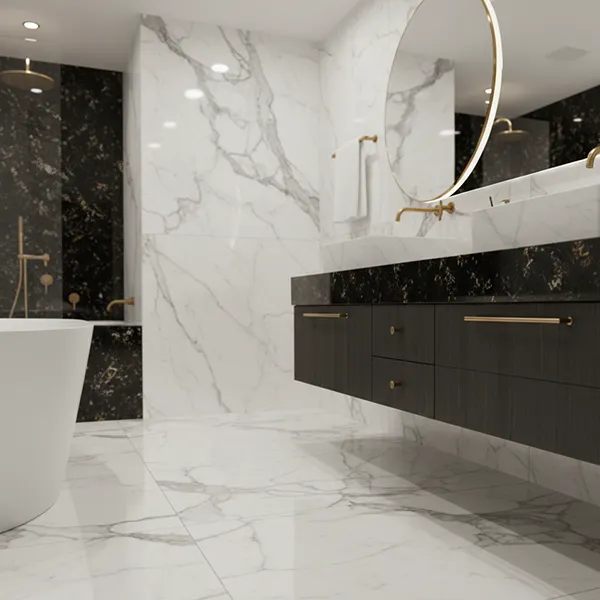
Marble countertops are formed from metamorphic limestone and are characterized by their distinctive veining, flowing patterns in white, grey, green, black, or gold that are the result of mineral deposits created over millions of years. No two marble slabs are identical, which is a significant part of its appeal.
From a surface material guide perspective, marble is a premium, aspirational choice. It is associated with high-end kitchen remodeling ideas, luxury bathrooms, and interior design that prioritizes aesthetics over practicality. However, marble is porous, acid-sensitive, and prone to etching from citrus, wine, and vinegar, which means it requires sealing and careful maintenance. For customers who want the look without the commitment, engineered marble or marble-effect porcelain tiles offer a compelling alternative.
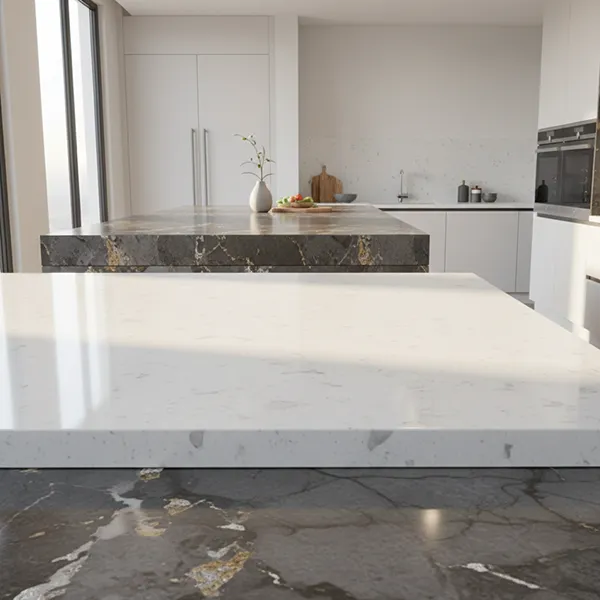
In a material visualizer, marble reads most powerfully in large-slab applications, kitchen islands, full-height splashbacks, and bathroom vanity tops, where the continuous veining pattern can be appreciated at scale.
Granite countertops are formed from igneous rock and are characterized by a speckled, crystalline surface pattern ranging from fine-grain to coarse, in colorways that span from near-white to deep black, red, blue, and green. Like marble, every granite slab is unique.
As a surface material guide material, granite is significantly more durable and less maintenance-intensive than marble. It resists scratching, is less porous when properly sealed, and is far less susceptible to etching from common kitchen acids. For customers who want a natural stone look but have an active kitchen lifestyle, granite countertops are the more practical choice in the stone selection guide.
The visual limitation of granite is its range, the speckled pattern is highly distinctive and suits certain design styles (traditional, rustic, classic) better than others. Customers pursuing minimal, contemporary, or Scandinavian kitchen remodeling ideas often find granite's pattern too busy.
Quartz countertops are not natural stone, they are engineered surfaces made from crushed quartz bound with resin. This manufacturing process gives quartz several significant advantages over natural stone: it is non-porous (no sealing required), consistently patterned (no variation between slabs), and available in colors and designs that natural stone cannot produce, including pure whites, deep blacks, and convincing marble and granite simulations.
From an interior material comparison perspective, quartz is the highest-performing material for busy kitchens and family bathrooms. It resists staining, does not require sealing, and is consistent throughout the slab. The tradeoff is that it lacks the unique character of natural stone, every slab of the same color looks identical, which some buyers experience as a loss of authenticity.
|
Factor |
Marble |
Granite |
Quartz |
|
Durability |
Moderate |
High |
Very High |
|
Scratch resistance |
Low-Moderate |
High |
High |
|
Stain resistance |
Low (porous) |
Moderate |
Very High |
|
Maintenance |
Seal annually |
Seal periodically |
None required |
|
Heat resistance |
Good |
Excellent |
Moderate |
|
Uniqueness |
Unique slab |
Unique slab |
Consistent pattern |
|
Best application |
Bathroom, low-use kitchen |
Kitchen, high-use areas |
All areas |
|
Price range |
High |
Medium-High |
Medium-High |
|
Countertop visualizer accuracy |
Excellent |
Excellent |
Excellent |
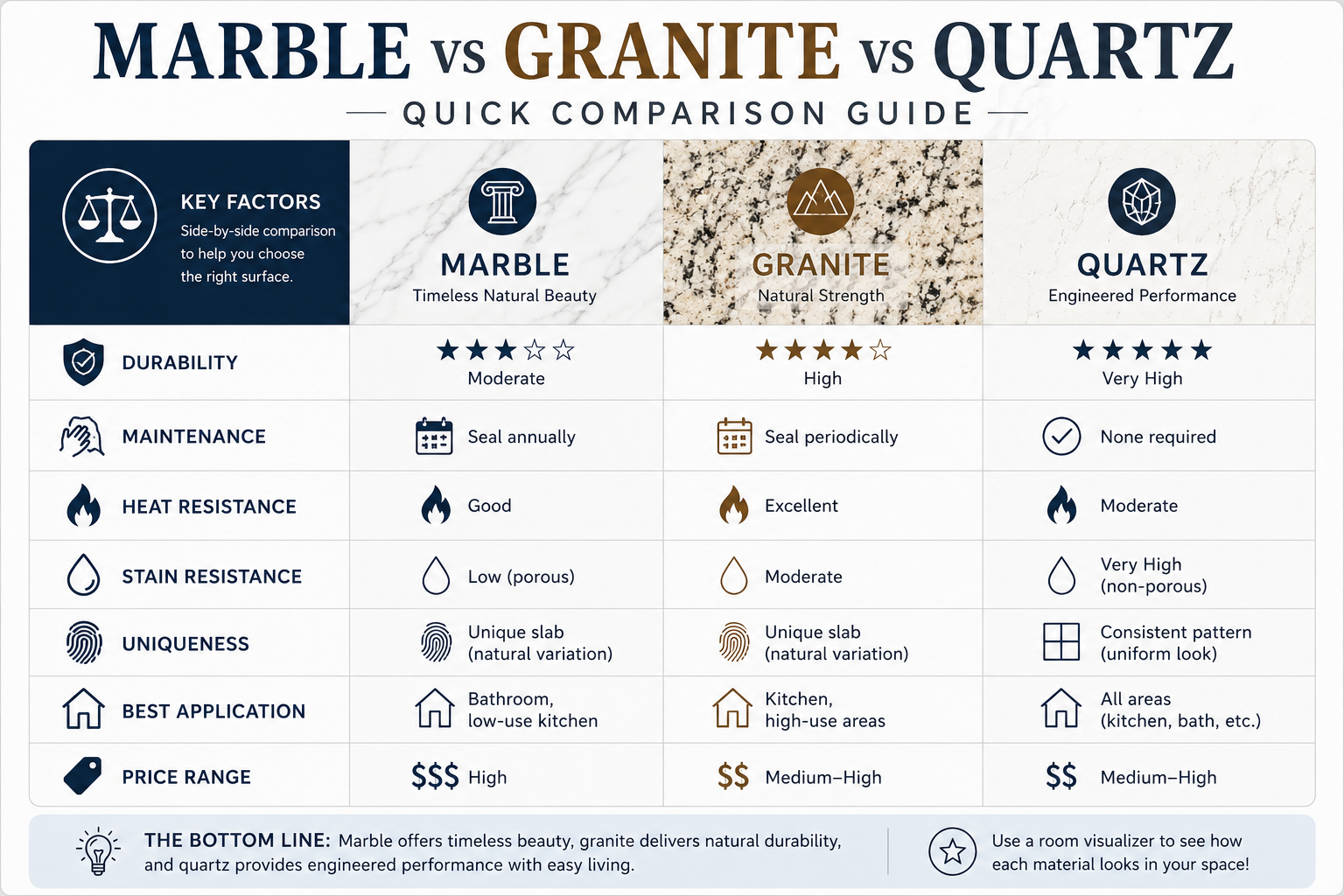
The marble vs granite vs quartz countertop comparison is one of the most visually dependent decisions in home renovation. Yet it is routinely made from samples that are:
A room visualizer solves every one of these limitations. The customer uploads a photo of their actual kitchen or bathroom, with their existing cabinets, their specific lighting, their real space dimensions, and applies marble countertops, granite countertops, and quartz countertops to the surfaces in sequence. The home renovation visualizer shows each material in the customer's actual room context, under their actual light, alongside their actual fixtures.
This virtual room design experience compresses what used to be a multi-visit, multi-sample, multi-week decision into a single, confident session. For the retailer, it translates directly into faster sales, higher satisfaction, and significantly reduced returns.
Before opening the kitchen design planner or material visualizer, ask the questions that determine which material actually fits: How heavily used is the kitchen? Do they cook with acidic ingredients regularly? Are there young children or heavy wear factors? Do they prioritize uniqueness or consistency? These answers create a framework that guides the countertop comparison conversation before the customer sees any visuals.
Once you understand the customer's lifestyle and aesthetic preferences, open the room visualizer, ideally with a photo of their actual kitchen or bathroom, and apply each material in sequence: marble countertops first if the customer is aesthetically driven, granite countertops if durability is important, quartz countertops if low maintenance is the priority.
The interior material comparison becomes visual and immediate rather than abstract and verbal. The customer can see the difference between marble veining and granite speckle in their actual space. The home renovation visualizer makes the stone selection guide conversation concrete.
The most common objections in the marble vs granite vs quartz conversation are aesthetic: 'I love marble but I am worried it will look too busy,' or 'I like quartz but will it look too plain?' A countertop visualizer answers these objections with evidence rather than reassurance. Show the customer the concern applied to their room, and then show them how to address it with a different finish, format, or grout choice.
TilesDisplay marble and granite visualizer → tilesdisplay.in/marble-granite-visualizer
Try the room visualizer → tilesdisplay.in/wall-floor-visualizer
Quartz countertops are the most practical choice for active kitchens, non-porous, low-maintenance, consistent. For low-use kitchens or showcase kitchen remodeling ideas, marble countertops create the most dramatic visual impact. Granite countertops offer a middle ground: natural character with better durability than marble.
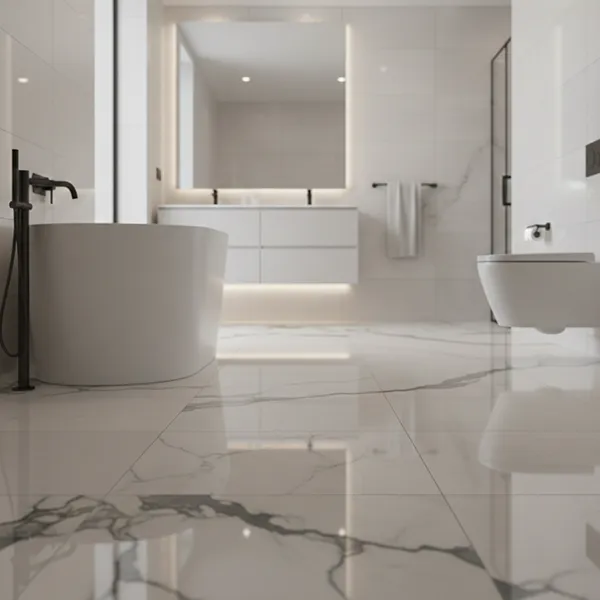
Marble countertops thrive in bathrooms, where the lower wear conditions suit its maintenance requirements and its visual qualities, the veining, the luminosity, are most appreciated. Use the home renovation visualizer to show customers full-height marble bathroom walls alongside marble vanity tops for the most dramatic presentation.
All three materials are used as floor tiles in premium applications. Marble flooring creates unmatched elegance but requires careful maintenance in high-traffic areas. Granite flooring is more durable and better suited to commercial or heavy-use residential spaces. Polished quartz-effect tiles offer the aesthetics of natural stone with superior durability and no sealing requirements – making them a popular choice in the virtual room design tool for families with young children.

Marble is a natural metamorphic stone with distinctive veining, beautiful but porous and requiring regular maintenance. Granite is a natural igneous stone with a speckled crystalline pattern – more durable and lower maintenance than marble. Quartz is an engineered surface made from crushed quartz and resin, the most durable and lowest-maintenance option with consistent, non-porous surfaces.
For high-use kitchens, quartz countertops are generally the most practical choice, non-porous, no sealing required, resistant to staining and scratching. Granite countertops are a good middle ground for buyers who want natural stone with better durability than marble. Marble countertops suit low-use, high-aesthetics kitchens where regular maintenance is acceptable.
A room visualizer allows customers to apply marble countertops, granite countertops, and quartz countertops to a photo of their actual kitchen or bathroom – under their real lighting, alongside their existing fixtures. This countertop comparison is far more meaningful than evaluating sample swatches in a showroom, because the customer sees each material in their specific room context.
A countertop visualizer is a room visualizer tool specifically designed to preview countertop and surface materials in kitchen and bathroom environments. It allows users to apply different materials, marble, granite, quartz, porcelain, wood, to countertop surfaces in their actual room and compare options side by side.
Not always. Quartz countertops offer superior practical performance, durability, stain resistance, and no maintenance, but lack the natural character and uniqueness of marble or granite. Customers who value the aesthetic of natural veining or crystalline patterns and are willing to invest in maintenance may prefer marble or granite over engineered quartz.
Marble works best in kitchen remodeling ideas that prioritize aesthetics over practicality: showcase kitchens with low daily cooking intensity, full-height splashback applications where the veining creates a dramatic feature, and island tops where the stone slab is a design centrepiece. Use a kitchen design planner to preview marble in your specific kitchen before committing.
The marble vs granite vs quartz decision is one of the most significant material choices your customers will make in their home renovation project, and it is one of the decisions where a room visualizer has the most dramatic impact on buyer confidence. The stone selection guide conversation changes entirely when a customer can see marble countertops, granite countertops, and quartz countertops applied to their actual kitchen or bathroom, in their actual lighting, alongside their actual fixtures.
Retailers and designers who use a material visualizer in the stone selection guide conversation close faster, reduce returns, and earn the kind of customer satisfaction that generates referrals. The countertop comparison that used to require multiple showroom visits and sample loans can happen in a single session, and the customer leaves with a clear, confident decision.
Which of the three materials do your customers most frequently struggle to decide between, and what role is your current room visualizer playing in helping them resolve that decision?
Explore TilesDisplay surface material visualizer → tilesdisplay.in/marble-granite-visualizer
Excerpt: Choosing between marble vs granite vs quartz is one of the most researched decisions in home renovation – but most customers make it from a small sample swatch. A room visualizer changes everything, letting customers preview marble countertops, granite countertops, and quartz countertops in their actual kitchen or bathroom before any purchase is made.