


















Elevate Your Interiors
with Trendy Tiles Display
Tiles That Speak the Language of Design.
12th Jul, 2026
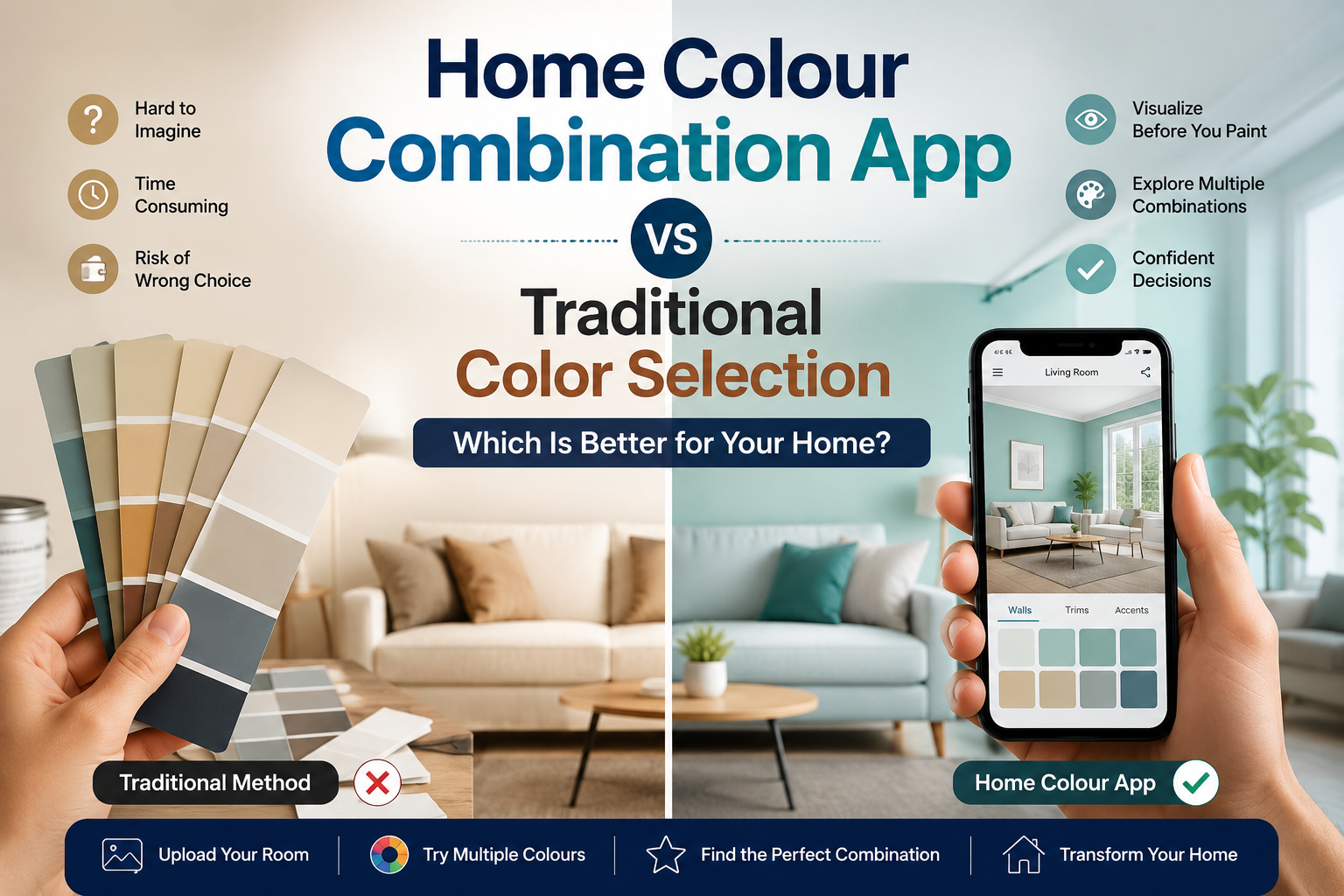
Choosing paint colours should be exciting, yet for many homeowners it's the most stressful part of a renovation. A colour that looks beautiful on a tiny paint swatch can appear completely different once it's covering an entire wall. Lighting changes throughout the day, furniture affects how colours feel, and repainting after a wrong decision can become an expensive mistake.
That's exactly why the home colour combination app has become one of the fastest-growing digital tools in home improvement. Instead of relying on imagination, you can now upload room photo, compare different colour palettes, and visualize your room before opening a single paint can. Whether you're renovating a living room, updating a bedroom, or planning an exterior makeover, digital visualization gives you confidence before you invest.
If you're looking for inspiration before selecting colours, explore our Home Paint Visualizer to preview paint shades on realistic room scenes or your own uploaded photos.
But does modern technology really outperform traditional paint cards and physical samples? Or is the classic approach still the safest option? In this guide, we'll compare both methods, examine where each excels, and help you decide which approach works best for your next project.
If you're looking for the short answer, here it is.
A home colour combination app is a digital visualization tool that allows you to preview paint colours on your own home before painting. Many modern platforms include AI color combination technology that recommends matching colour palettes based on your room, furniture, flooring, and lighting. While traditional paint samples remain useful for final confirmation, digital visualization helps homeowners narrow their choices faster and avoid costly mistakes.
Not long ago, choosing paint meant collecting dozens of sample cards from a paint store and trying to imagine how each colour would look across an entire room. Today, homeowners expect the same digital experience they enjoy when buying furniture, designing kitchens, or shopping online.
The rise of the wall colour app, paint preview app, and virtual paint visualizer reflects this change in consumer behaviour. Instead of making decisions based on guesswork, people now want to compare colours, save multiple designs, and test different ideas before spending money.
I've noticed that homeowners rarely struggle with finding colours—they struggle with confidence. Most already know the style they like; they simply want reassurance that the final result will match their expectations. That's where visualization technology provides genuine value.
Digital colour planning isn't just convenient—it solves real problems that homeowners have faced for years.
Some of the biggest advantages include:
Rather than replacing creativity, digital tools make experimenting easier. You can test bold colours, neutral palettes, or modern interior colour combinations without worrying about wasting paint or time.
The popularity of visualization tools is supported by changing consumer behaviour across the home improvement industry.
|
Industry Insight |
Why It Matters |
|
Most homeowners research renovation ideas online before beginning a project. |
Digital planning has become part of the buying journey. |
|
Buyers are more confident when they can preview products before purchasing. |
Visualization reduces uncertainty and improves decision-making. |
|
AI-powered home design tools are increasingly used by homeowners and professionals alike. |
Technology is becoming a standard part of renovation planning. |
This explains why search terms such as paint visualizer upload photo, paint my room, AI room visualizer, and online colour visualizer continue to grow in popularity. Homeowners don't just want colour inspiration anymore—they want to see the finished result before making a commitment.
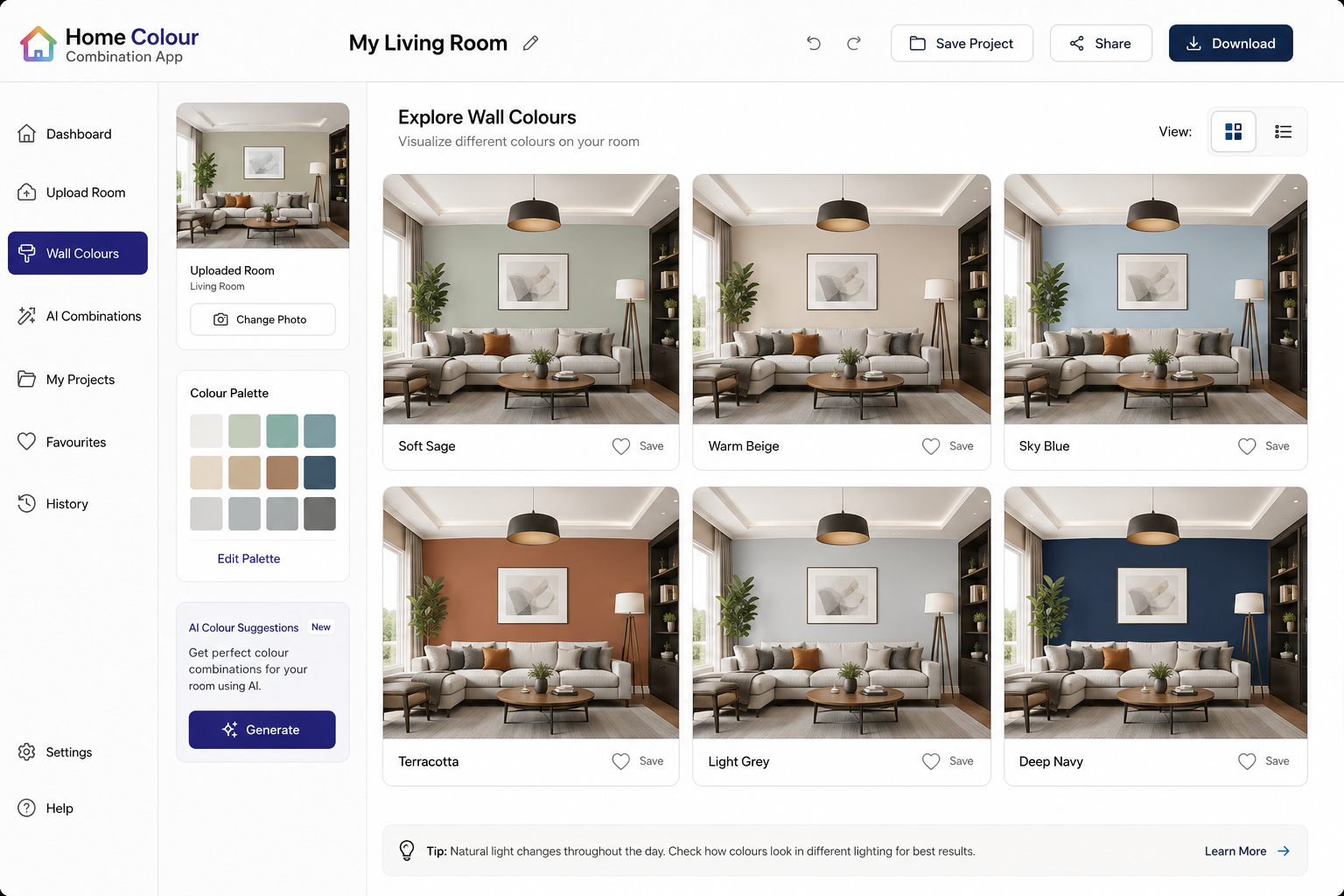
A home colour combination app is a digital visualization tool that helps homeowners preview different paint colours before any painting begins. Instead of relying on tiny paint swatches or imagination, you can upload room photo, apply different wall colours instantly, and see how they look in your actual space. This approach removes much of the uncertainty that comes with traditional paint selection.
Modern apps go beyond simple colour replacement. Many now function as a complete home colour planner, allowing users to compare multiple palettes, save favourite combinations, and coordinate wall colours with flooring, furniture, ceilings, and décor. Whether you're refreshing a bedroom or planning an entire house renovation, these tools help you make informed decisions with greater confidence.
One feature that's becoming increasingly popular is paint visualizer upload photo, where you simply upload an image of your room and test countless shades within minutes. It's like having a virtual interior designer available whenever inspiration strikes.
Artificial intelligence has transformed home design by making colour planning more personalised and efficient. Rather than suggesting random shades, AI color combination technology analyses your room and recommends colours that naturally work together.
The software considers several important factors, including:
Instead of asking yourself whether navy blue matches oak flooring or if warm beige complements white cabinets, the AI provides balanced recommendations based on complementary colours, analogous colours, and monochromatic colour schemes.
From my experience reviewing visualization platforms, AI doesn't replace creativity—it simply speeds up the decision-making process. Rather than exploring hundreds of colours manually, homeowners can narrow their choices to a few well-matched palettes in minutes.
Long before digital visualization became available, homeowners selected colours using printed catalogues, paint swatches, and sample pots. While this method requires more time, it continues to be trusted because it shows exactly how paint behaves under real lighting conditions.
Professional painters often recommend painting small test patches on different walls and observing them throughout the day. Morning sunlight, afternoon brightness, and evening indoor lighting can dramatically change how a colour appears.
Traditional colour selection is particularly valuable when evaluating:
These details are difficult for any digital tool to reproduce perfectly, which is why physical sampling remains an important final step before painting.
Both approaches help you choose colours, but they solve different challenges.
|
Feature |
Home Colour Combination App |
Traditional Colour Selection |
|
Preview Colours |
Instant digital preview |
Physical paint samples |
|
Upload Your Room |
✅ Yes |
❌ No |
|
AI Recommendations |
✅ Yes |
❌ No |
|
Compare Multiple Palettes |
Unlimited |
Limited |
|
Time Required |
Minutes |
Several days |
|
Final Paint Accuracy |
High |
Excellent |
The comparison shows why many homeowners now begin with a wall paint visualizer before purchasing paint. It allows them to experiment freely, shortlist their favourite shades, and then confirm the final choice using physical paint samples.
One of the biggest advantages of digital planning is that it reduces expensive mistakes. Repainting isn't just about buying another can of paint—it also involves labour costs, surface preparation, furniture protection, and valuable time.
Imagine spending an entire weekend painting your living room only to discover that the colour looks completely different once it dries. It's a frustrating and surprisingly common experience.
Using a paint matching app or room paint visualizer dramatically lowers that risk because you can compare multiple colours before making a purchase. Even if you still test a physical sample later, you've already eliminated dozens of unsuitable options.
That's why both homeowners and professional designers increasingly rely on digital visualization during the planning stage.
Imagine two homeowners renovating identical living rooms.
The first homeowner visits a paint store, picks up five paint cards, buys sample pots, paints sections of the wall, waits for them to dry, and spends several days deciding which colour looks best.
The second homeowner opens a virtual paint visualizer, uploads a room photo, tests twenty different colour palettes in less than thirty minutes, shares the designs with family members, and narrows the selection to two final options before buying paint.
Both homeowners may eventually use physical samples, but one reaches the final decision much faster and with greater confidence.
Before making your final colour decision, you can also explore our Room Visualizer to compare different layouts, lighting conditions, and wall colours using your own space.
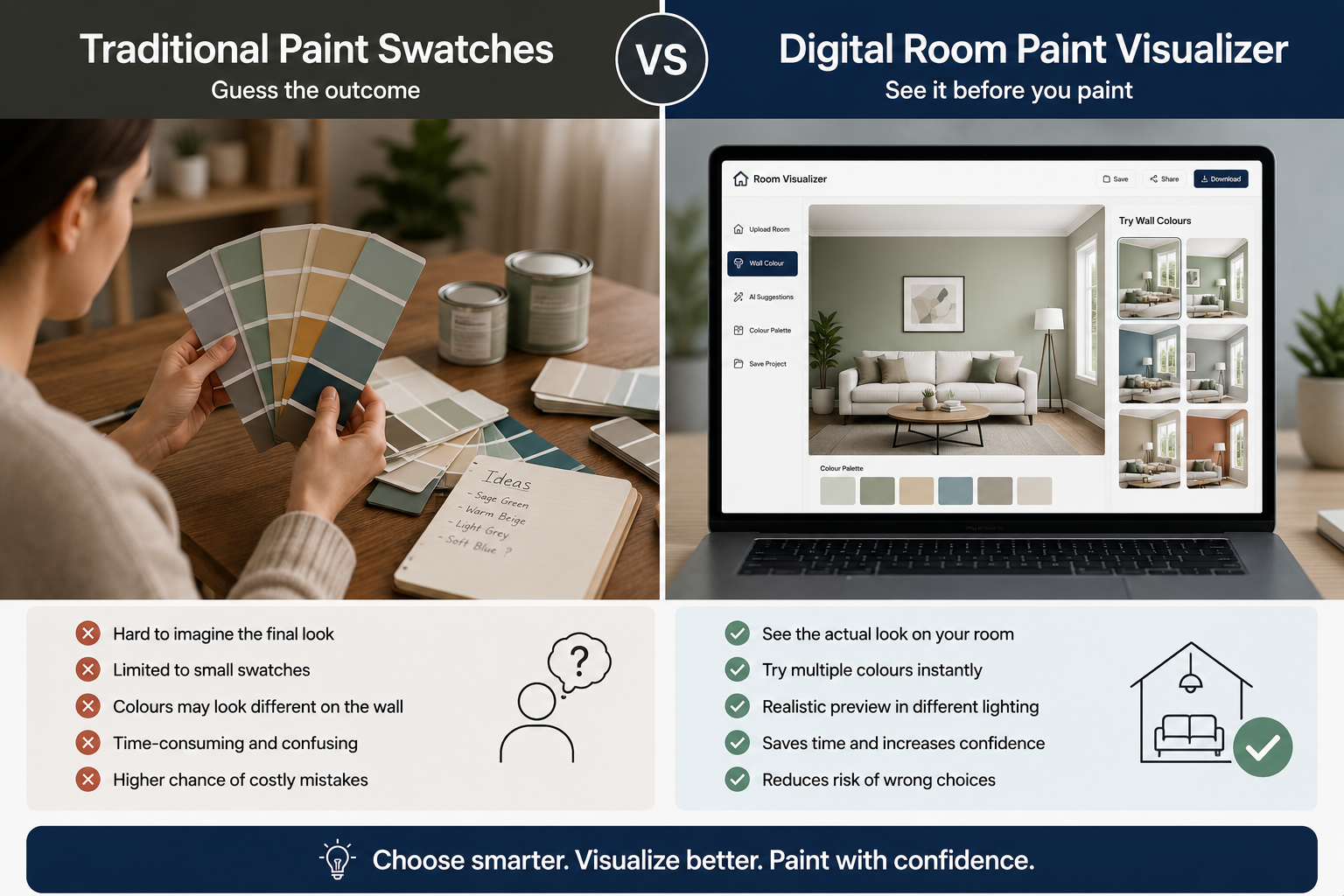
The right approach depends on your project rather than choosing one method for every situation. A home colour combination app is ideal during the planning phase because it lets you experiment with colours quickly, while traditional paint sampling is better suited for final approval before painting begins.
Here's a practical comparison:
|
Project Type |
Best Approach |
Why? |
|
Apartment Renovation |
Home Colour Combination App |
Quickly compare multiple colour palettes before purchasing paint. |
|
New Home Construction |
Digital Planning + Paint Samples |
Explore ideas digitally, then verify colours on-site. |
|
Exterior House Painting |
Upload House Image + Physical Sample |
Outdoor lighting changes throughout the day. |
|
Luxury Villa |
AI Visualization + Professional Consultation |
Ensures every colour complements premium finishes. |
|
Commercial Office |
Digital Colour Planning |
Faster approvals from multiple stakeholders. |
|
DIY Room Makeover |
Paint Preview App |
Saves time and reduces repainting mistakes. |
Rather than replacing traditional methods, digital planning makes them more efficient. By shortlisting colours first, you spend less time testing samples and more time enjoying the renovation process.
One interesting trend I've noticed is that experienced designers rarely rely on a single method anymore. Instead, they use technology to improve the traditional workflow.
The process usually starts with an AI room visualizer or home colour planner. Designers create several concepts using different palettes and present realistic previews to clients. Once the client selects two or three favourites, physical paint samples are applied to the walls for final approval.
This hybrid approach offers several advantages:
Technology hasn't replaced professional expertise—it has simply made good design decisions easier and more efficient.
Choosing colours isn't just about aesthetics; it's about making informed decisions before investing your time and money. That's why Tilesdisplay has developed a visualization platform that helps homeowners, architects, retailers, and interior designers create confident renovation plans.
Unlike basic paint preview tools, Tilesdisplay offers an integrated visualization experience where users can coordinate wall colours, flooring, tiles, and décor within a single interface. This makes it easier to build a complete colour palette for home instead of selecting paint in isolation.
Whether you're redesigning a single room or planning an entire home, Tilesdisplay simplifies every stage of colour planning.
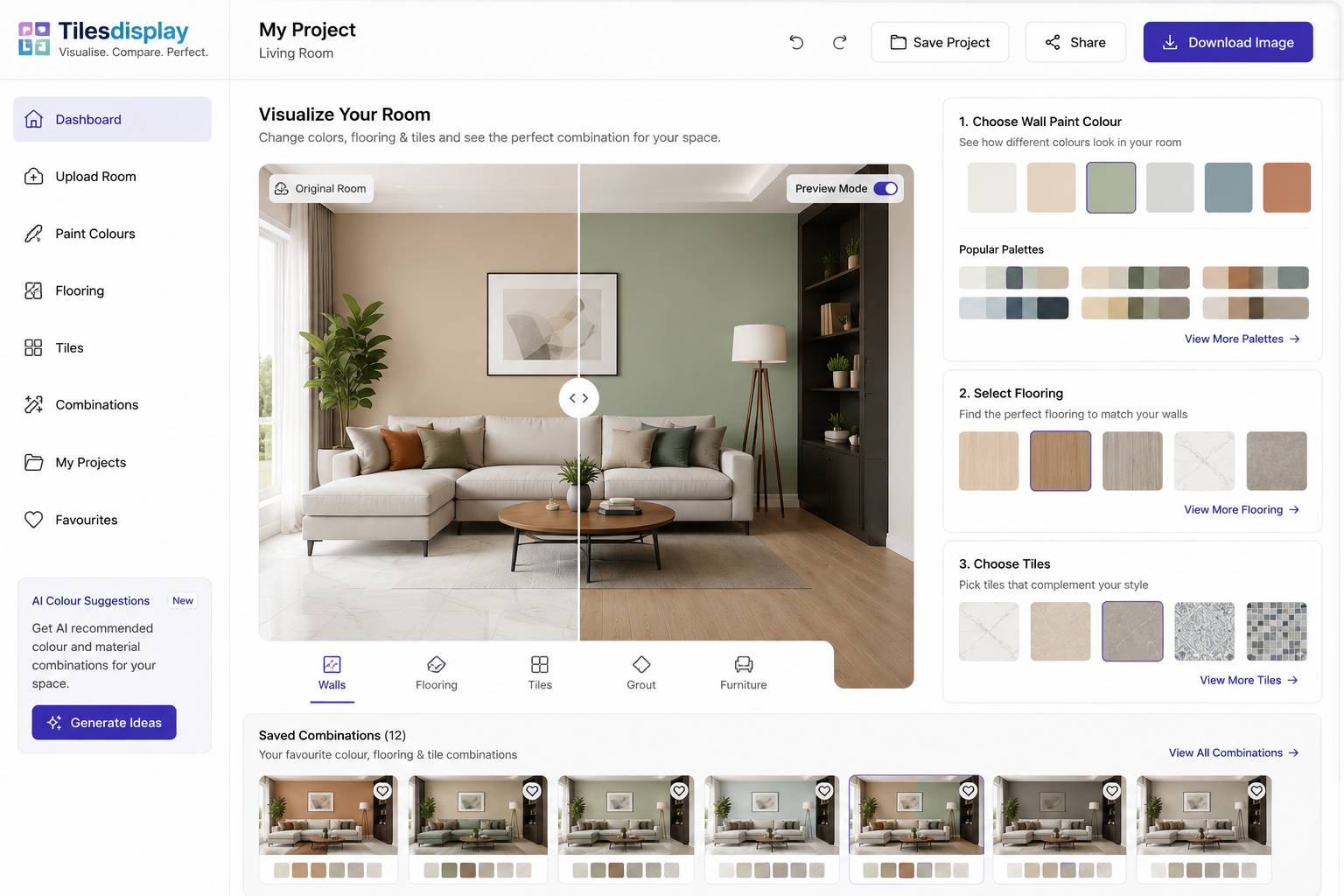
Colour is more than decoration—it influences how a room feels and functions. Warm shades such as beige, terracotta, and soft cream often create a welcoming atmosphere, while cooler colours like sage green, blue, and grey can make spaces feel calm and spacious.
Professional designers also use digital colour matching to ensure that walls, flooring, furniture, and décor work together as a complete design rather than competing for attention. This is one reason why homeowners increasingly use visualization tools before making final decisions.
If you're interested in creating healthier indoor spaces while planning your renovation, the U.S. Environmental Protection Agency (EPA) provides useful guidance on maintaining good indoor environments during home improvement projects. (Government Reference Link)
Understanding colour psychology alongside visualization technology helps homeowners choose colours that not only look beautiful but also support the purpose of each room.
After reviewing countless home renovation trends and visualization platforms, a few best practices consistently deliver better results.
These simple habits help create a balanced home colour design while reducing unnecessary repainting costs.
After comparing both methods, one conclusion becomes clear: the smartest solution isn't choosing digital or traditional—it is combining them.
Start by using a home colour combination app to visualize your room, test different house colour combinations, and experiment with AI-powered recommendations. Once you've narrowed your choices, apply physical paint samples to confirm the finish and appearance under your home's actual lighting conditions.
This workflow combines the speed of technology with the reliability of traditional craftsmanship, giving homeowners greater confidence before the first brush touches the wall.
Before choosing your final colours, you can also explore our AI Tile Visualizer to see how wall colours, flooring, and tile designs work together in realistic room settings.
Home renovation is becoming more intelligent every year, and colour selection is no exception. What once relied entirely on paint catalogues and sample pots is now powered by artificial intelligence, 3D visualization, and augmented reality. As these technologies continue to evolve, choosing the perfect paint colour will become faster, more accurate, and more personalized.
Future versions of a home colour combination app will do much more than recommend colours. They will analyse room dimensions, furniture layouts, natural lighting, architectural styles, and even your personal preferences to generate complete design concepts. Instead of spending hours comparing paint swatches, homeowners will receive customized colour palettes that suit their lifestyle and existing décor.
We're already seeing this transformation through features like paint my room, AI room visualizer, paint visualizer upload photo, and online colour visualizer. These innovations are helping homeowners make confident decisions before investing in paint, saving both time and money.
A home colour combination app is a digital visualization tool that allows you to preview different wall colours before painting. Many modern apps include features such as paint visualizer upload photo, AI color combination, and wall paint visualizer, helping homeowners compare colour schemes using their own room photos instead of relying only on paint swatches.
Yes. Modern visualization platforms provide realistic previews that closely represent how colours will appear in your home. While factors such as lighting, screen calibration, and paint finish can slightly affect the final appearance, using a room paint visualizer significantly reduces guesswork. For the most accurate results, combine digital previews with physical paint samples.
Absolutely. Most advanced platforms allow you to upload room photo or upload house image so you can see how different colours interact with your existing flooring, furniture, lighting, and décor. This personalized approach helps homeowners choose colours with much greater confidence.
AI makes colour planning faster by recommending balanced palettes and allowing you to compare multiple options instantly. Traditional paint sampling, however, remains valuable for confirming finishes and observing colours under real lighting conditions. The best results usually come from combining both methods.
Tilesdisplay is more than a simple paint matching app. It combines AI-powered visualization with realistic room previews, allowing users to compare paint colours, flooring, tiles, and décor within one platform. Whether you're planning a small room makeover or a complete home renovation, Tilesdisplay helps you make informed decisions before purchasing materials.
At Tilesdisplay, we understand that choosing the right colour is about more than aesthetics—it's about confidence. Our visualization platform is designed to help homeowners, architects, interior designers, builders, and retailers make smarter decisions by seeing the final result before work begins.
With advanced visualization technology, users can upload their own room photos, explore hundreds of colour combinations, coordinate paint with flooring and tiles, and compare multiple layouts in realistic 2D and 3D environments. Instead of relying on imagination, you can confidently plan every detail before investing in materials.
Whether you're designing a modern apartment, renovating a family home, or planning a commercial project, Tilesdisplay provides practical tools that simplify the entire renovation journey.
Choosing paint colours no longer has to involve uncertainty or expensive trial and error. As we've explored throughout this guide, a home colour combination app offers homeowners a smarter way to plan renovations by allowing them to visualize your room, compare house colour combinations, and receive intelligent AI recommendations before buying paint. Traditional colour selection still plays an important role in confirming finishes and testing colours under real lighting, making a combination of both methods the most reliable approach.
Ready to transform your space with confidence? Tilesdisplay helps you explore interior colour combinations, exterior house colour combinations, flooring, tiles, and wall colours within one intelligent visualization platform. Upload your room photo, experiment with different colour palettes, and make informed design decisions before you invest. Start exploring with our Home Visualizer and experience a faster, smarter, and more enjoyable way to design your dream home.