
















Elevate Your Interiors
with Trendy Tiles Display
Tiles That Speak the Language of Design.
14th Aug, 2026
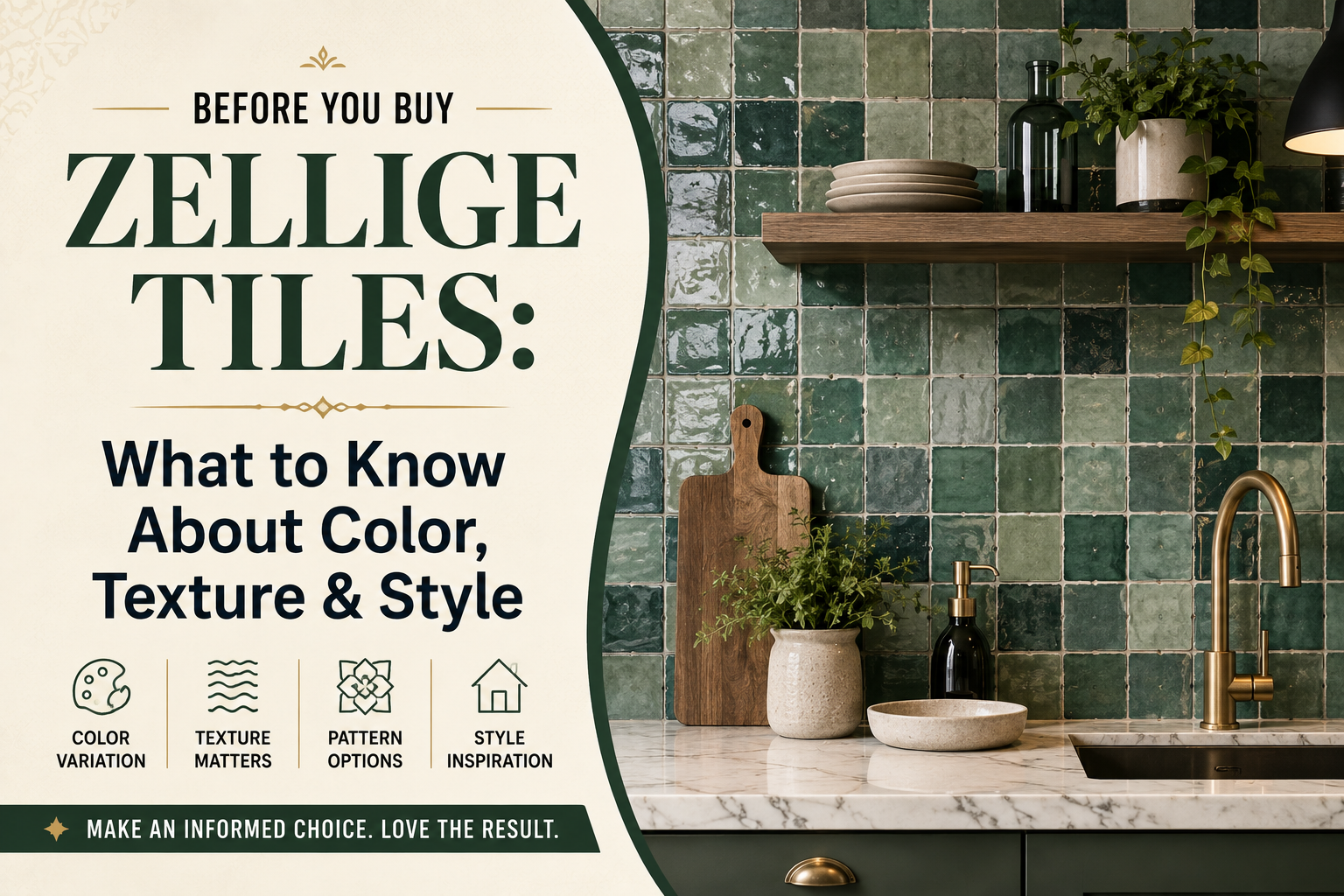
There's a reason Zellige tiles show up in nearly every design magazine and renovation mood board right now. Their imperfect glaze, soft color variation, and handcrafted character give a room a warmth that mass-produced tile simply can't replicate. But that same handmade quality is exactly what trips buyers up. Zellige doesn't behave like standard ceramic or porcelain tile, and buying it without understanding what makes it different can lead to a costly, frustrating surprise once it's installed.
If you're considering a Zellige tile backsplash, bathroom wall, or accent feature, this guide walks through everything worth knowing before you place an order — color variation, texture, pattern options, where it works best, and the practical trade-offs that don't always make it into the glossy photos.
Zellige tiles are hand-cut, hand-glazed tiles that originated in Morocco, traditionally made from natural clay and fired using centuries-old techniques. Each tile is shaped and glazed individually by artisans, which means no two pieces are ever perfectly identical. That's not a manufacturing flaw; it's the entire point. The slight irregularities in shape, glaze thickness, and surface texture are what give Zellige tile its signature handmade look.
This is a fundamentally different product from the machine-pressed, computer-calibrated tile most buyers are used to. Understanding that distinction early is the single most important thing to know before you buy.
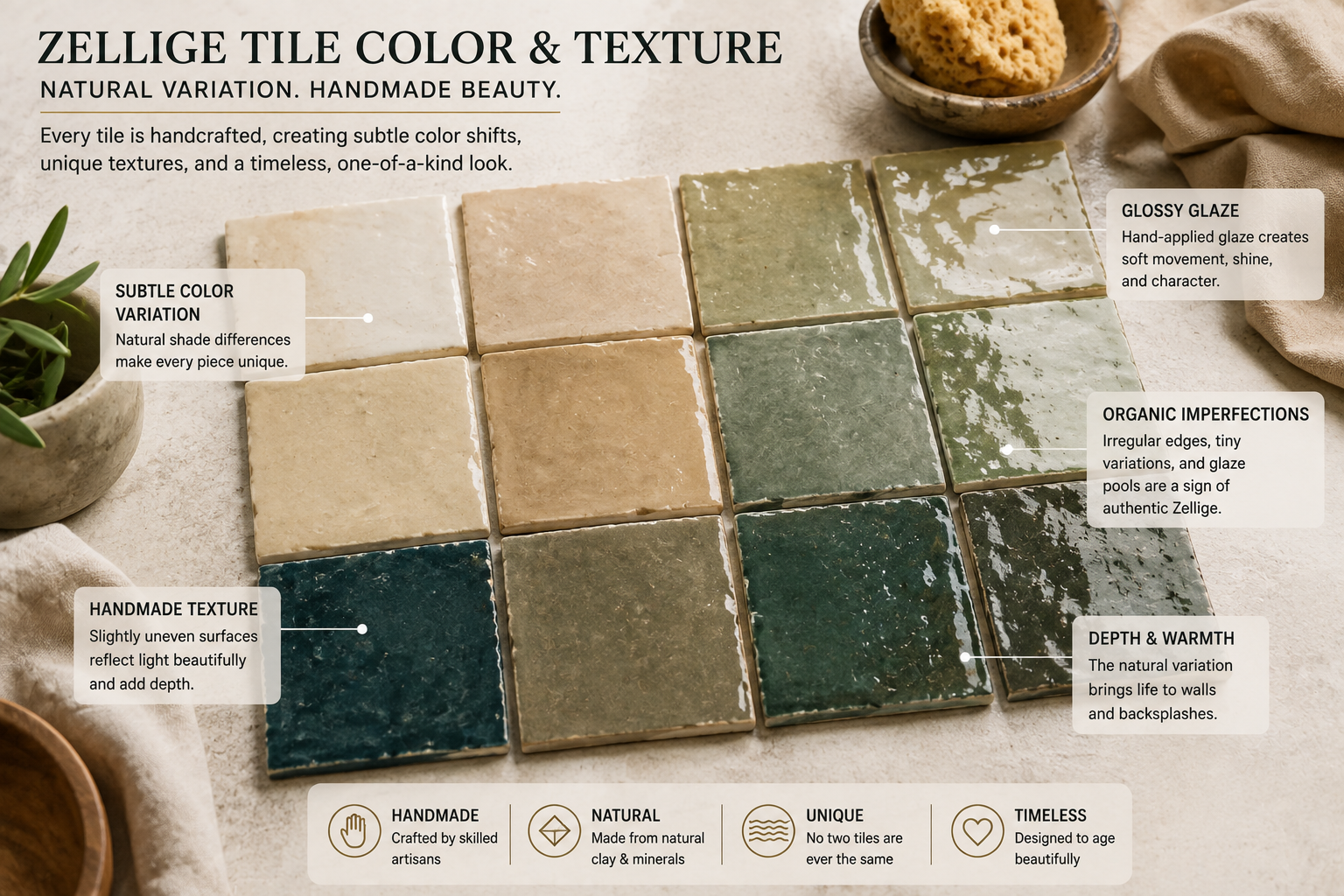
One of the first things that surprises first-time buyers is just how much Zellige tile colors shift from piece to piece, even within the same order. A box labeled "ivory" might contain tiles ranging from warm cream to pale honey to soft white, all in the same batch.
This happens because of how the tiles are made. Natural clay bodies, hand-applied glazes, and wood-fired or gas-fired kilns all introduce small, unrepeatable variations in tone. Buyers expecting the flat, uniform color of a printed porcelain tile are often caught off guard when their Zellige order arrives looking more varied than the sample photo suggested.
The upside is that this variation is exactly what creates Zellige's depth. A wall made from uniform color would look flat under changing light; a wall made from Zellige shifts subtly depending on the angle and time of day, which is a big part of why designers love it. If you want a more predictable, uniform look, it's worth knowing upfront that true handmade Zellige may not be the right fit — some manufacturers now offer more color-controlled reproductions for buyers who want the aesthetic with less variation.
Beyond color, Zellige tile texture is the other defining characteristic buyers need to understand before ordering. Authentic Zellige has a slightly uneven, rippled surface — a result of the tiles being shaped and glazed by hand rather than pressed by machine. Light catches this texture differently than it does on a flat, uniform tile, creating subtle shadows and highlights across the surface.
This texture also means Zellige tiles are rarely perfectly flat or perfectly square. Edges can be slightly rounded or wavy, and thickness can vary tile to tile. For installers used to working with rectified porcelain, this takes some adjustment; grout lines may need to be slightly wider and less uniform to accommodate the natural irregularity, and that's expected, not a defect.
If glossy, glassy tile texture is what you're after, Zellige is likely not the right choice. But if you want a wall or backsplash that has visible depth and handmade character, this texture is the feature, not a compromise.
While the classic square Zellige tile is the most recognizable, Zellige tile patterns extend well beyond that. Options include:
Pattern choice significantly affects how much the tile's natural color and texture variation shows. Smaller, simpler shapes like squares tend to highlight the variation more, since there's more visible grout and more individual tile faces catching light. Larger or more decorative shapes can either amplify the handmade look or, if a buyer wants a busier design, distract from it slightly. It's worth requesting a rendered layout or asking your supplier for installed photos of your specific pattern choice before committing to a full order.
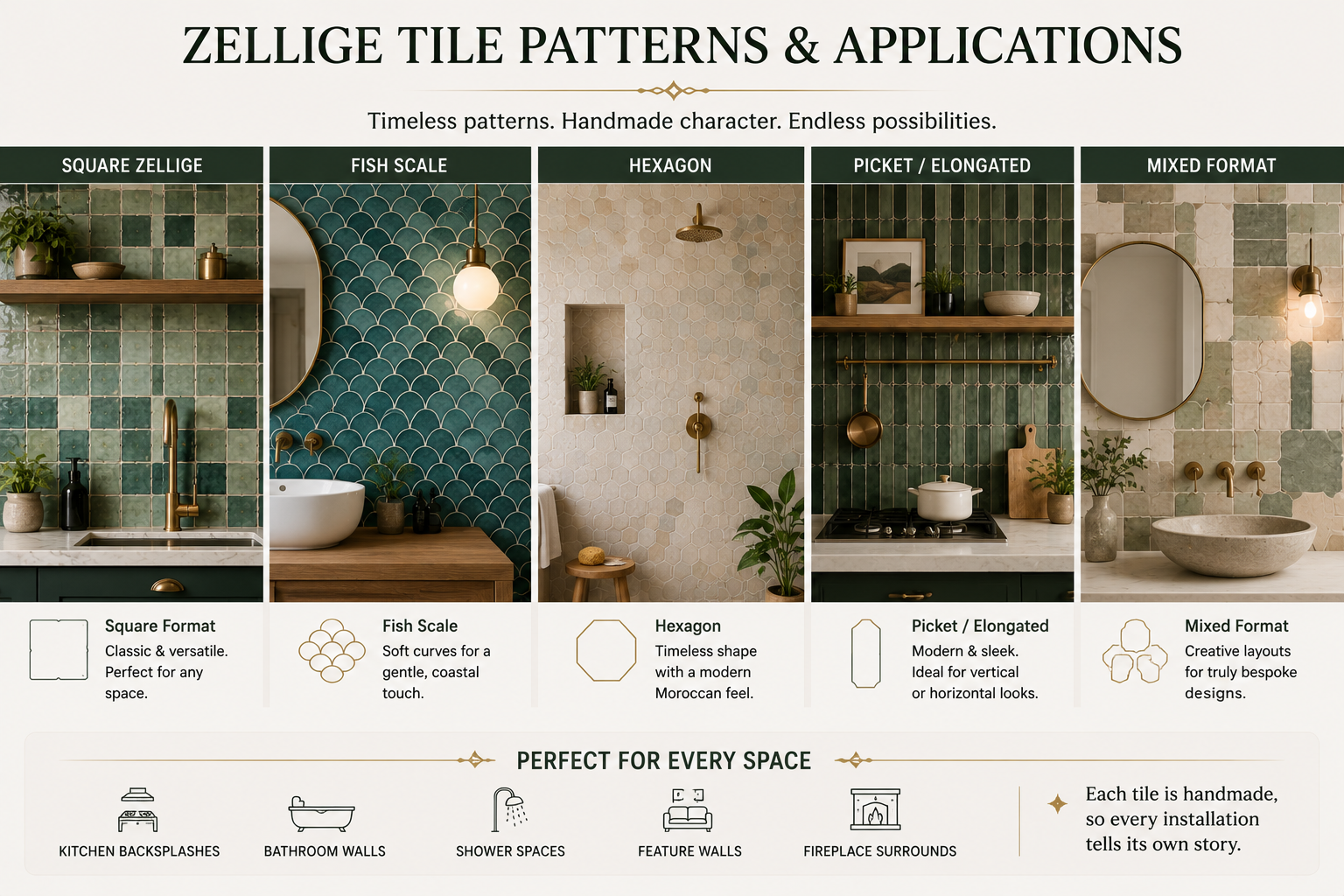
Zellige tiles for kitchen backsplashes have become one of the most popular applications, and it's easy to see why; the combination of warmth, texture, and subtle color movement gives a kitchen a custom, artisan feel that flat tile can't match. It pairs particularly well with simple cabinetry and stone countertops, since the busier texture of the tile provides contrast against cleaner surrounding surfaces.
That said, kitchens come with practical considerations. Backsplash areas near stovetops are exposed to grease, steam, and regular wiping, so a sealed, food-safe glaze is essential. Buyers should confirm with their supplier that the specific tile line is rated for kitchen use and ask what sealing or maintenance routine is recommended for that particular glaze. Full kitchen floors are a tougher application for traditional zellige since its handmade surface isn't always rated for heavy foot traffic; check slip resistance and durability ratings before choosing it for flooring rather than backsplash use.
Zellige bathroom tiles are another popular use case, especially for shower walls and vanity backsplashes where the tile's light-catching texture really stands out. But bathrooms introduce a specific challenge: constant moisture exposure.
Because Zellige is a porous, handmade material, not every batch is glazed or sealed to the same standard for wet environments. Before buying Zellige for a shower or tub surround, confirm:
Whether the glaze is fully vitrified or still somewhat porous
Skipping this step is one of the most common regrets among Zellige buyers; some discover after installation that their tile requires more frequent resealing than expected in a high-moisture shower environment. Asking these questions upfront avoids that surprise entirely.
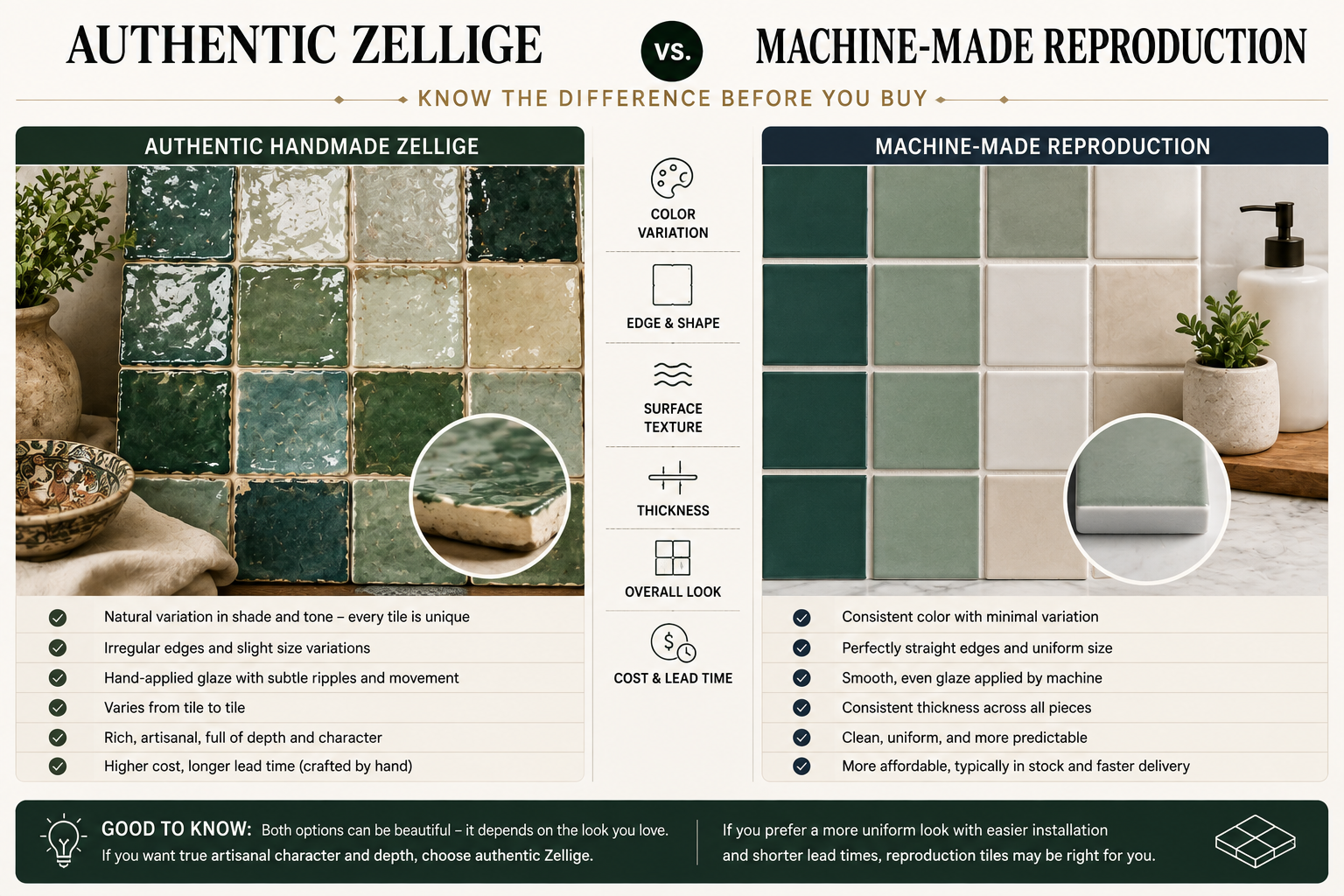
It's worth knowing that not everything marketed as "Zellige" today is truly handmade. Because demand has grown, many manufacturers now produce machine-made reproductions that mimic the look of handmade Zellige tiles using more consistent, factory-controlled processes.
Reproductions tend to offer:
Authentic Moroccan Zellige tiles, on the other hand, offer the following:
Neither option is objectively "better"; it depends on what you're prioritizing. If budget predictability and faster turnaround matter more than authenticity, a well-made reproduction can deliver a similar aesthetic. If you specifically want the handmade Moroccan character and are willing to accept longer lead times and more variation, authentic Zellige is worth the investment. Just be clear with your supplier about which one you're actually buying; the terminology is often used loosely in marketing.
If you're specifically exploring a Zellige tile backsplash, a few design approaches tend to work particularly well:
Because the tile itself carries so much visual interest on its own, simpler layouts and grid patterns often let the material's natural character do the work, rather than competing with an overly complex design.
Before making a final decision, it helps to see the trade-offs laid out directly.
Weighing this Zellige tile pros and cons list against your specific project, budget, timeline, and room type, is the most reliable way to know whether it's the right material for your space.
If you're ready to move forward, here's a practical approach for how to choose Zellige tiles with confidence:
Ongoing care is worth planning for before you buy, not after. Most Zellige tile requires periodic resealing, particularly in kitchens and bathrooms where moisture and grease exposure is regular. A gentle, pH-neutral cleaner is generally recommended, since harsh or abrasive chemicals can wear down the glaze over time. Avoid excessive standing water on the surface, and check with your specific supplier for a resealing schedule appropriate to their glaze formulation; this can range from every year to every few years depending on the product and how heavily the surface is used.
Zellige tiles offer a look that's genuinely difficult to replicate with any other material, but that same handmade quality comes with real trade-offs in cost, consistency, and maintenance that are worth understanding before you commit. If you value character, depth, and a one-of-a-kind finished result, and you're willing to plan for the variation and upkeep that comes with it, Zellige can be one of the most rewarding materials you choose for a kitchen or bathroom. If predictability, lower cost, or minimal maintenance are higher priorities, it's worth exploring reproduction options or a different material entirely.
Either way, going in with a clear understanding of the color variation, texture, and care involved means you'll end up with a result that matches what you expected, rather than a surprise once the tile is already on the wall.