

Elevate Your Interiors
with Trendy Tiles Display
Tiles That Speak the Language of Design.
4th Nov, 2026
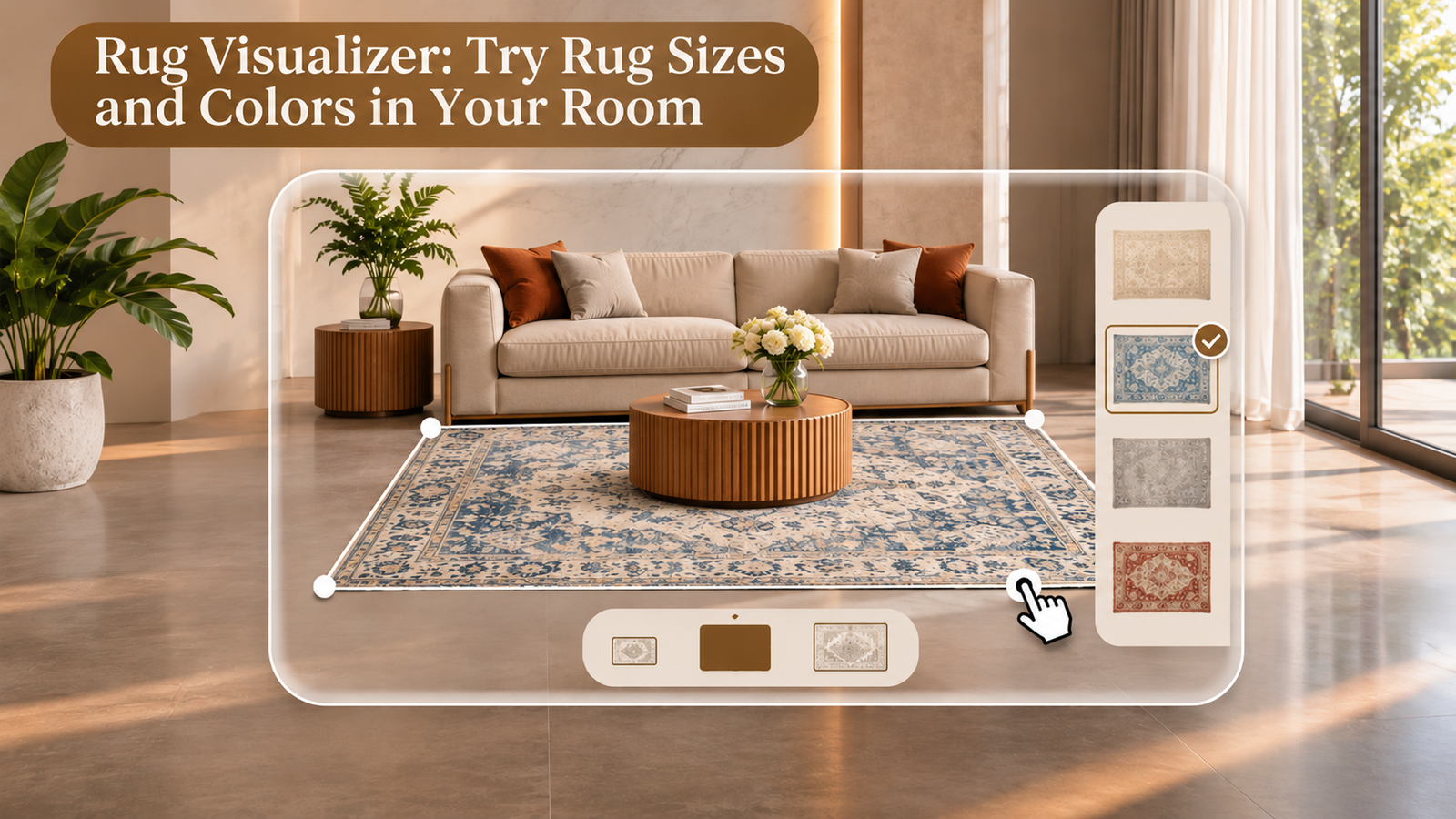
Picture this: you carry a gorgeous 5 x 8 ft rug into your living room, unroll it, and realise it looks like a postage stamp lost on a football pitch. The colour was perfect. The size was not. It is the most common rug mistake there is, and it is exactly what a rug visualizer is built to prevent.
A rug visualizer lets you see a rug in a photo or 3D view of your room before you buy it, so you can test sizes and colours without dragging anything home. In this guide I will walk you through how a virtual rug try on works, a simple rug size guide, colour tips and the mistakes I would avoid. If you want to see your floor first, you can explore your room in the Tilesdisplay room visualizer and plan the rug around it.
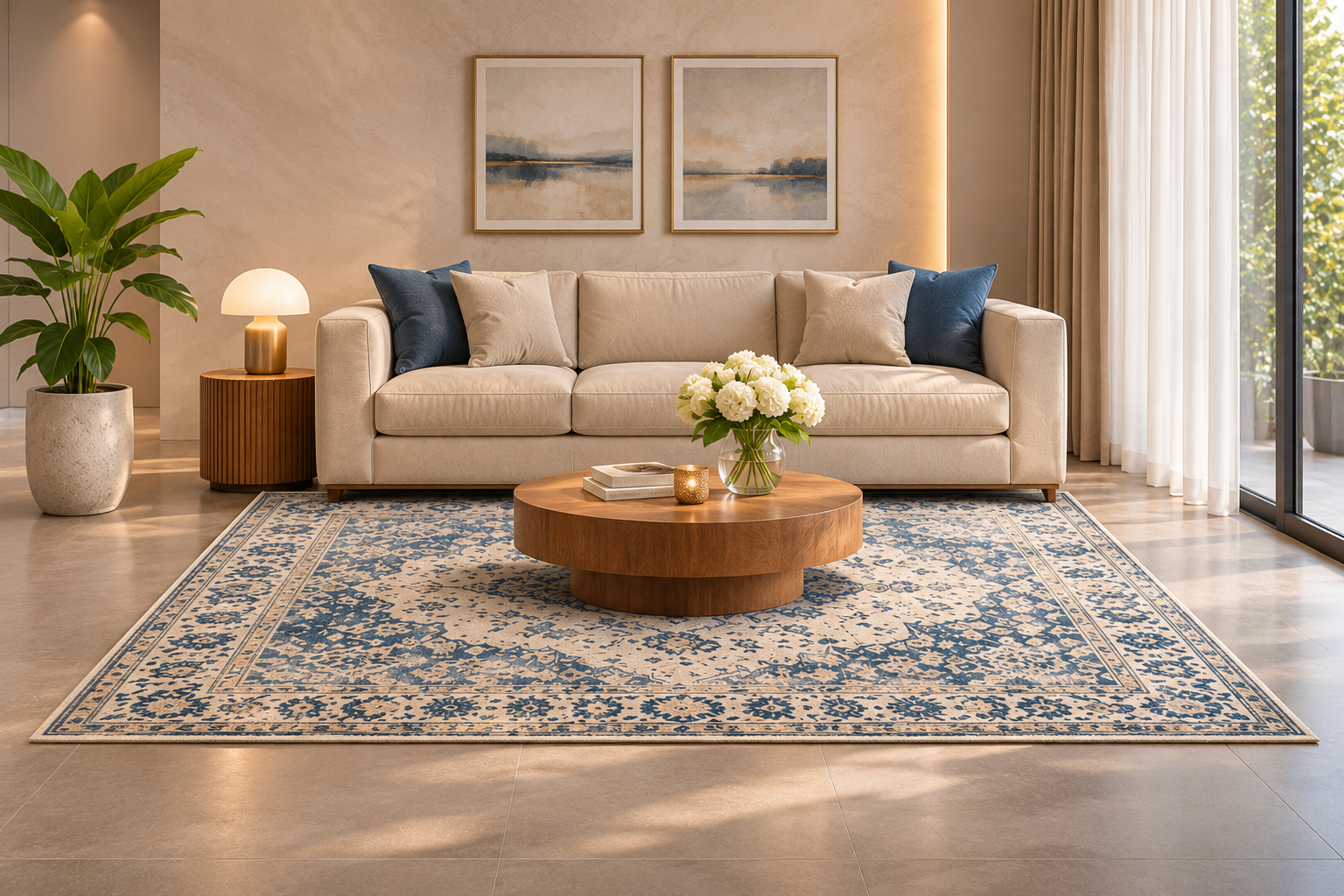
A rug visualizer is a digital tool that places a rug of your chosen size, colour and pattern into an image or 3D model of your room, so you can judge the fit before you pay. A virtual rug try on works the same way: you upload a photo or pick a sample room, drop in the rug, then move or resize it until the proportions feel right. Think of it as a fitting room for your floor.
The reason it matters is simple. A rug is large, highly visible and awkward to return. Its colour changes under your lighting, and its size changes against your furniture. A good room visualizer shows both at once, which beats guessing from a product photo or a tape measure alone. It also lets you compare a rug size for living room options side by side in minutes.
The short answer to "what size rug do I need" is: bigger than you think. Most rooms look best when the main furniture sits at least partly on the rug, with a border of bare floor around the edges, usually about 18 inches (45 cm). A small rug floats and makes the room look smaller, while a well-sized one ties the space together. Use this rug sizes chart as a starting point, then test it in a rug visualizer.
|
Room |
Common rug size |
In cm |
Fit tip |
|
Small living room or entryway |
5 x 8 ft |
150 x 240 |
Front legs of the sofa on the rug |
|
Standard living room |
8 x 10 ft |
240 x 300 |
Front legs on, or all legs on |
|
Large living room |
9 x 12 ft |
270 x 370 |
All furniture legs on the rug |
|
Bedroom with a queen bed |
8 x 10 ft |
240 x 300 |
Extends beyond both sides of the bed |
|
Dining room (4 to 6 seats) |
8 x 10 ft |
240 x 300 |
Chairs stay on the rug when pulled out |
For rug size for living room projects, you have three layouts, and each one changes the mood. All legs on gives the most polished, hotel-like look and needs a big rug, typically 9 x 12 ft. Front legs on is the most popular: only the front legs of sofas and chairs sit on the rug, which works well with an 8 x 10 ft. All legs off, with the rug floating in the middle, is the cheapest option, but it feels disconnected unless the rug is still large enough to reach the seating group.
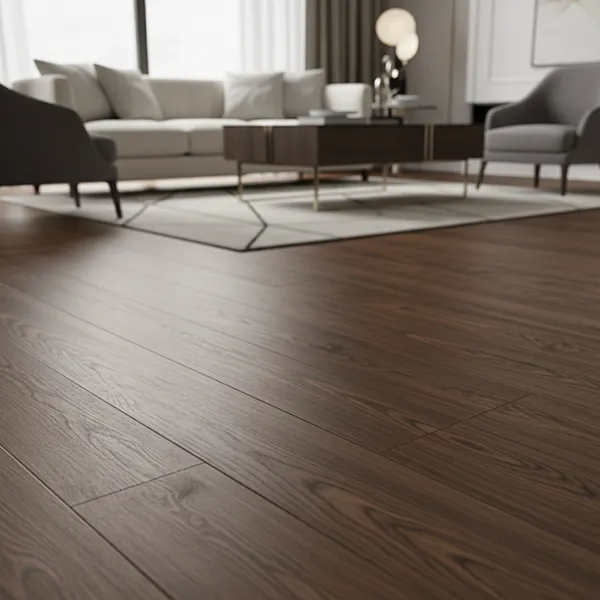
Your rug layout under sofa decision comes down to room size. In a small room, go front legs on, so the rug anchors the seating and the bare floor frames it. Good area rug placement also means centring the rug on the seating group, not necessarily on the room. If a coffee table sits in the middle, make sure all its legs land on the rug, or it will wobble every time someone puts down a mug.
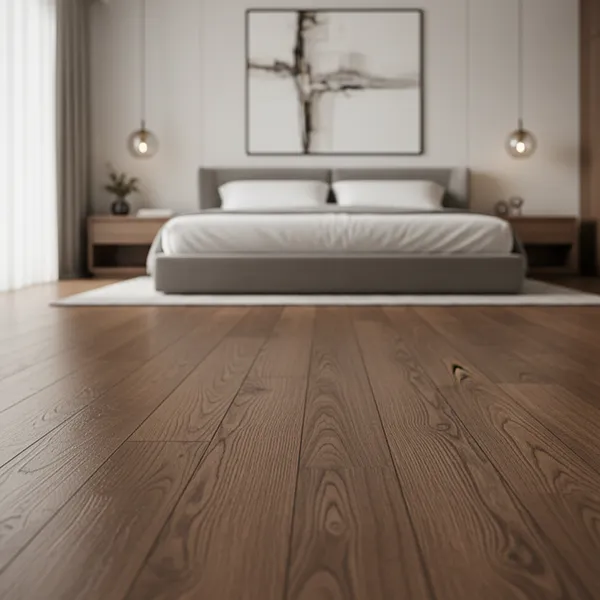
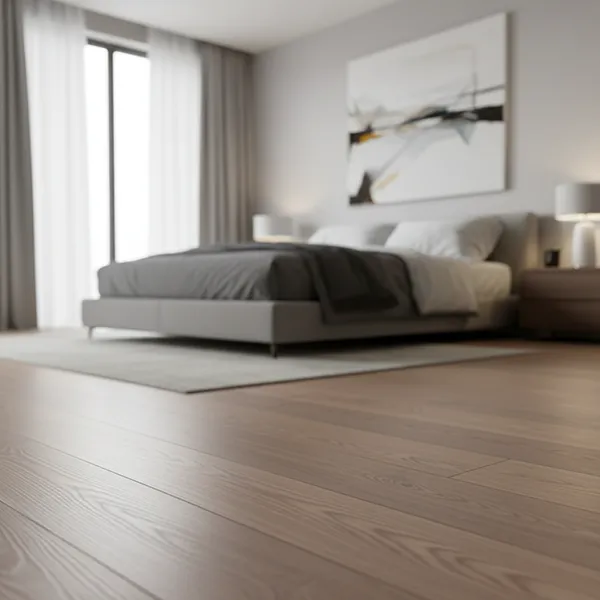
In a bedroom, a rug should extend about 18 to 24 inches (45 to 60 cm) beyond the sides and foot of the bed, so your feet land on something soft when you get up. Good area rug placement here means sliding the rug about two-thirds of the way under the bed. A queen bed often pairs with an 8 x 10 ft rug, and a king bed with 9 x 12 ft. Under a dining table, add at least 24 inches (60 cm) on every side, so chairs stay on the rug when you pull them out. Nothing ruins dinner like a chair leg snagging on a rug edge.
You do not need an app to build an area rug size calculator. You need a tape measure and a little arithmetic. Here is the method I would use:
Measure the furniture group: note the width and length of the seating area, bed or dining table.
Add the overhang: about 18 to 24 inches on each side for a bed, and 24 inches for a dining table.
Check the room: leave at least 18 inches (45 cm) of bare floor between the rug and each wall.
Round to a standard size: pick the closest size from the rug sizes chart, then test it in the visualizer.
Here is a quick example. A dining table that measures 72 x 36 inches, plus 24 inches on every side, needs a rug of at least 120 x 84 inches, or 10 x 7 ft. An 8 x 10 ft rug covers that comfortably. Treat this area rug size calculator as a first draft, then let the visualizer confirm it.
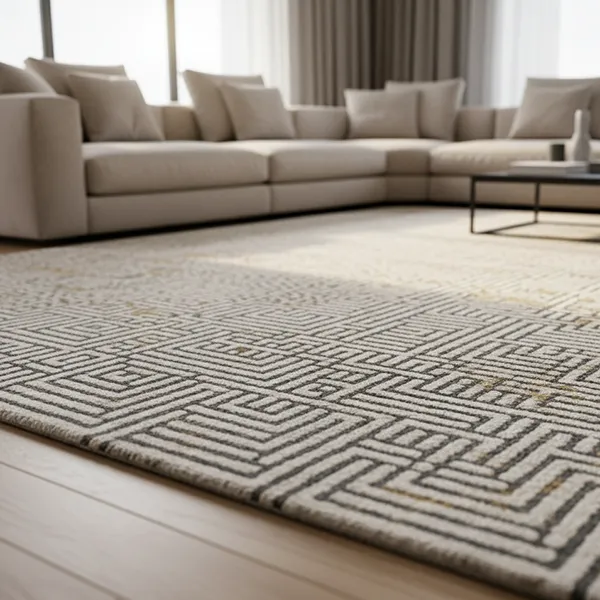
Colour is where a virtual rug try on earns its keep. For rug color ideas, start from the room. If your walls and sofa are neutral, let the rug be the colour moment, with deep blue, rust or forest green. If the room is already busy, choose a calm rug in sand, grey or oatmeal. A useful trick is to pull one accent colour from your cushions, art or curtains into the rug.
For rug colour matching, aim for harmony rather than an exact match, because a perfect match looks flat, like a catalogue set. Rug colour matching also works best when you check it against your wall colour in daylight. Contrast matters too: a light rug on a dark floor brightens the room and defines a zone, while a dark rug on a pale floor grounds it. Bold patterns suit large, quiet rooms, and subtle textures suit small, busy ones. Dark, patterned and low-pile rugs also hide stains better than light, solid ones.
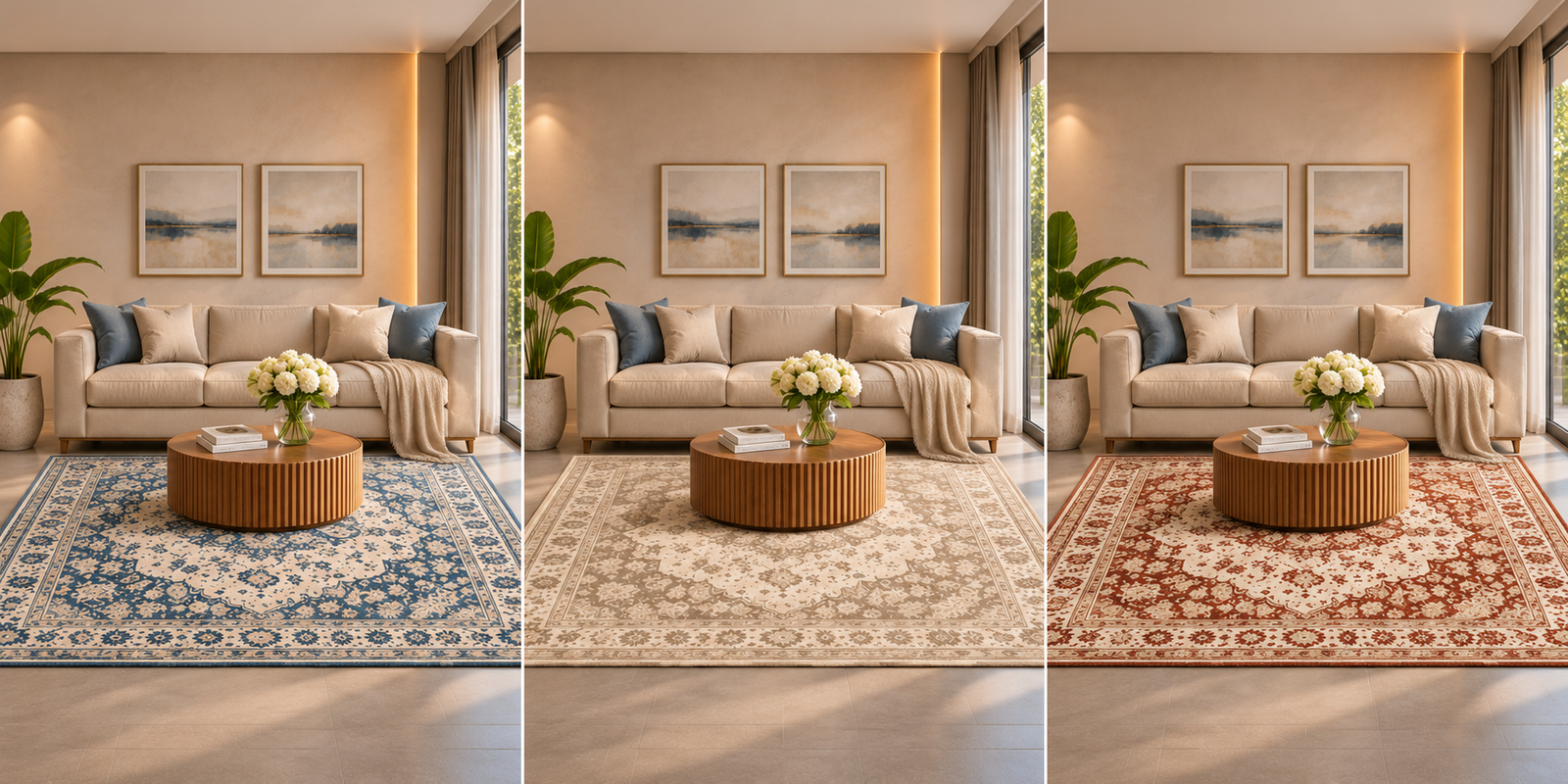
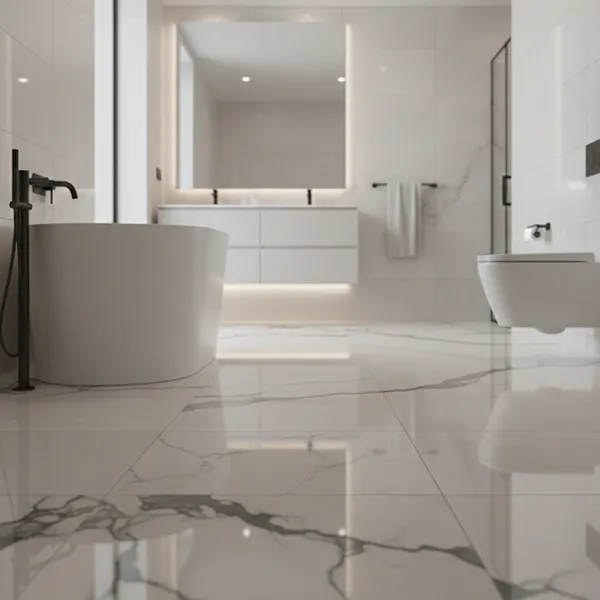
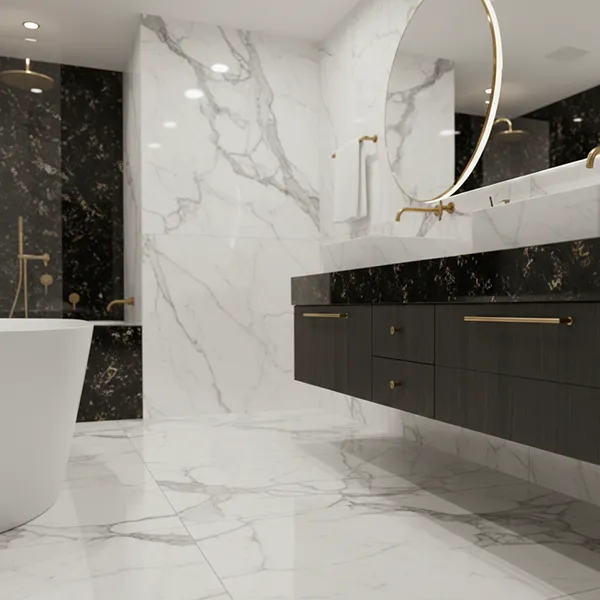
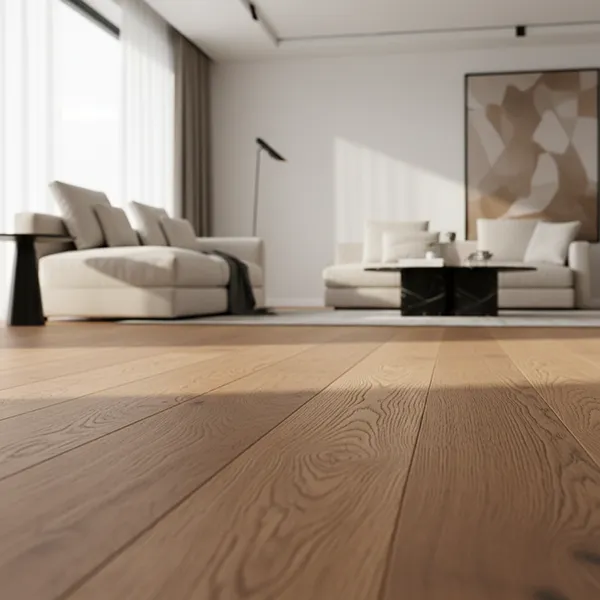
Tile floors and rugs are natural partners. The tile gives you a durable, easy-clean base, and the rug adds warmth and softens sound. A busy tile layout such as herringbone or checkerboard needs a calmer rug, so check our guide to floor tile patterns before you choose. A rug visualizer also shows how the rug sits against your tile pattern.
Safety deserves a line too. On smooth tile, always use a non-slip rug pad, because rugs that slide are a trip hazard. The U.S. Centers for Disease Control and Prevention reports that about one in four older adults falls each year, and its advice on preventing falls includes securing or removing loose area rugs. That matters in any home with parents, grandparents or small children.
Start with a straight-on photo of your room in daylight, with the floor and main furniture visible. Upload it, then enter the rug by real dimensions, not by feel. Try three sizes and three colours, and save each version to your phone so you can compare them later. If the tool offers different lighting, check the evening view too, because a rug can look warm at noon and muddy at 8 pm. That kind of rug visualizer test costs nothing and saves you from a very expensive guess.
Finally, tape the rug outline on your floor with painter's tape. It takes five minutes and confirms that the footprint works with your doorways and walkways. Once the digital preview and the tape agree, you can order with confidence.
An 8 x 10 ft rug suits most standard living rooms, and a 9 x 12 ft rug suits larger ones. Aim for at least the front legs of your sofa and chairs to sit on the rug, with about 18 inches of bare floor around the edges.
The rug should extend slightly past both sides of the sofa, with at least the front legs on it. For a polished look in a large room, place all legs on the rug. The rug layout under sofa should always stay centred on the seating group.
It gives you a close idea, but screens and lighting always shift colour a little. Use the visualizer to judge size, contrast and style, then order a small swatch to confirm the exact shade in your own room.
Pick one accent from your cushions, art or curtains and use a rug in that shade or a softer version of it. Add texture, such as a wool or jute weave, if you prefer a quiet look. Avoid matching the sofa exactly, because it makes the room look flat.
It is accurate when you enter real room and rug dimensions and use a straight-on photo or a 3D room. Photos taken at an angle can distort proportions, so confirm the final size with painter's tape on the floor.
A rug should anchor your room, not drift in it. Choose a rug size guide you trust, such as 8 x 10 ft for standard living rooms, check what size rug you need using the four-step measure, and keep 18 inches of bare floor around the edges. Pick colours for harmony, secure the rug with a pad, and use a rug visualizer to test everything before you buy.
If you want help planning your room, floors included, we would be glad to hear from you. Contact the Tilesdisplay team and use our room visualizer to see your space before you spend.