

Elevate Your Interiors
with Trendy Tiles Display
Tiles That Speak the Language of Design.
6th Nov, 2026
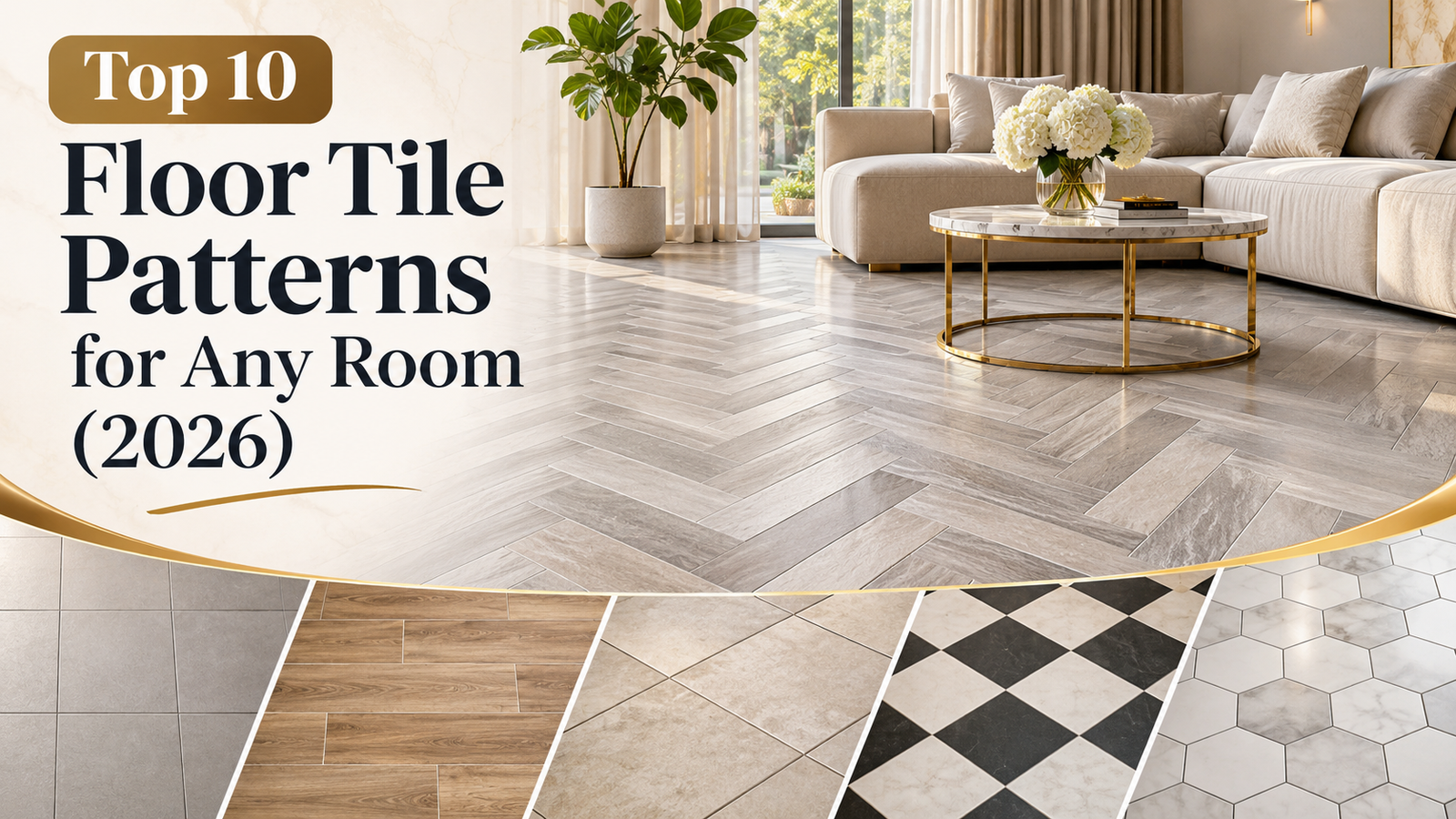
Here is a small confession: most people spend weeks choosing a tile colour and about four minutes thinking about how it will be laid. Then the floor goes in, and the tile that looked calm on the sample board suddenly feels like a chessboard or a hospital corridor. The layout does half the work, which is why floor tile patterns matter as much as the tile itself.
This guide walks through ten floor tile pattern ideas, from safe classics to the ones that make guests ask who your designer is. You will also get a comparison table, a few rules for matching a layout to a room, and answers to the questions I hear most. If you would rather see a pattern than imagine it, you can preview floor tiles in your own room with the Tilesdisplay tile visualizer before you buy a single box.
Floor tile patterns are the arrangements in which tiles are laid, defined by tile shape, size, direction and the offset between rows. The same tile can give you a quiet, restful floor or a busy, high-energy one just by changing the layout. Think of tiles as words and the pattern as grammar: identical vocabulary, completely different sentence. A good floor tile design balances three things: the shape of the room, the size of the tile, and how much visual movement you want underfoot.
Tile layout patterns also change what you pay. Straight layouts waste the least material, and installers commonly add about 10% extra for cuts. Diagonal and herringbone layouts usually need 15% or more, and labour costs rise too, because every edge piece needs a precise cut. Keep that in mind as you scroll, because the prettiest pattern is not always the cheapest.
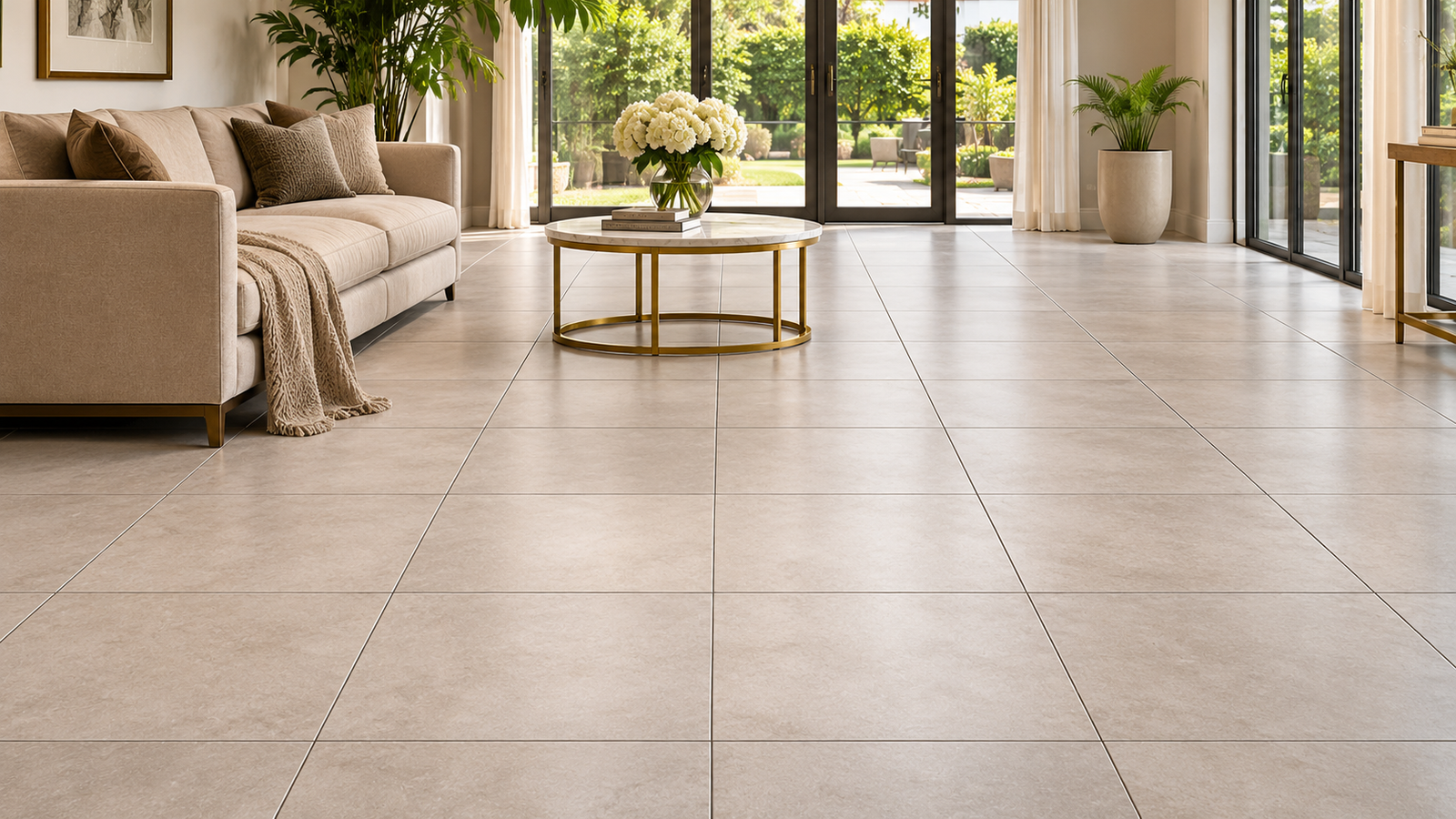
The straight lay places square or rectangular tiles in neat rows with joints aligned both ways. It is the quickest to install and the kindest to your budget, and it makes a small room feel orderly instead of busy. I would pick it for modern floor tile designs with large-format porcelain, where fewer grout lines give a calm, almost seamless look. The catch is that straight lines expose crooked walls fast.
Best suited for: Bedrooms, living rooms, kitchens and open-plan spaces.
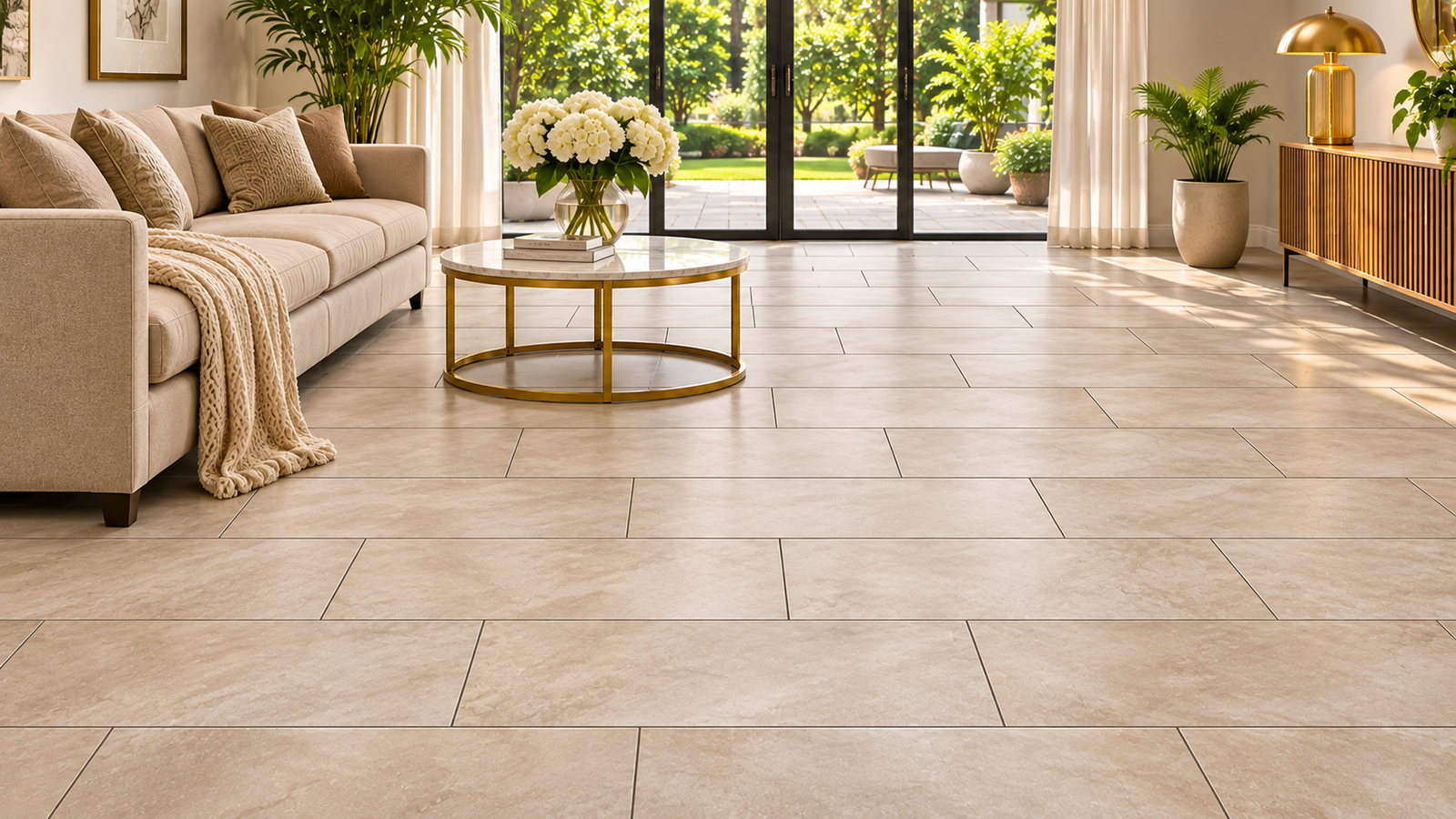
Running bond offsets each row, like bricks in a wall. It adds gentle movement without shouting, so it suits kitchens, hallways and long narrow rooms, where the lines pull the eye along the space. For long rectangular planks, use a one-third offset instead of a half, because planks can bow slightly and a half offset makes the edges sit unevenly.
Best suited for: Kitchens, living rooms, utility rooms and casual interiors.
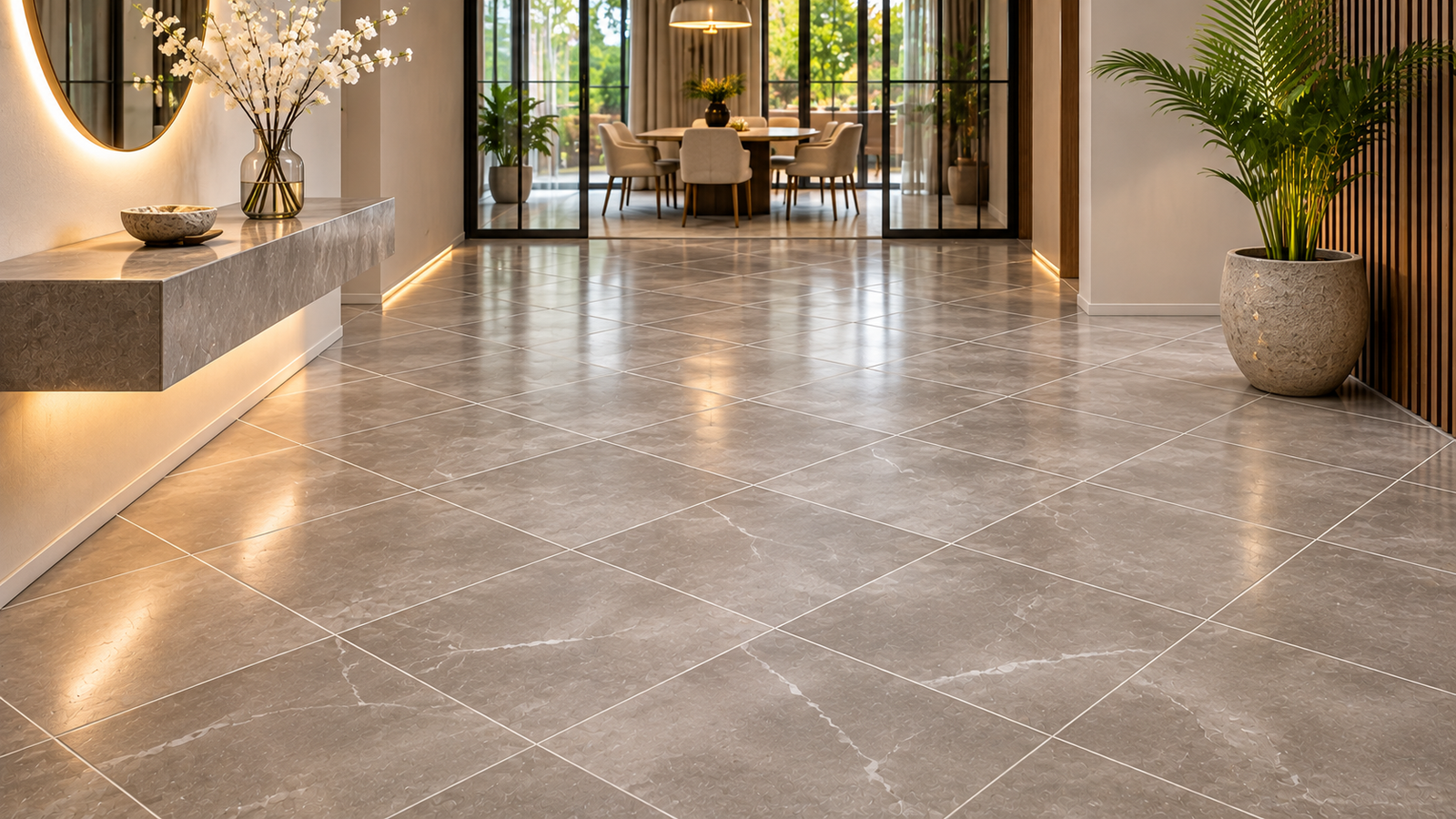
A diagonal tile layout turns square tiles 45 degrees so the corners point at the walls. It is a classic trick for making a small or boxy room feel wider, because the lines run away from the walls and blur the sense of edges. Expect more cuts and roughly 15% waste, so it costs more in material and labour. Try it in entryways and compact living rooms, where a little drama pays off.
Best suited for: Small rooms, bathrooms, kitchens and narrow spaces.
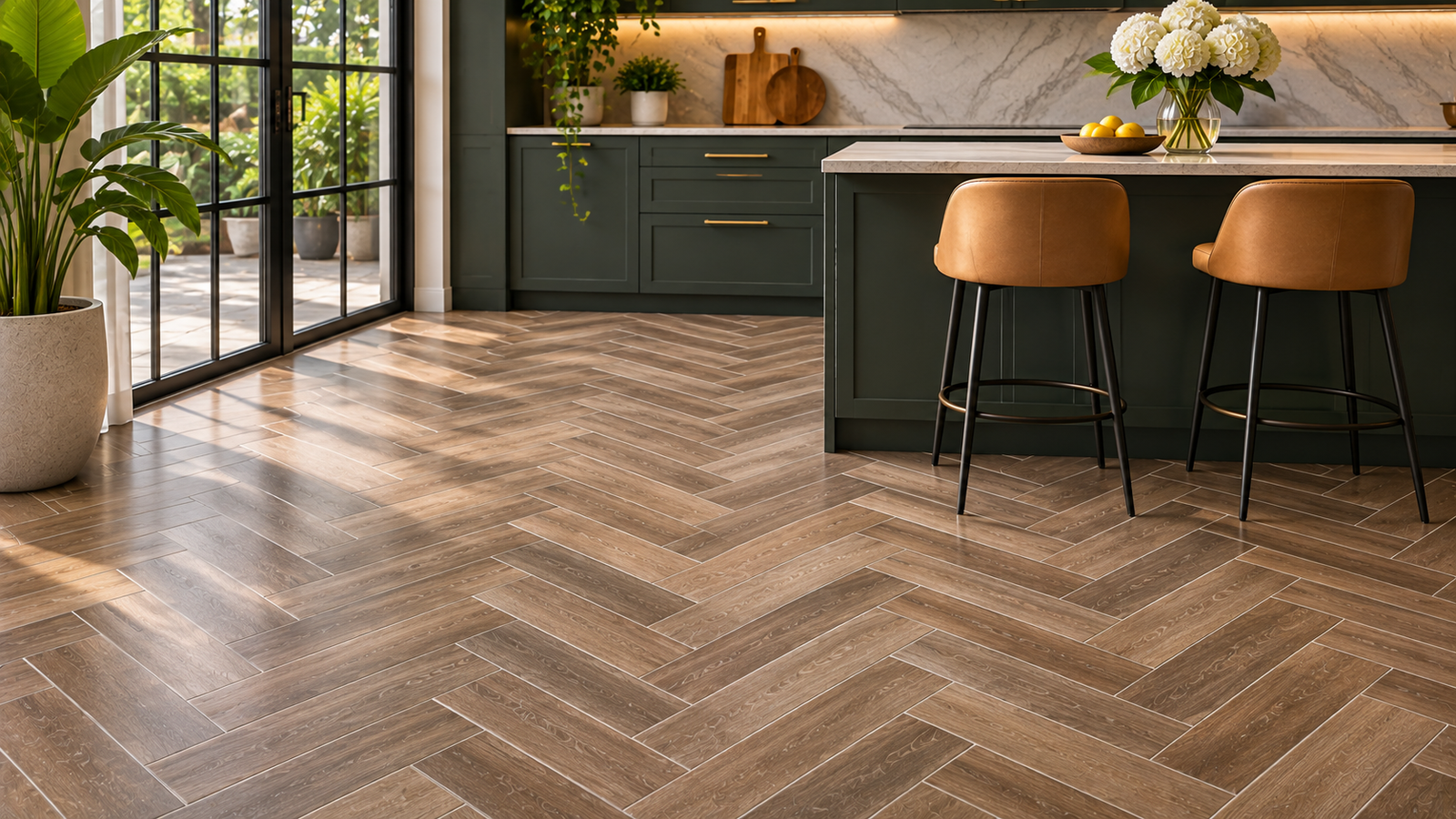
The herringbone tile pattern sets rectangular tiles at right angles in a zigzag, like the bones of a fish. It looks expensive because it takes skill: every tile needs careful alignment, and the edge cuts add up. Wood-look porcelain planks in herringbone give you the warmth of parquet without the upkeep. It works best in living rooms, halls and open-plan spaces where the floor can be the star.
Best suited for: Hallways, kitchens, living rooms and contemporary interiors.
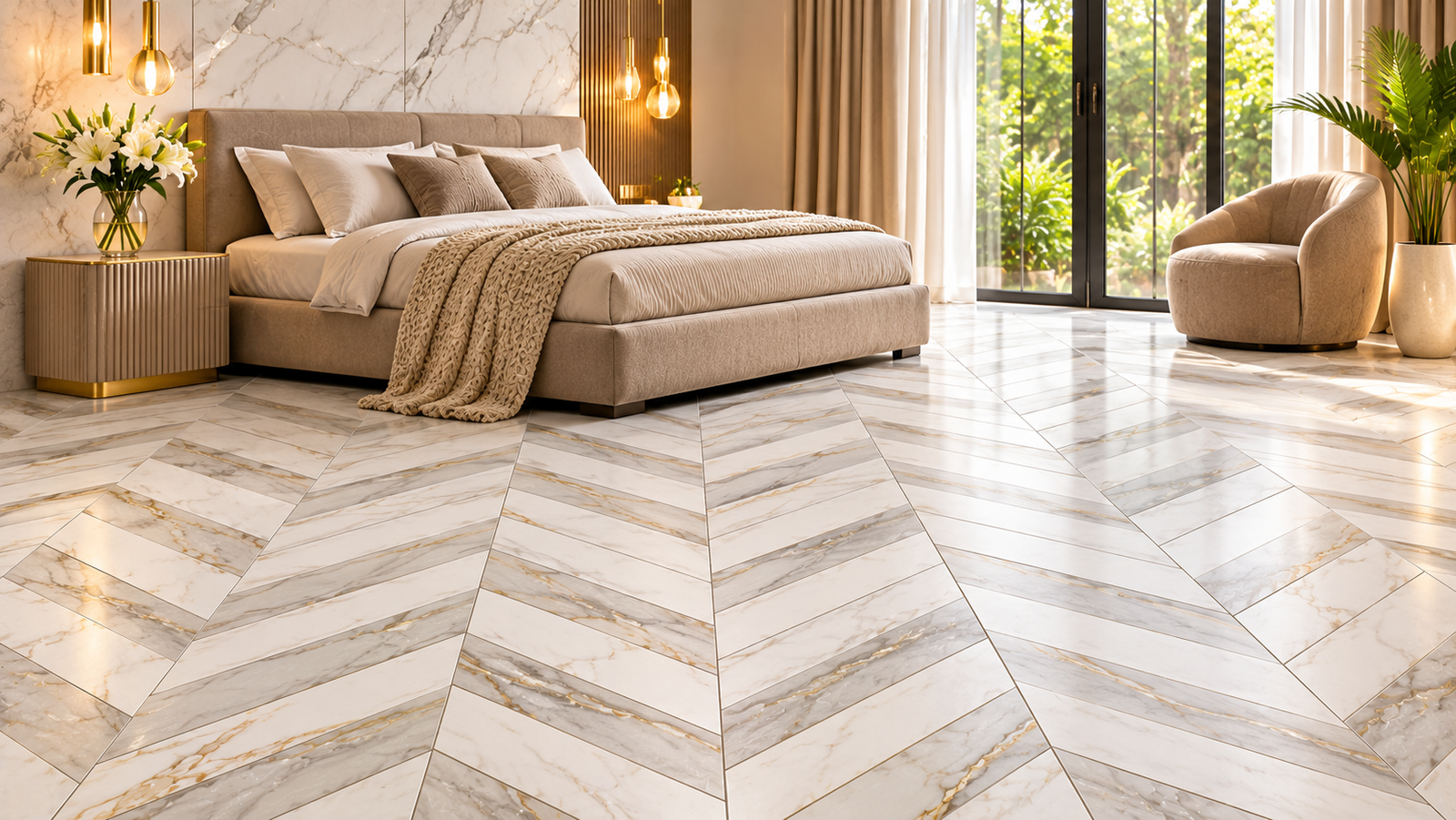
Chevron is herringbone's sharper cousin. The tile ends are cut at an angle so they meet in a clean point, forming continuous V-shapes with no broken zigzag. It reads sleeker and more modern, but it needs pre-cut mitred tiles, which cost more. Choose it for a statement hallway or bedroom, and keep the walls simple so the floor does the talking.
Best suited for: Living rooms, hallways, dining spaces and modern interiors.
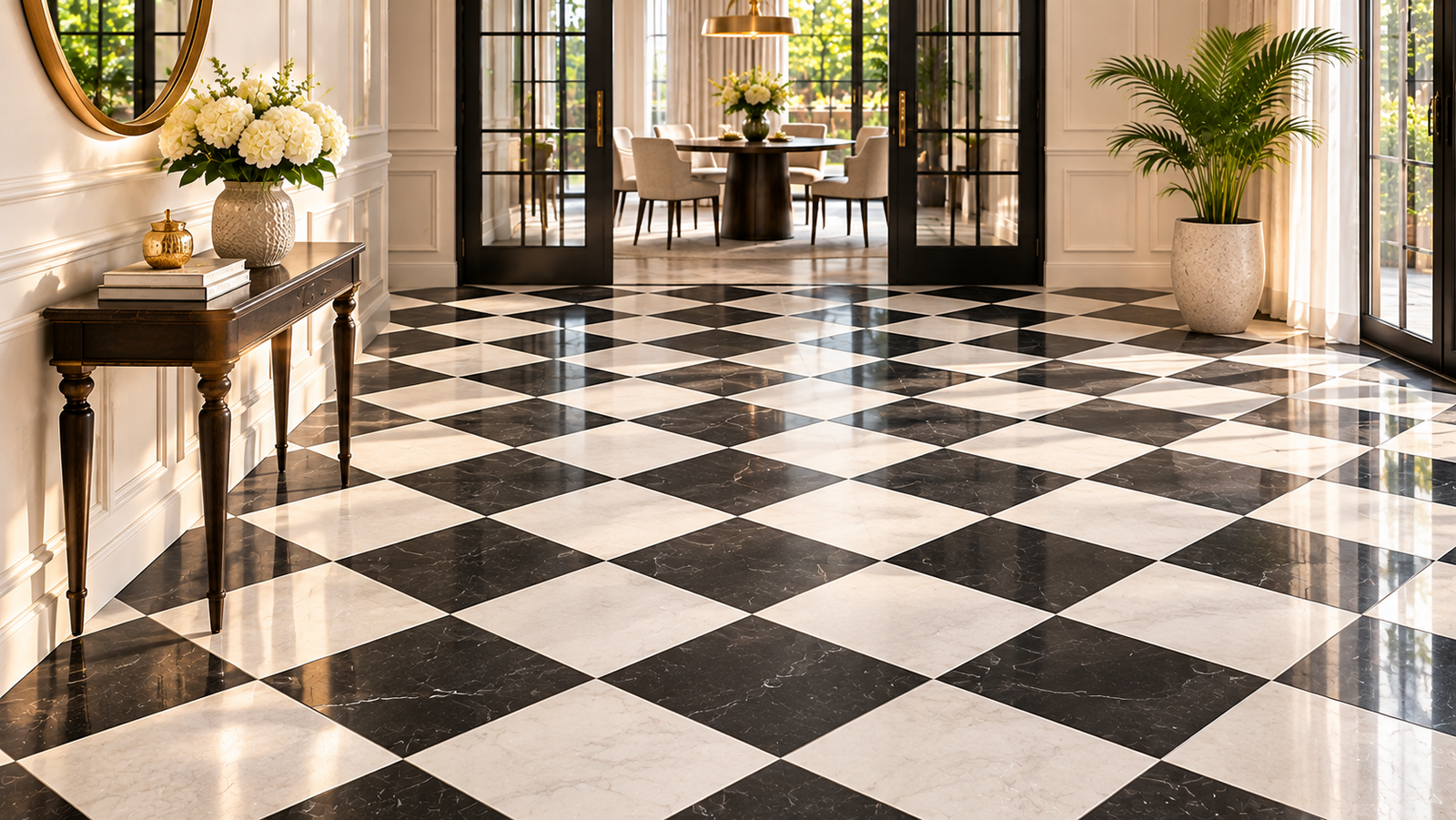
Checkerboard floor tiles alternate two contrasting colours in a square grid. Black and white is the famous version, but sage and cream, terracotta and ivory, or two soft greys feel far more current. High contrast makes a room look busier and smaller, so go low-contrast in tight spaces. It is brilliant in kitchens, bathrooms and cafés, where a little playfulness suits the mood.
Best suited for: Kitchens, bathrooms, dining rooms and classic interiors.
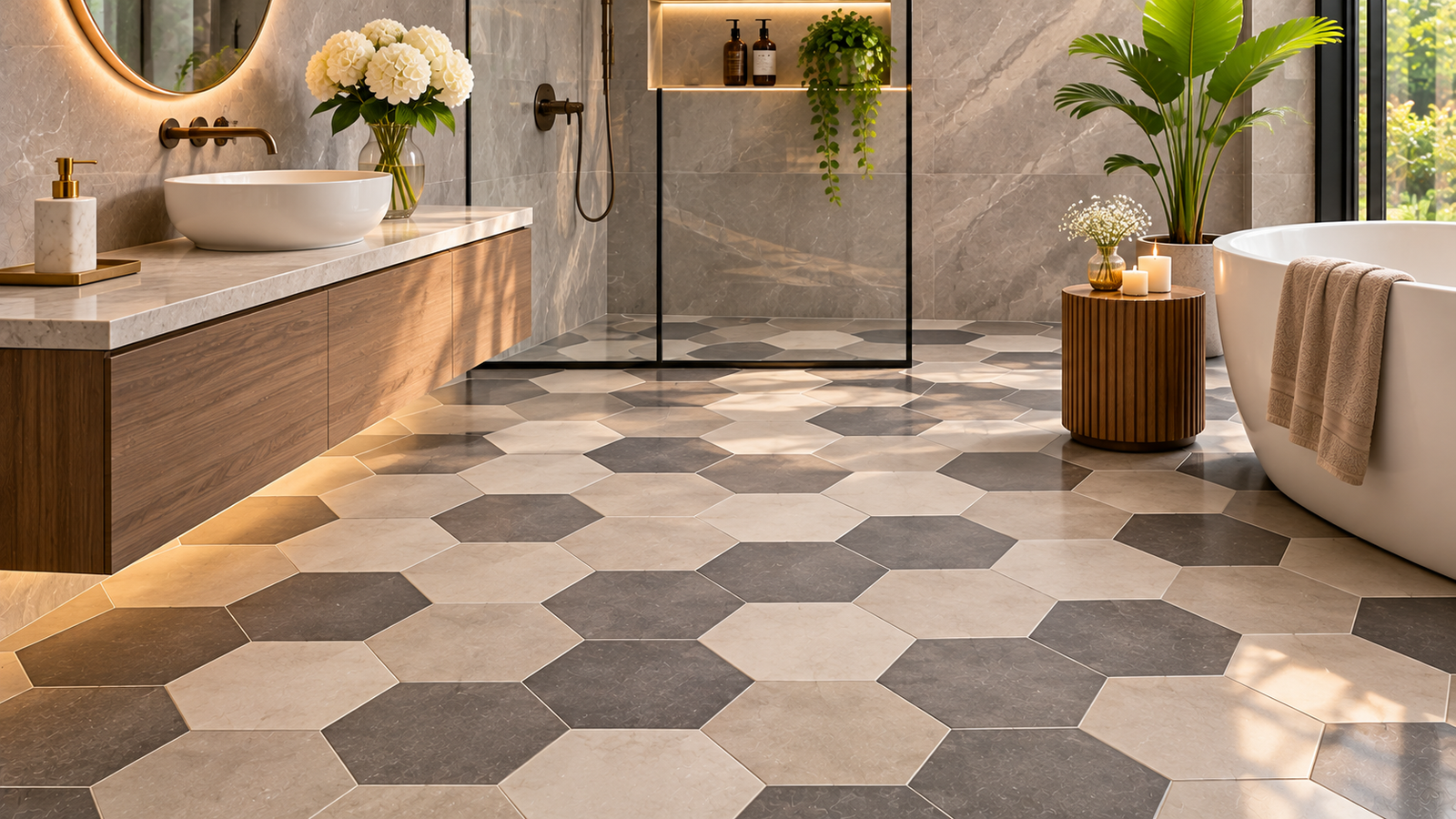
A hexagon floor tile layout fits six-sided tiles together like honeycomb. Sizes run from tiny mosaics to large format: big hexagons feel contemporary, small ones lean vintage. The many grout lines add traction, which is handy in bathrooms and entryways. Because the shape has no straight rows, it also reads as a pattern even in a single colour.
Best suited for: Bathrooms, kitchens, entryways and modern interiors.
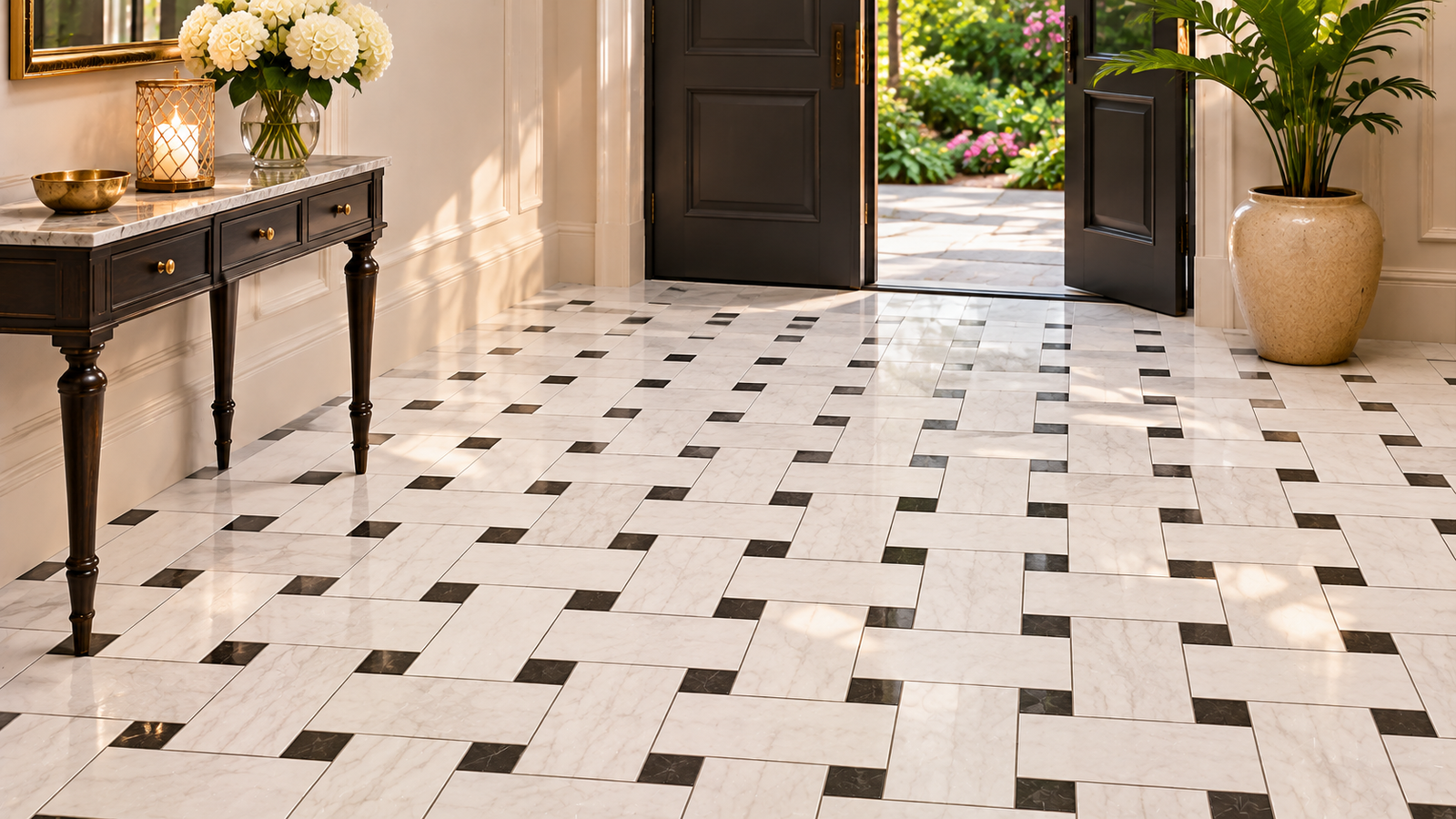
The basketweave tile pattern pairs rectangular tiles into squares, alternating horizontal and vertical pairs so the floor looks woven. It is a vintage favourite in bathrooms and entryways, usually in marble or ceramic mosaic. A small accent tile can sit where the corners meet. It is busy by nature, so keep the colours quiet, with white and grey as the classic choice.
Best suited for: Bathrooms, kitchens, traditional interiors and decorative spaces
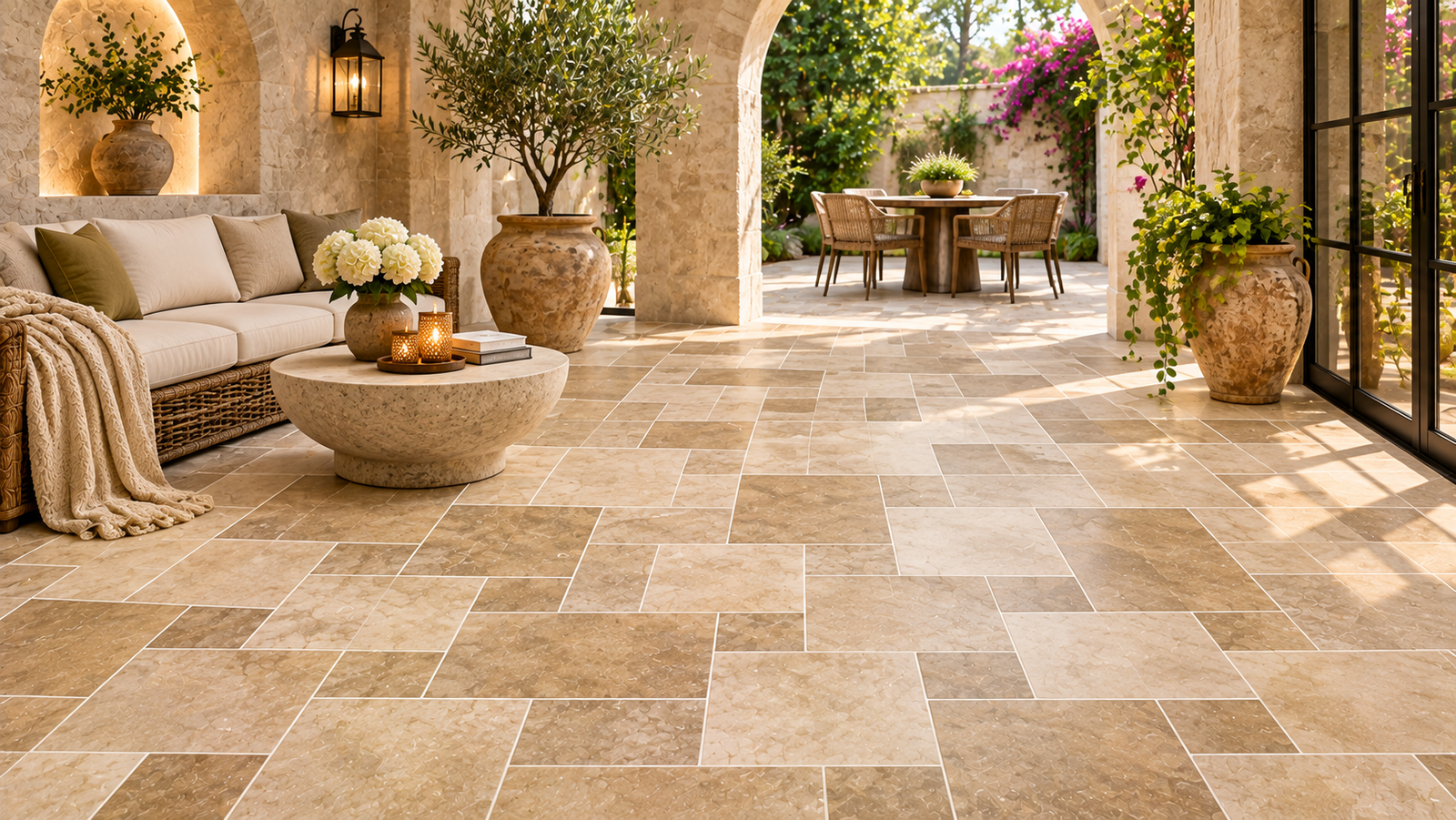
The Versailles pattern combines tiles of several sizes in a repeating module, giving the look of an old-world stone floor. It suits large rooms, such as living and dining areas, where the pattern has room to breathe. It needs a precise installer and a fixed layout kit, so it is one for people who value character over speed.
Best suited for: Large living rooms, patios, entryways and statement interiors.
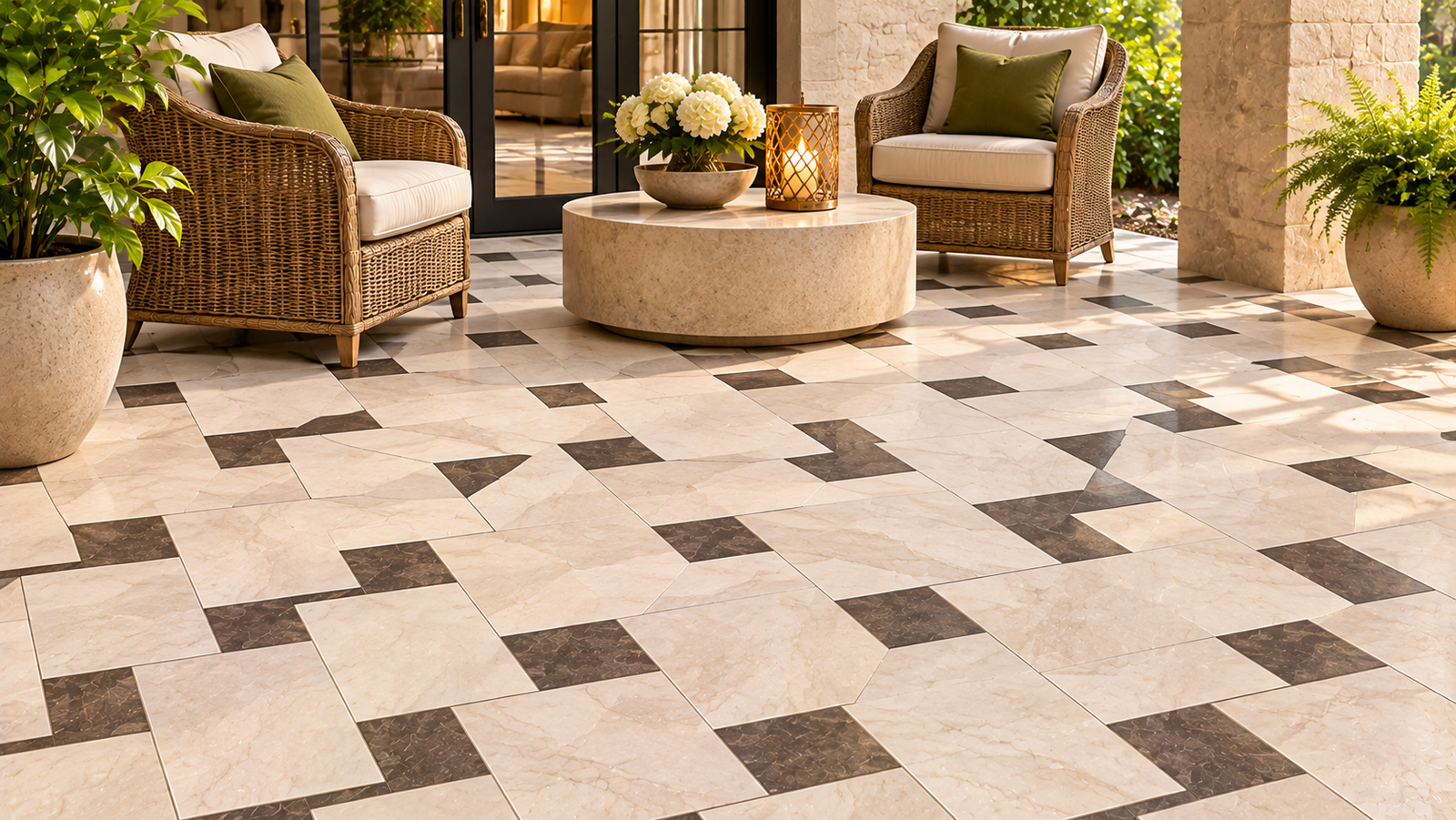
The pinwheel pattern places a small square at the centre of four rectangular tiles arranged around it. The grid is simple, but the effect is charming, like a tiny windmill repeated across the floor. It works well in bathrooms and kitchens with a cottage or heritage feel, and the small squares are a neat spot for a contrasting colour.
Best suited for: Bedrooms, kitchens, living rooms and commercial interiors.
If you skimmed the list, this table gives you the short version of the best floor tile pattern ideas. The waste figures are typical allowances, so confirm them with your installer.
|
Pattern |
Typical waste |
Install difficulty |
Best for |
|
Straight lay |
About 10% |
Easy |
Small rooms, large-format tiles |
|
Running bond |
10–12% |
Easy to moderate |
Kitchens, hallways |
|
Diagonal |
About 15% |
Moderate |
Entryways, boxy rooms |
|
Herringbone |
15–20% |
Hard |
Living rooms, open plans |
|
Hexagon |
10–15% |
Moderate |
Bathrooms, entryways |
|
Checkerboard |
About 10% |
Easy to moderate |
Kitchens, cafés |
Start with the room, not the pattern. A floor tile design that looks stunning in a magazine can fall flat if it fights your layout, so match your tile layout patterns to the space using a few simple rules.
Small rooms: go for diagonal or straight lay in low-contrast colours to open the space up.
Long, narrow rooms: run the pattern along the length, using running bond or herringbone.
Large rooms: patterns like Versailles or large-format herringbone have room to show off.
Wet areas: pick small tiles such as hexagon or basketweave, because the extra grout lines help grip.
Safety is part of pattern choice too. The U.S. Occupational Safety and Health Administration lists slips, trips and falls among the most common causes of serious workplace injuries, and the same logic applies at home. Check the slip rating on any tile for a bathroom or kitchen; the ANSI A137.1 standard uses a wet DCOF of 0.42 as the benchmark for level interior floors. If you are weighing options for the heart of the house, our guide to kitchen floor tile ideas is a good next read.
Modern floor tile designs lean on large formats, such as 600 x 1200 mm tiles, and on fewer visible lines. The bigger the tile, the calmer the floor, so pair big tiles with bold patterns and small tiles with quiet ones. A busy mosaic plus a busy wall is how rooms start to feel like a carnival.
Grout colour is the quiet hero of floor tiles design for home projects. Matching the grout to the tile softens the pattern and makes the floor feel larger. Contrasting grout does the opposite: it outlines every tile and turns a plain layout into a graphic one. I usually tell people to choose grout last, but test it first, because it changes the personality of the floor more than most people expect.
Tile flooring patterns look very different in your room than on a sample board. Light from your windows, the colour of your walls and the size of your room all change the effect. For any floor tiles design for home project, the cheapest way to avoid a costly mistake is to preview the layout digitally. With the Tilesdisplay visualizer you can try different tiles and patterns in a 3D view of your own space, so you can compare a diagonal layout with a straight one in minutes instead of imagining it. Tiles are hard to undo, and a preview costs nothing.
The straight lay is the most common, because it is simple, affordable and works with almost any tile size. Among statement floor tile pattern ideas, herringbone has been one of the most requested patterns in recent years, especially with wood-look porcelain.
A diagonal layout usually makes a small room feel wider, because the lines point away from the walls. Large-format tiles with thin grout lines in a light, matching colour also help, since fewer breaks make the floor look continuous.
The straight lay is typically the cheapest, with the least waste and the fastest installation. Running bond and checkerboard come next. Herringbone, chevron and Versailles cost the most, mainly because of extra cutting and skilled labour.
Plan for about 15% extra for diagonal layouts and 15 to 20% for herringbone or chevron, compared with roughly 10% for a straight lay. Your installer can give an exact figure after measuring the room, and a few spare tiles are useful for future repairs.
Yes, you can mix tile layout patterns as long as you keep a consistent thread, such as a shared colour family or material. A common approach is a quiet straight lay in main areas and a statement pattern such as hexagon in the bathroom or entryway. Transition strips keep the change tidy.
The best floor tile patterns are the ones that suit your room, your budget and your taste. Straight lay and running bond are easy and affordable, diagonal opens up small spaces, herringbone and chevron bring drama, and hexagon, checkerboard, basketweave, Versailles and pinwheel add personality. Remember that tile flooring patterns differ in cost, so check waste, slip ratings and grout colour before you commit.
If you want help turning ideas into a floor you will love, we would be glad to hear from you. Contact the Tilesdisplay team to explore your options, or try our visualizer and see your favourite pattern in your own room today.