

Elevate Your Interiors
with Trendy Tiles Display
Tiles That Speak the Language of Design.
14th Nov, 2026
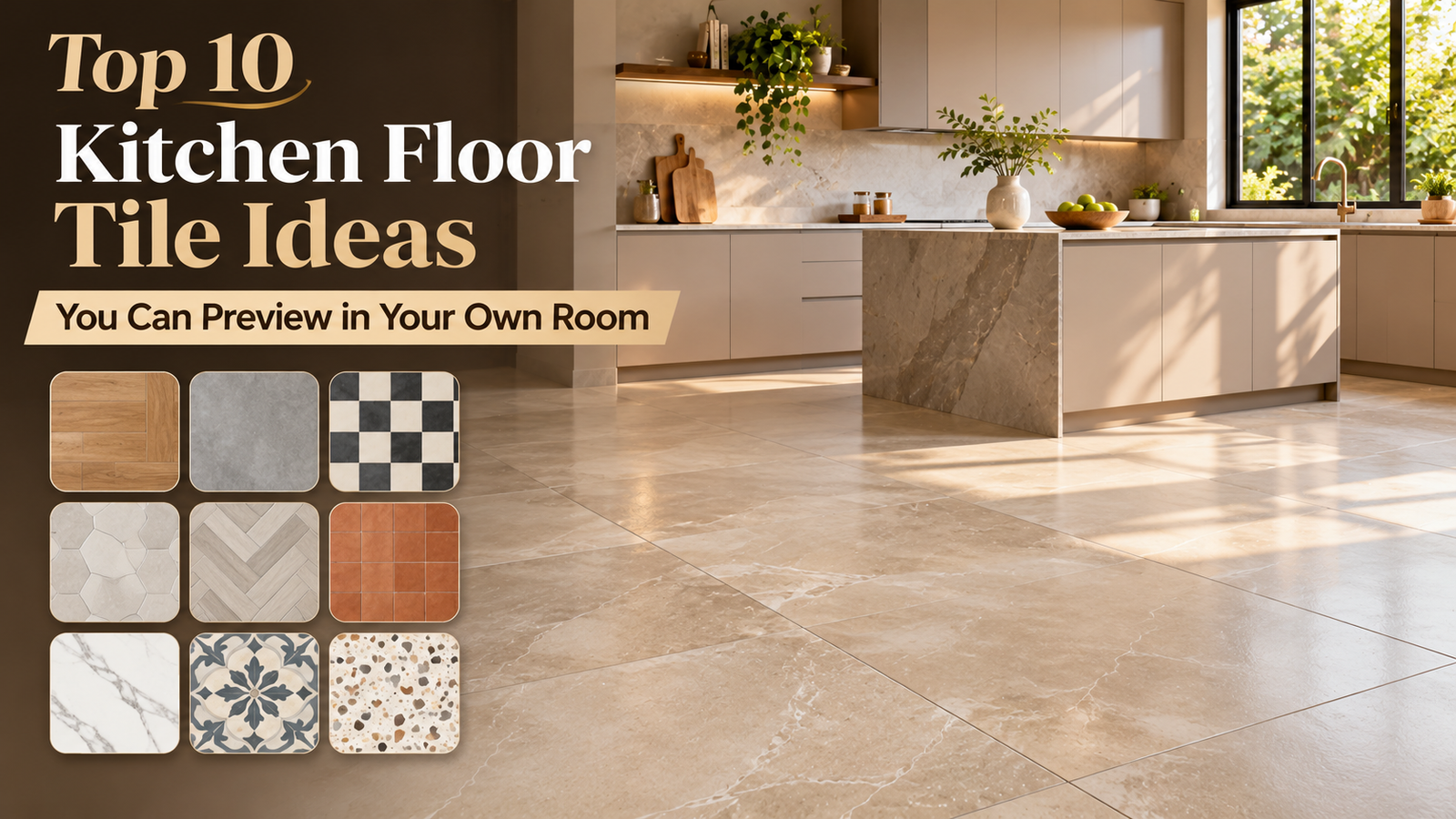
The kitchen is the hardest-working room in your home. It handles boiling water, spilled oil, dropped plates and the occasional late-night dance in socks. So the floor has to look good and survive all of it, which makes choosing kitchen floor tiles part style decision and part survival strategy.
The good news is that you do not have to guess. In this guide I will walk you through ten kitchen floor tile ideas, explain how to choose between matte and glossy finishes, and show how to combine tile colours with cabinets. Along the way you will pick up kitchen flooring ideas that go beyond the usual white square. You can also preview tiles in your own kitchen with the Tilesdisplay tile visualizer before you buy a single box.
Before the pretty part, run three practical checks. First, slip resistance. Wet floors are the main kitchen hazard, so look for anti-skid kitchen tiles with a textured or matte surface. In the United States, the ANSI A137.1 standard uses a wet DCOF of 0.42 as the benchmark for level interior floors, which is a useful number to ask your dealer about.
Second, durability. Porcelain kitchen tiles absorb 0.5% or less water, so they resist stains and moisture better than most ceramic tiles. Third, size and grout. Large tiles mean fewer grout lines to scrub, and epoxy grout resists oil and stains better than standard cement grout. Get these three right, and the best tiles for kitchen floor use will almost choose themselves.
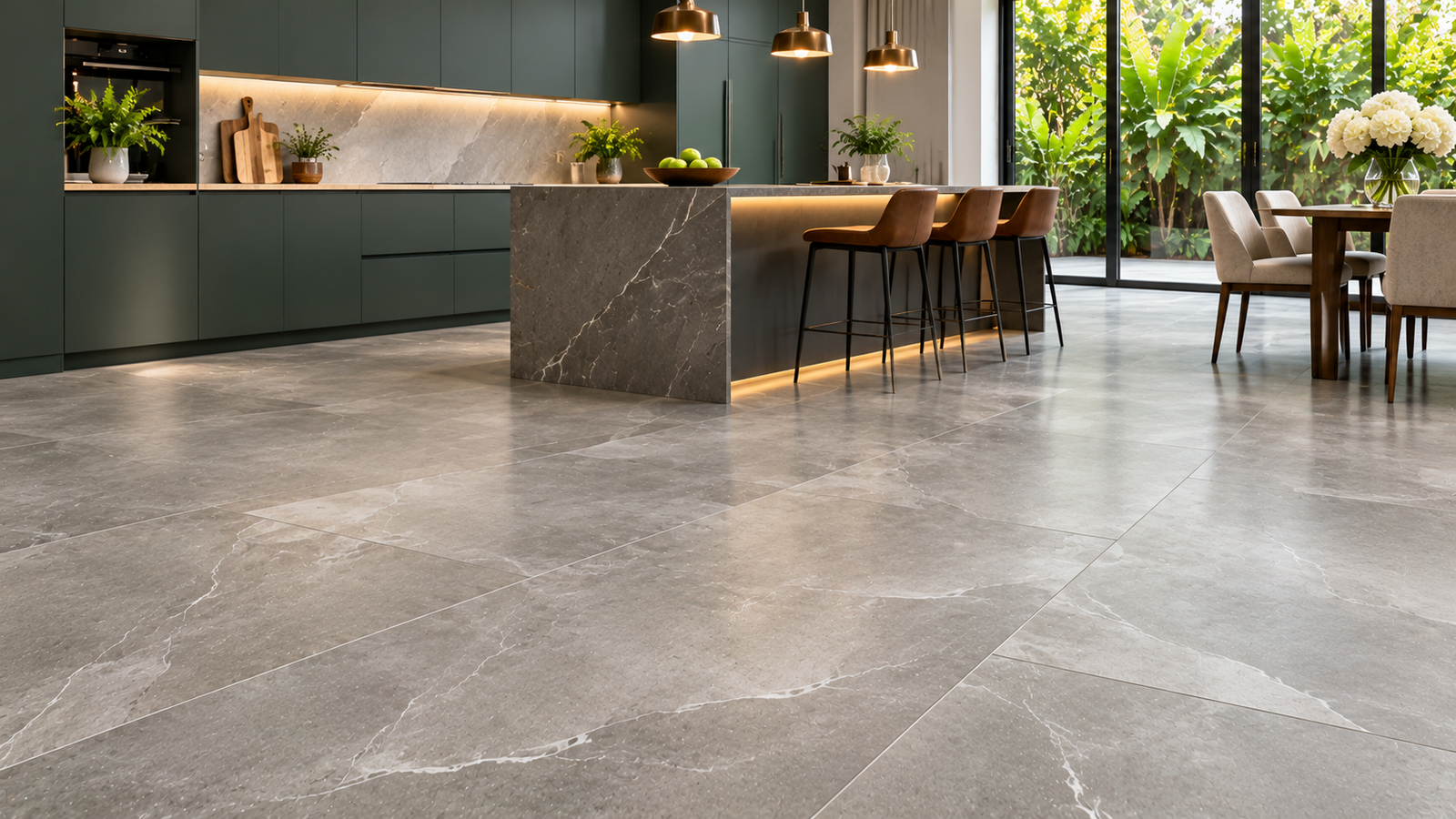
Big tiles, such as 600 x 1200 mm, cut down on grout lines and make a kitchen look bigger and calmer. Stone-look porcelain gives you the richness of slate or limestone without the sealing and staining worries. Many ranges come as anti-skid kitchen tiles with a textured surface. It is one of the best kitchen flooring ideas for open-plan homes, and a great base for bold cabinets.
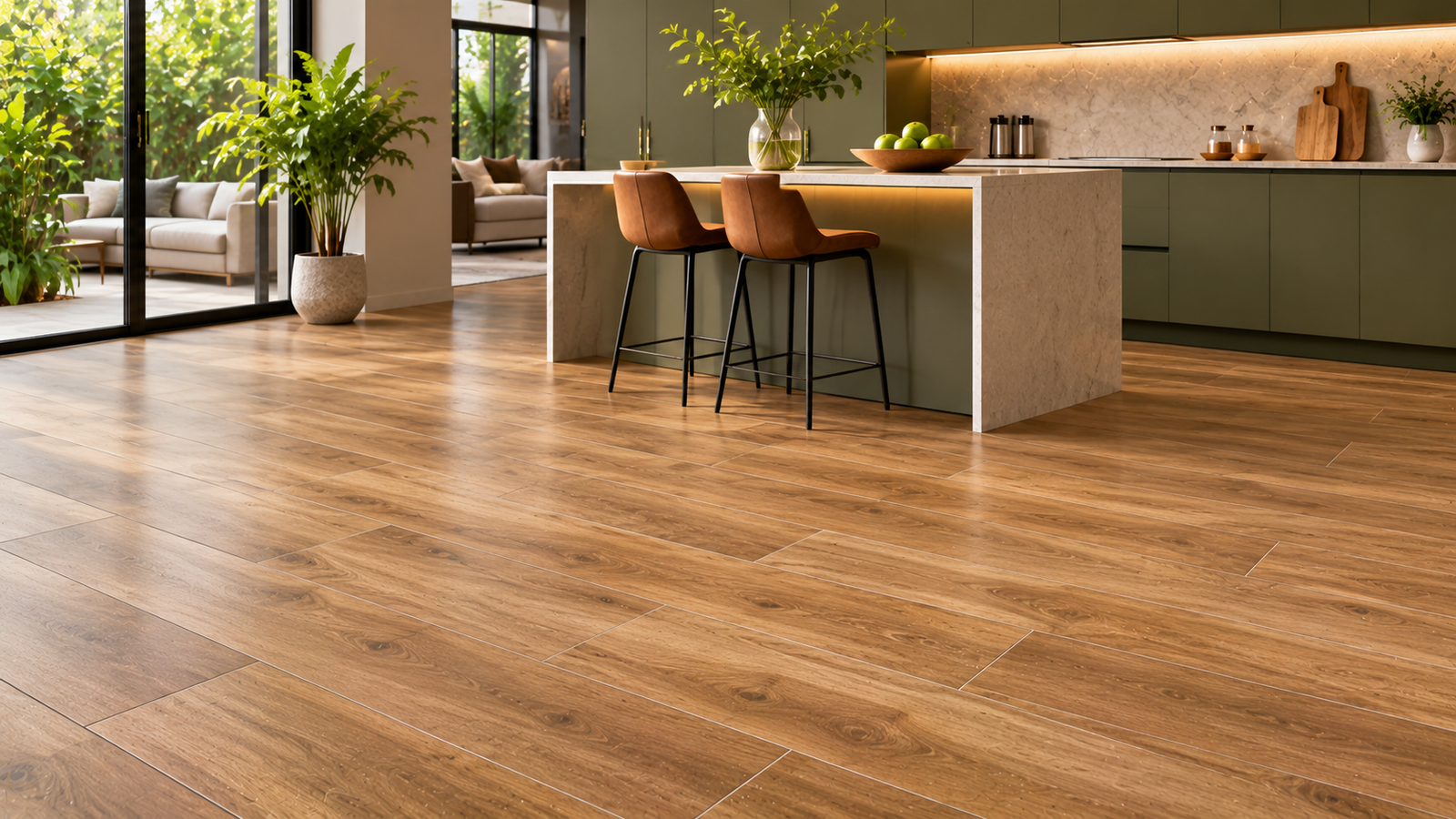
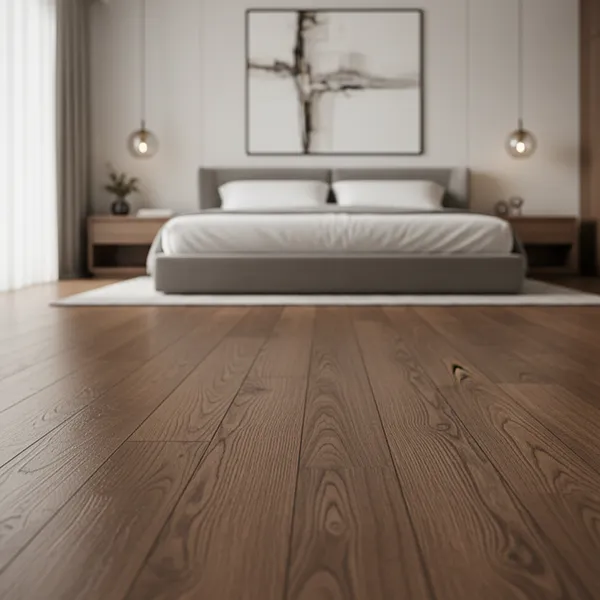
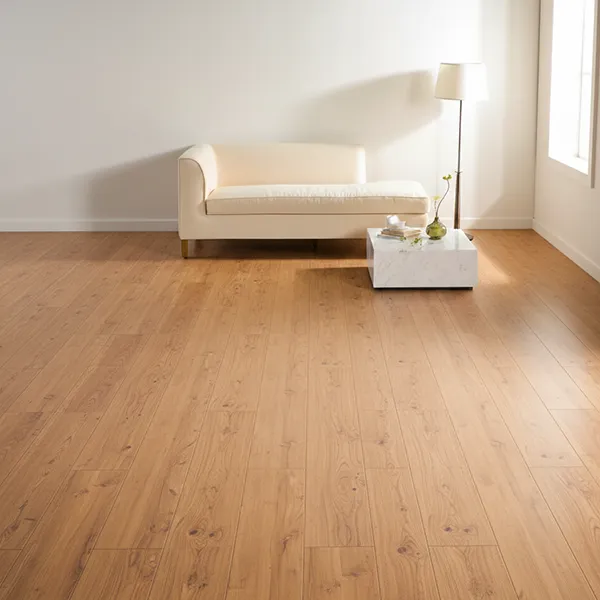
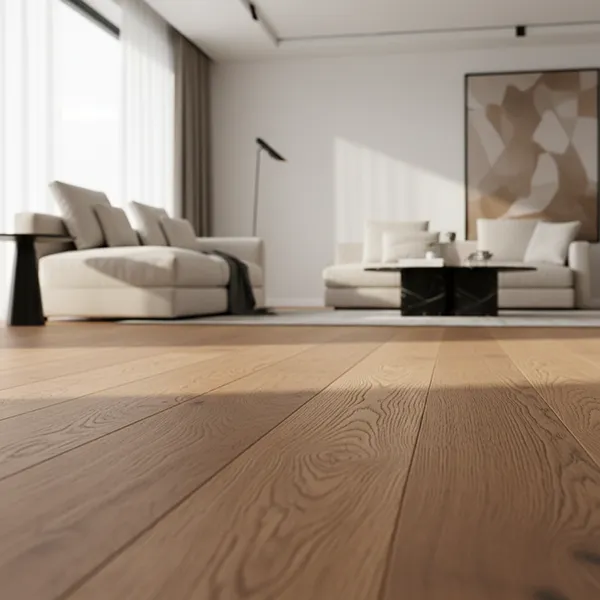
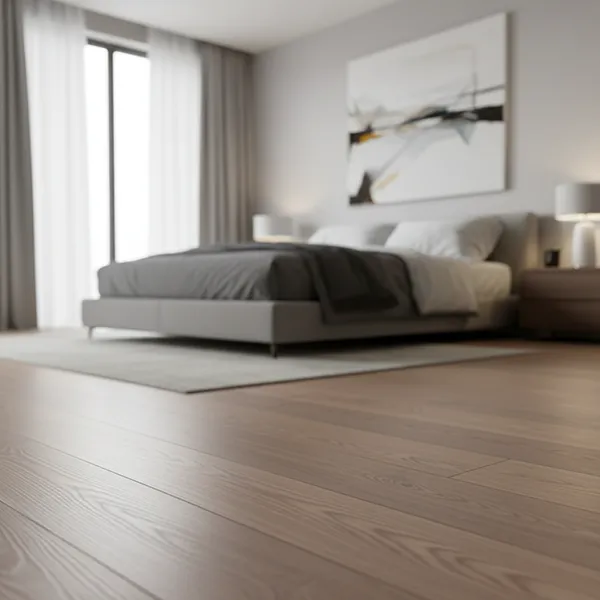
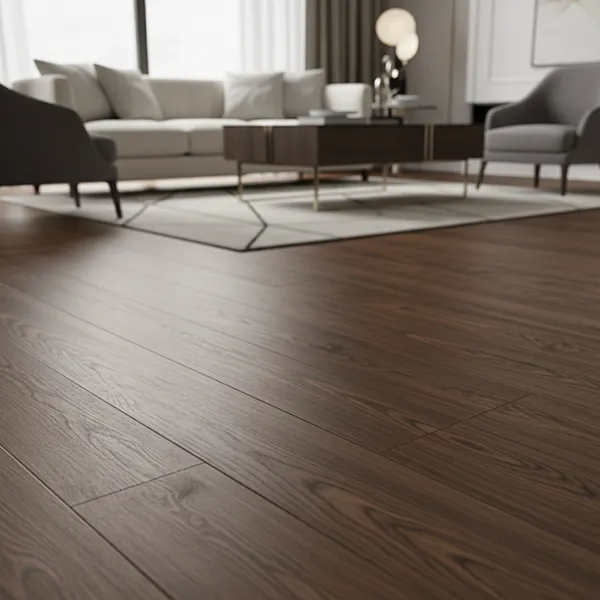
You get the warmth of timber with none of the water worries. Plank tiles in oak or walnut tones make a kitchen feel cosy and flow smoothly into a wooden living room floor. Choose a matte, textured finish and a rectified edge, so the grout lines stay thin.
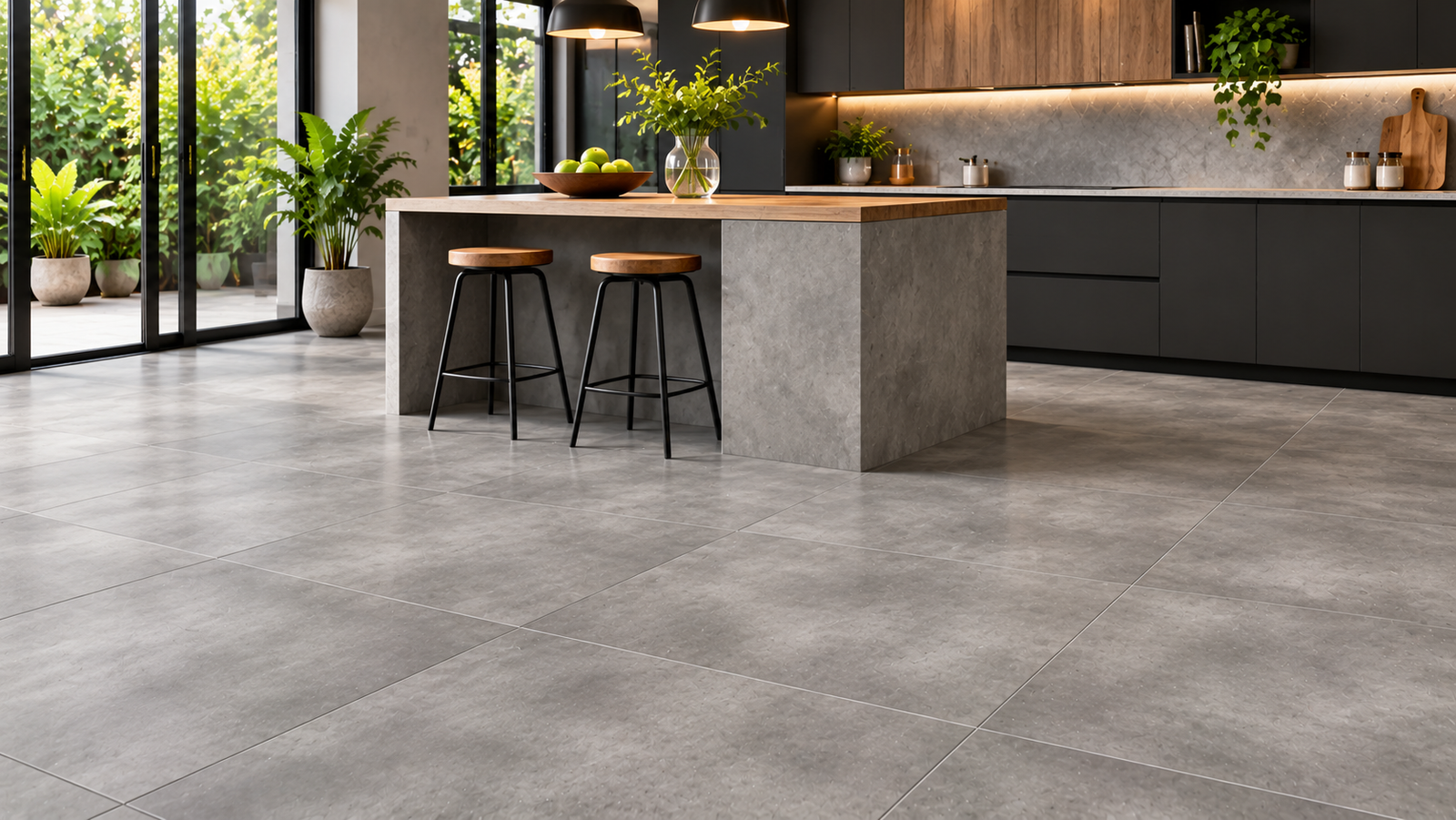
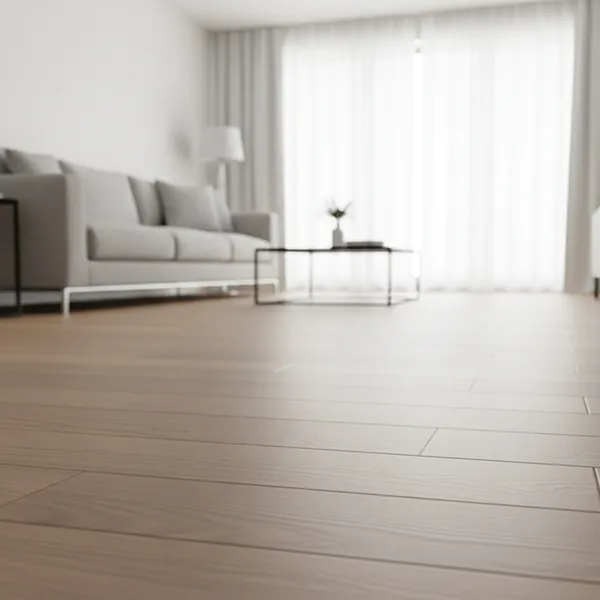
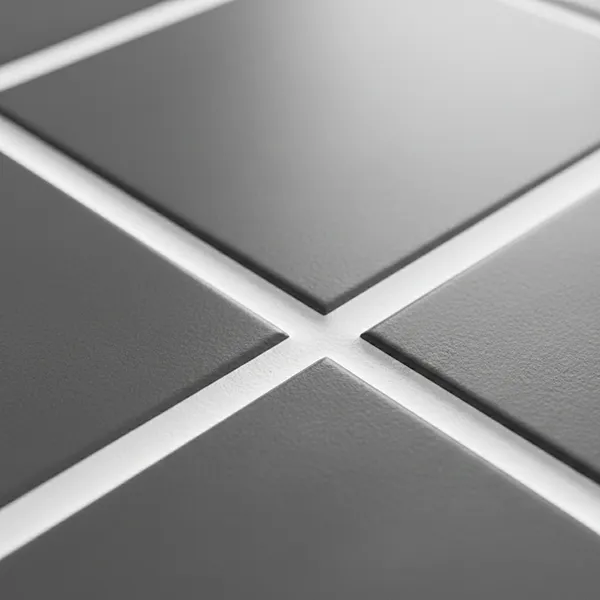
Soft grey, cloudy porcelain kitchen tiles give you an industrial, gallery feel. They hide crumbs and footprints well and pair beautifully with white, black or wooden cabinets. They are a staple of modern kitchen floor tiles and one of the safest picks for busy households.
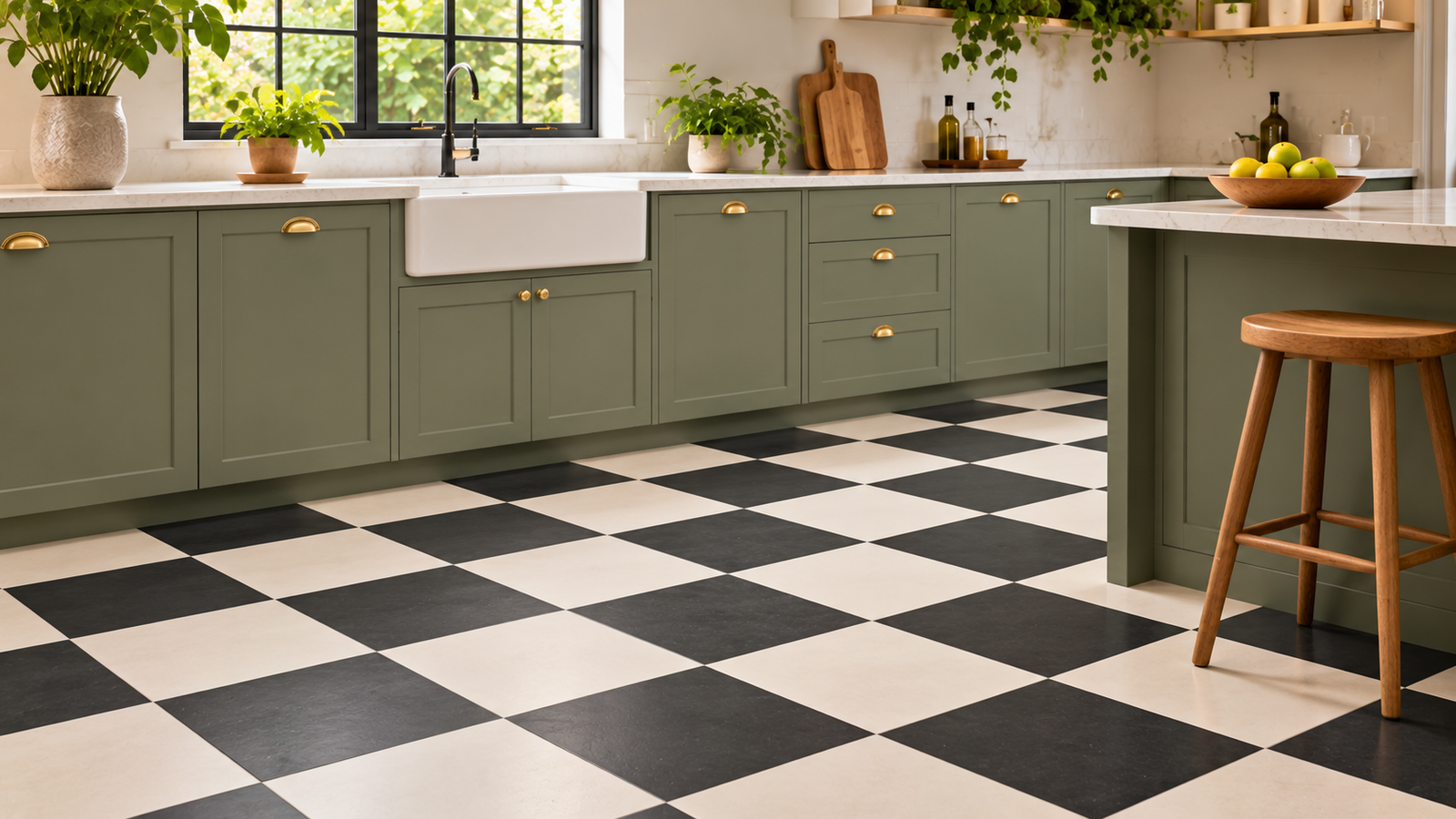
A checkerboard floor gives a kitchen instant personality. Classic black and white feels retro, while sage and cream or two soft greys feel current. Keep the cabinets simple, because the floor is already doing the talking.
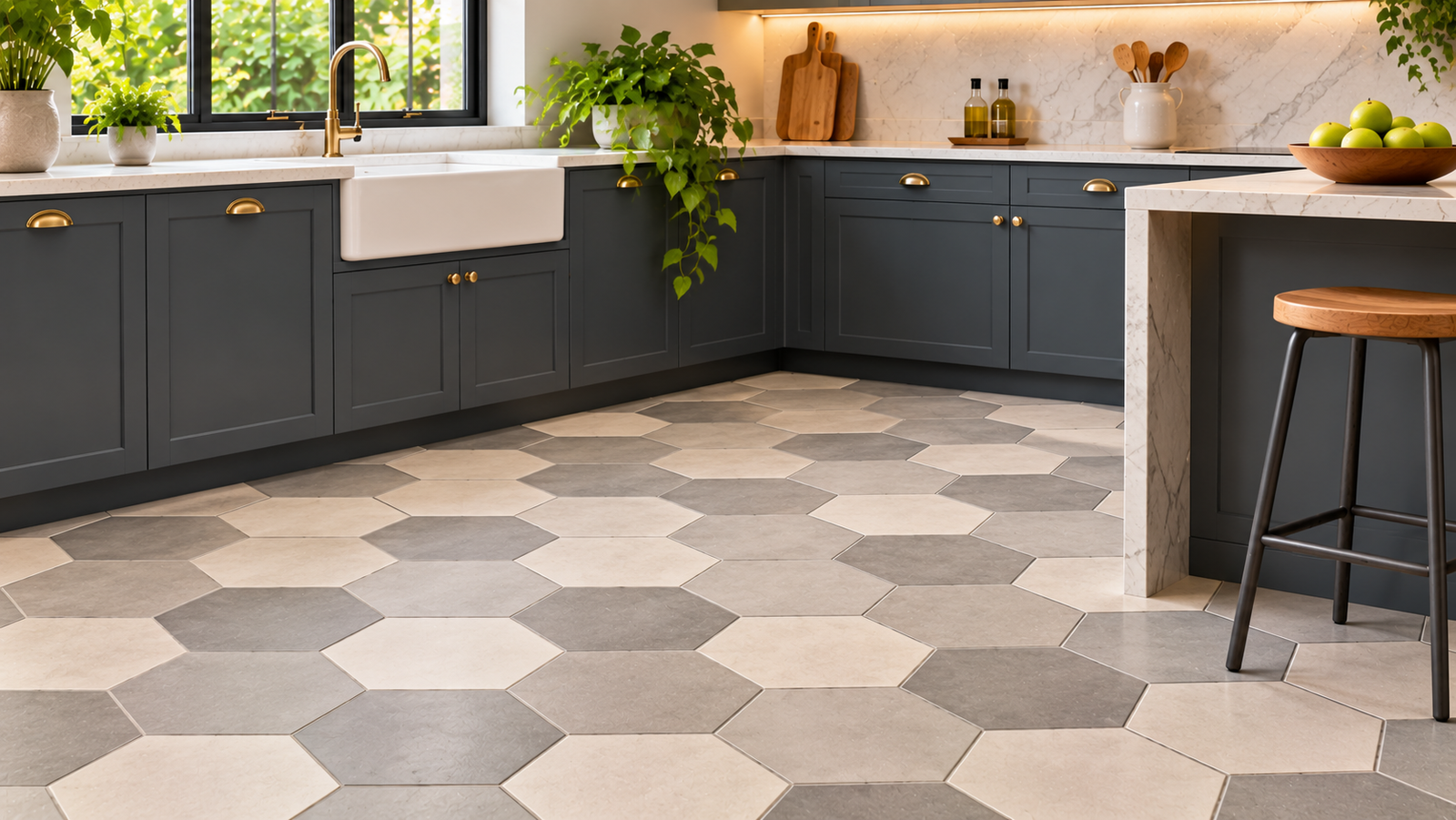
Hexagon tiles bring a honeycomb pattern that suits both vintage and contemporary kitchens. The extra grout lines add grip, and small sizes handle corners and curves neatly. Use a mid-tone grout to hide stains.
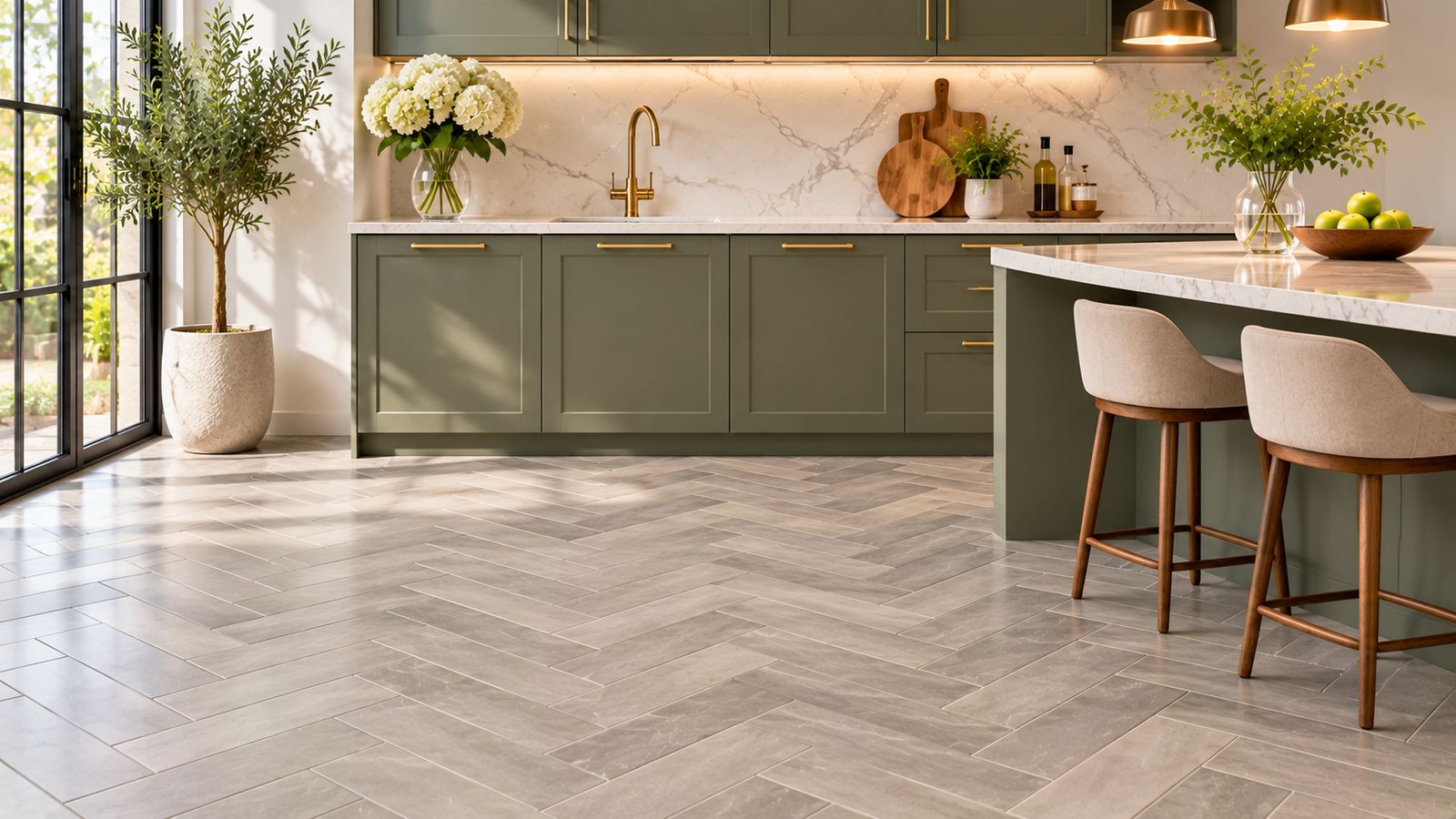
Herringbone adds movement and a touch of luxury. Use narrow rectangular tiles in a neutral tone, so the pattern is visible but not loud. It costs more to lay because of the extra cuts, but it lifts a plain kitchen. Our guide to floor tile patterns shows more layouts to try.
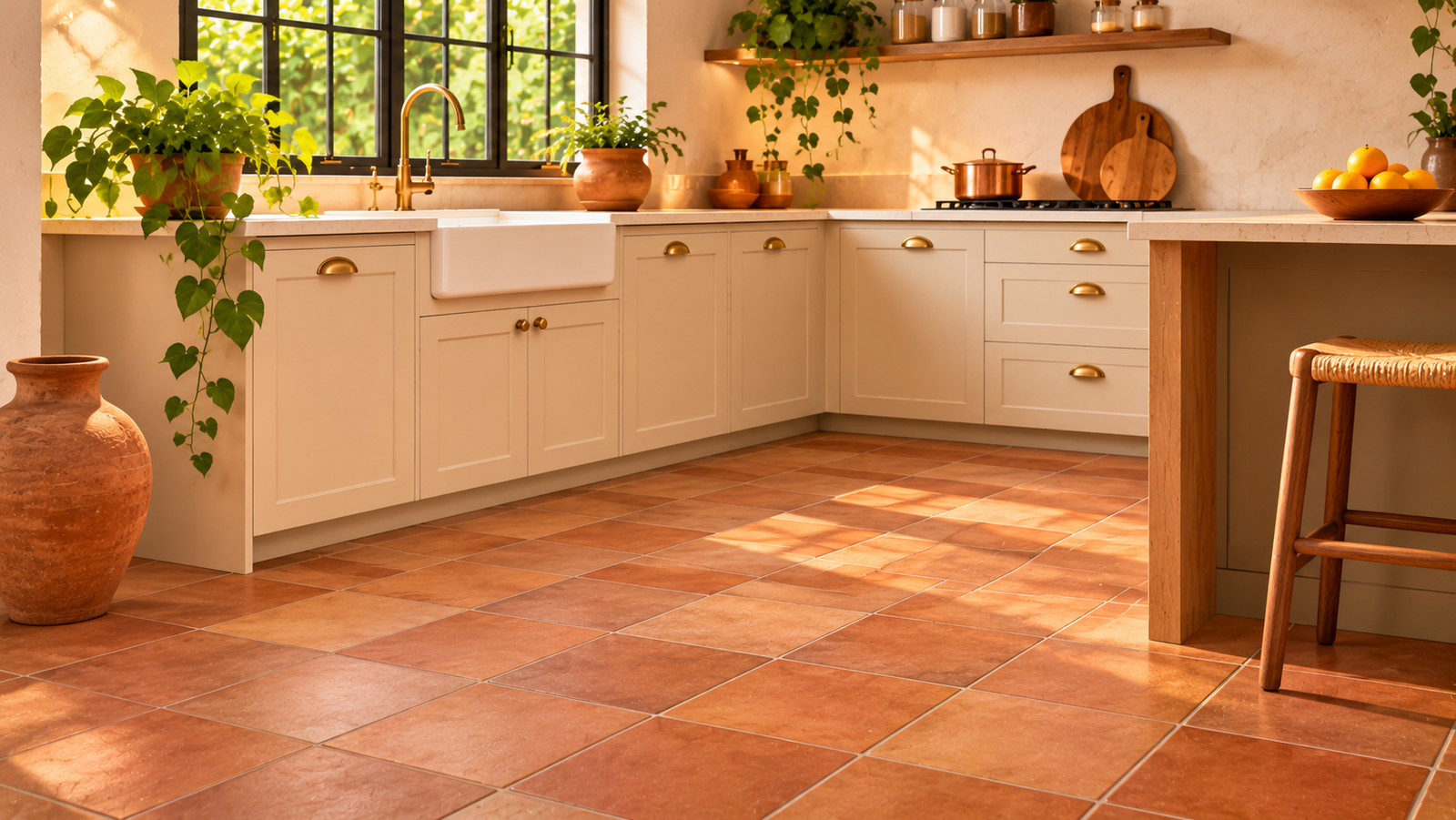
Warm terracotta and clay-toned tiles suit rustic, Mediterranean and Indian-style kitchens. Choose glazed or sealed versions, because unglazed terracotta absorbs stains. Pair them with cream walls and brass handles for a golden-hour feel.
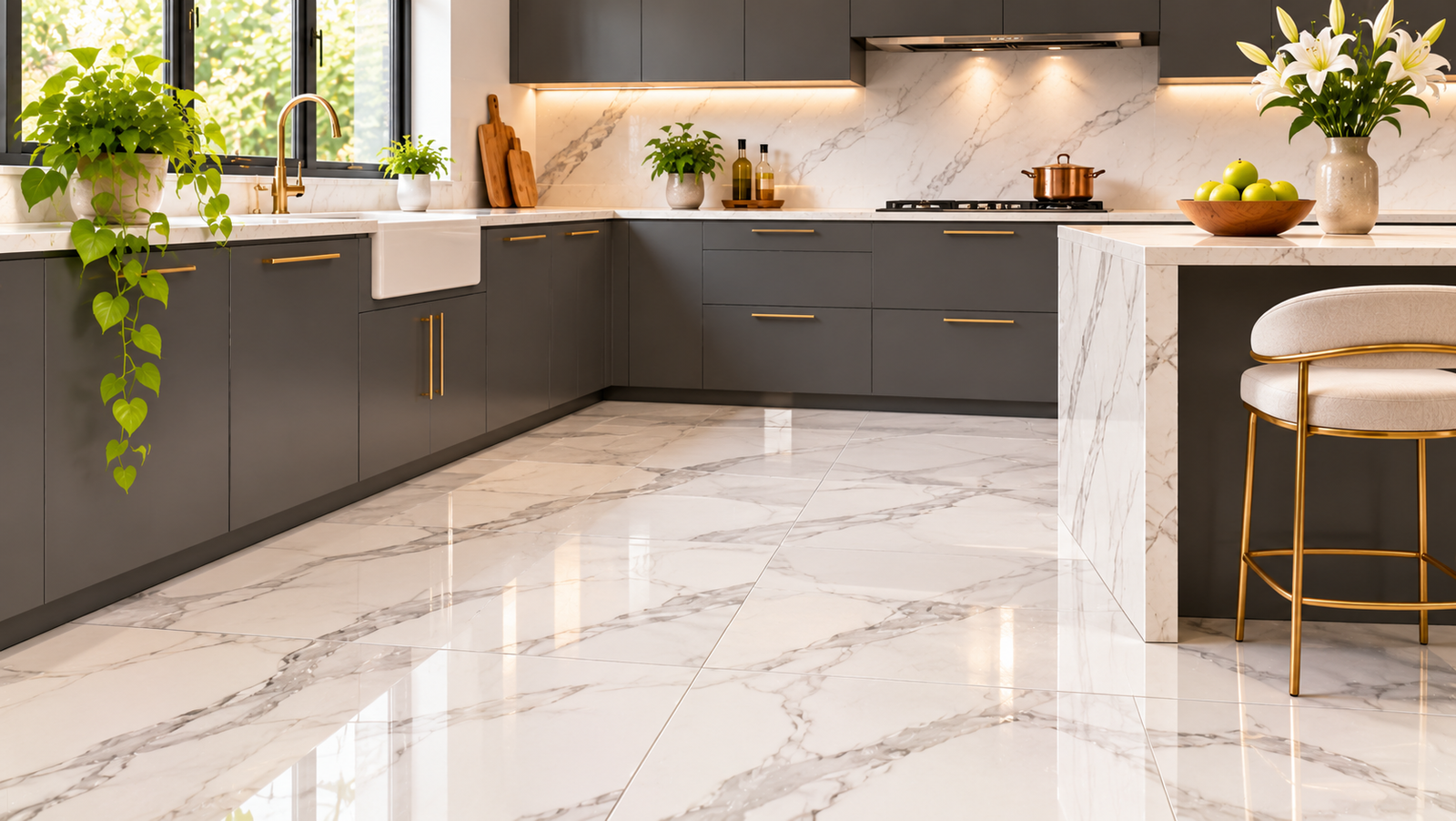
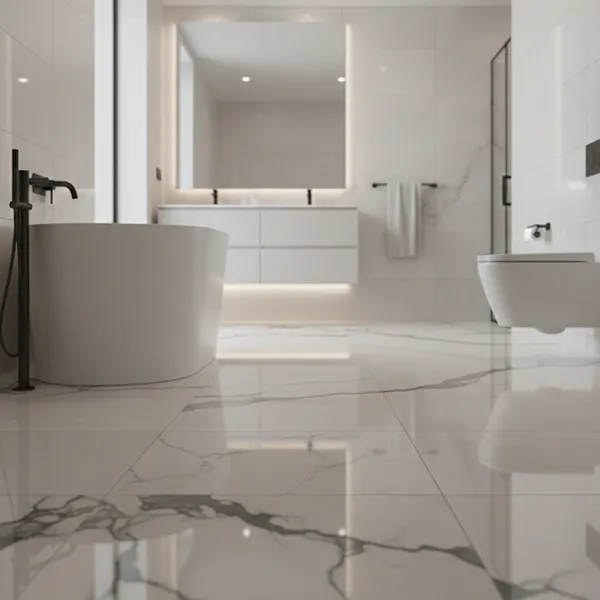
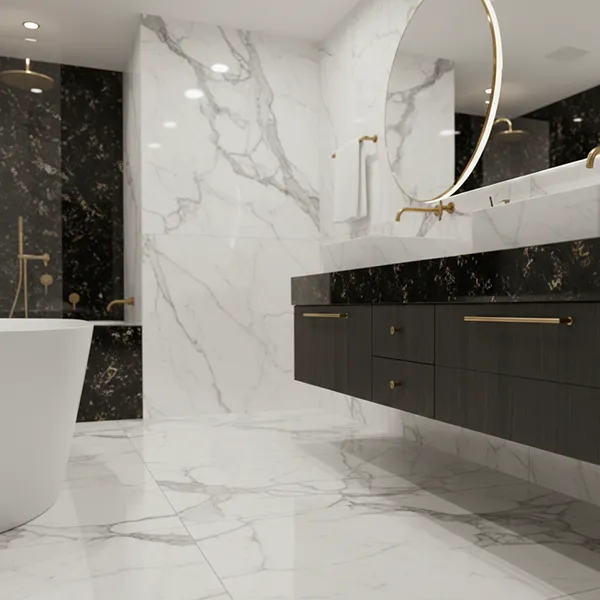
Real marble stains easily from lemon juice and wine, which is not ideal in a kitchen. Marble-look porcelain gives you the veining and elegance, with far better stain resistance. White and grey marble looks brighten dark kitchens.
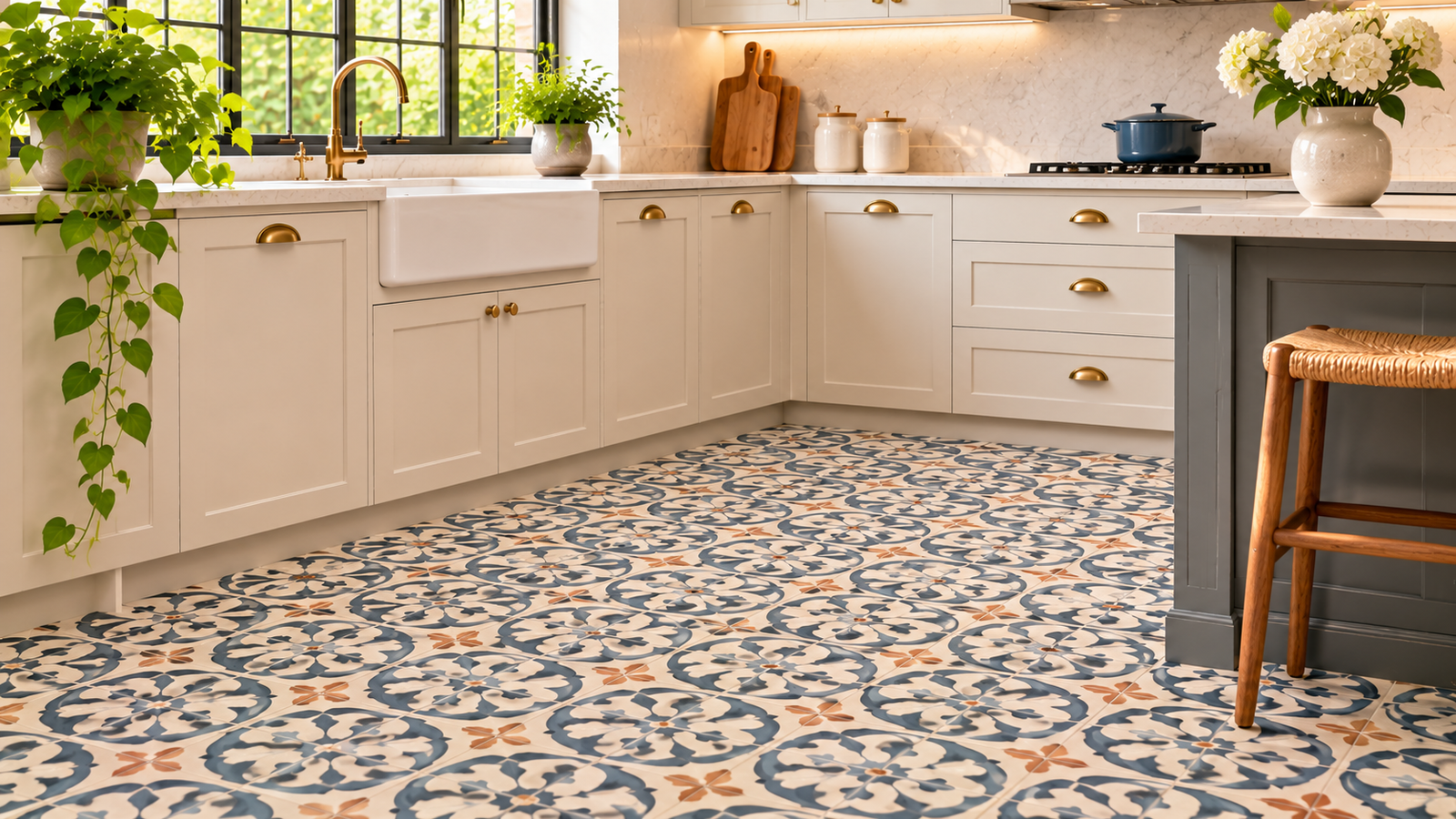
Tiles with geometric or floral prints make the floor the star of the room. Use them with plain cabinets and walls, or limit them to a zone, such as the dining nook or the area in front of the sink.
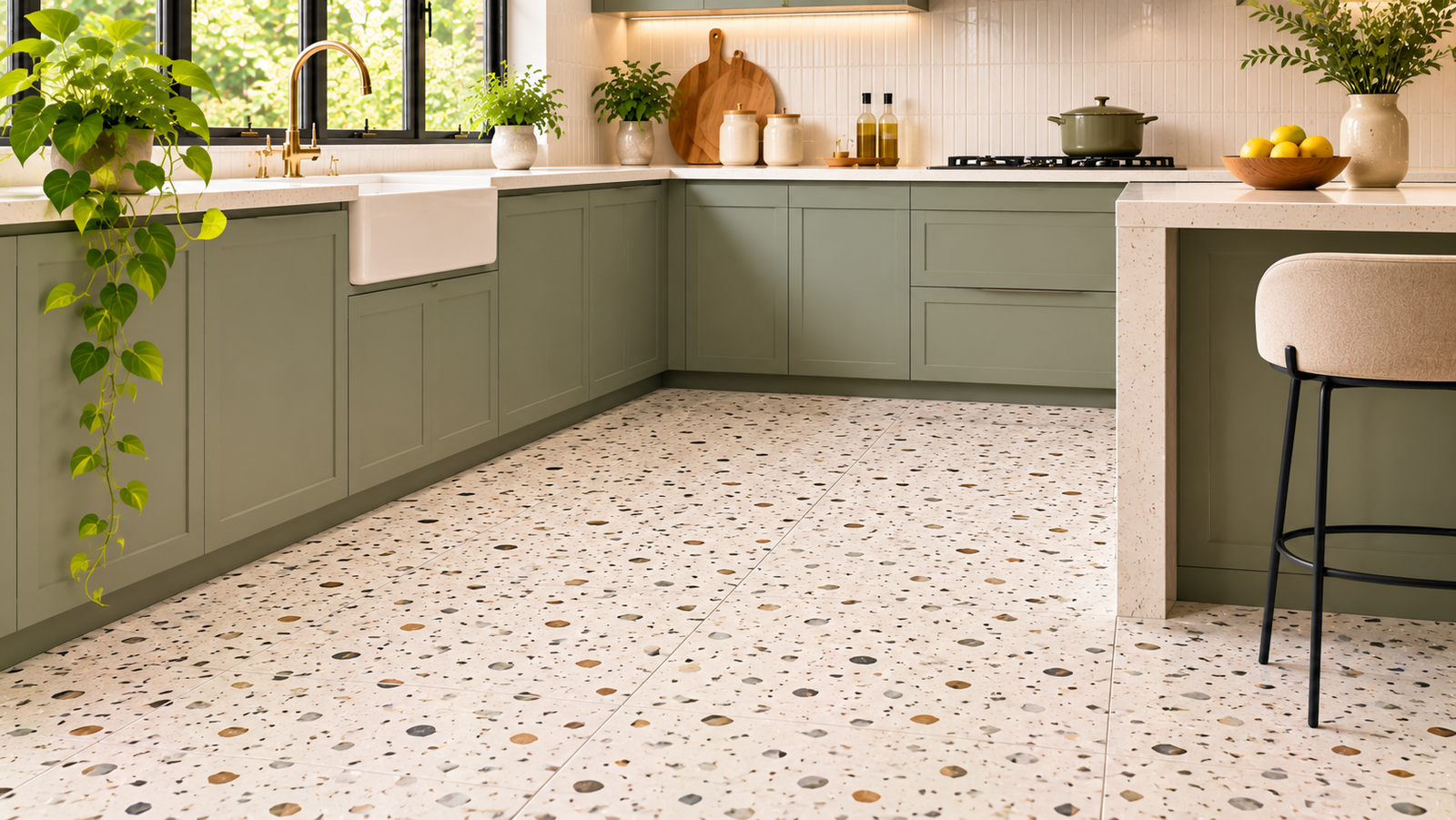
Speckled terrazzo-look tiles hide mess brilliantly and add playful texture. They suit both minimalist and colourful kitchens, and they work with almost any cabinet colour.
In the matte vs glossy tiles debate, matte wins in most kitchens. Matte surfaces have more grip, hide water spots and fingerprints, and look softer under bright lights. Glossy tiles reflect light and make a small kitchen feel bigger, but they show every drip and can be slippery when wet. If you love shine, choose a satin or semi-polished finish with an anti-skid rating, or keep glossy tiles for walls and backsplashes. Finish also changes how kitchen floor tiles age, because matte surfaces hide light scratches and wear better over the years.
A good kitchen tile colour combination, and the wider kitchen tiles design, starts with the cabinets. White cabinets pair with almost any floor, but grey concrete-look and warm wood-look tiles keep them from feeling clinical. Dark cabinets need lighter or mid-tone floors, otherwise the room turns into a cave. Wooden or green cabinets suit neutral stone tones and terracotta.
As a rule, keep two of the three big surfaces (floor, cabinets and walls) quiet and let one speak. If you are still choosing wall colours, our guide to the best house paint apps can help you test them first.
Not every tile type behaves the same way under a frying pan. When you are choosing the best tiles for kitchen floor use, this table compares the main options.
|
Tile type |
Water absorption |
Stain resistance |
Best for |
|
Porcelain |
0.5% or less |
Excellent |
Busy family kitchens |
|
Ceramic |
Higher |
Good, depends on glaze |
Budget kitchens, light use |
|
Vitrified |
Low |
Good |
Large formats, Indian homes |
|
Natural stone |
Varies, needs sealing |
Can stain |
Premium rustic looks |
Indian cooking is wonderful and wonderfully messy, with oil, turmeric and spices everywhere. That shapes kitchen floor tile design India choices in a few ways:
Go matte or anti-skid: oil makes floors slippery, so grip matters more than shine.
Avoid very light grout: turmeric stains easily, so use mid-grey or epoxy grout.
Pick speckled mid-tones: they hide dust and spice marks better than plain white.
Choose large sizes: 600 x 600 mm or 600 x 1200 mm tiles mean fewer lines to scrub.
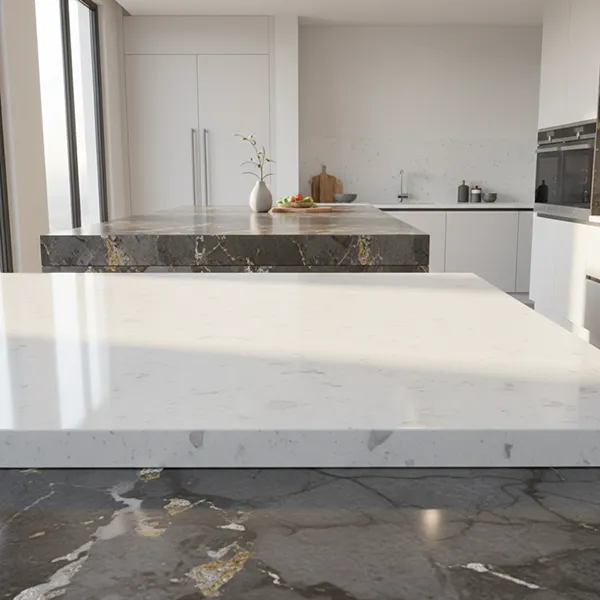
Match the counter: a granite or quartz slab should sit comfortably with the floor tone.
Safety matters here too. The U.S. Centers for Disease Control and Prevention reports that about one in four older adults falls each year, and its advice on fall prevention starts with safe floors and quickly wiped spills. If older family members use your kitchen, treat grip as a priority.
Good kitchen tiles design is more than picking a tile. Layout changes the feel: a straight lay keeps things calm, running bond leads the eye along a galley kitchen, and a diagonal layout makes a compact kitchen feel wider. Grout colour matters just as much. Matching grout softens a pattern, while contrasting grout outlines every tile. Finish the edges neatly, too: a slim metal or stone threshold where the kitchen meets another room keeps the transition tidy and protects the tile edges. Always confirm whether tiles will run under the cabinets, because it changes how much you need to order.
A kitchen tile visualizer lets you place a tile in a photo or 3D model of your own kitchen, so you can see the floor next to your cabinets, counters and walls. That matters, because a tile that looks perfect on a showroom wall can look very different in your light. Try three kitchen floor tile ideas, compare them side by side, and notice how each one changes the mood. Then order a sample and place it on the floor for a few days.
Porcelain is usually the best choice, because it absorbs very little water, resists stains and handles heavy use. Choose a matte or textured finish with a good slip rating for extra safety.
Matte is better for most kitchens, because it offers more grip and hides water marks. Glossy tiles look dramatic and brighten small spaces, but they can be slippery when wet and show every spill.
Large tiles, such as 600 x 600 mm or 600 x 1200 mm, suit most kitchens because they reduce grout lines. In very small or irregular kitchens, smaller tiles or mosaics can work better around corners.
Mid-tone, speckled tiles in grey, beige or brown hide dust, crumbs and spice stains best. Very light and very dark plain tiles show marks quickly, so they need more frequent cleaning.
Yes. Using the same tile creates a smooth, spacious look, especially in open-plan homes. Choose a tile with a good slip rating, since the kitchen needs more grip than the living room.
Whether you love modern kitchen floor tiles or classic patterns, the best kitchen floor tiles balance style with safety: choose porcelain or similar low-absorption tiles, pick a matte or anti-skid finish, and keep grout practical. Whether you love stone-look, wood-look, checkerboard or hexagon, match the floor to your cabinets, keep two of the big surfaces calm, and check the slip rating before you buy.
If you want help picking kitchen floor tile ideas that suit your home, we would be glad to hear from you. Contact the Tilesdisplay team and let us help you see your kitchen before you spend.