


Elevate Your Interiors
with Trendy Tiles Display
Tiles That Speak the Language of Design.
7th Nov, 2026

Wood floors look gorgeous until you see the quote. Real hardwood can cost noticeably more than its cheaper cousin, which is why so many people end up asking about laminate flooring. It looks like timber, installs in a day or two, and does not flinch at a messy dinner party. The only problem is choosing the shade, because a swatch the size of a playing card tells you very little about a whole room.
That is where a laminate flooring visualizer helps. It shows how a plank colour looks in your own room, under your own light, before you spend anything. In this guide I will cover design and colour choices, how to read an AC rating, the laminate vs vinyl question, and a realistic look at laminate flooring price in India. If you are still deciding between floor types, you can try different floors in the Tilesdisplay floor visualizer first.
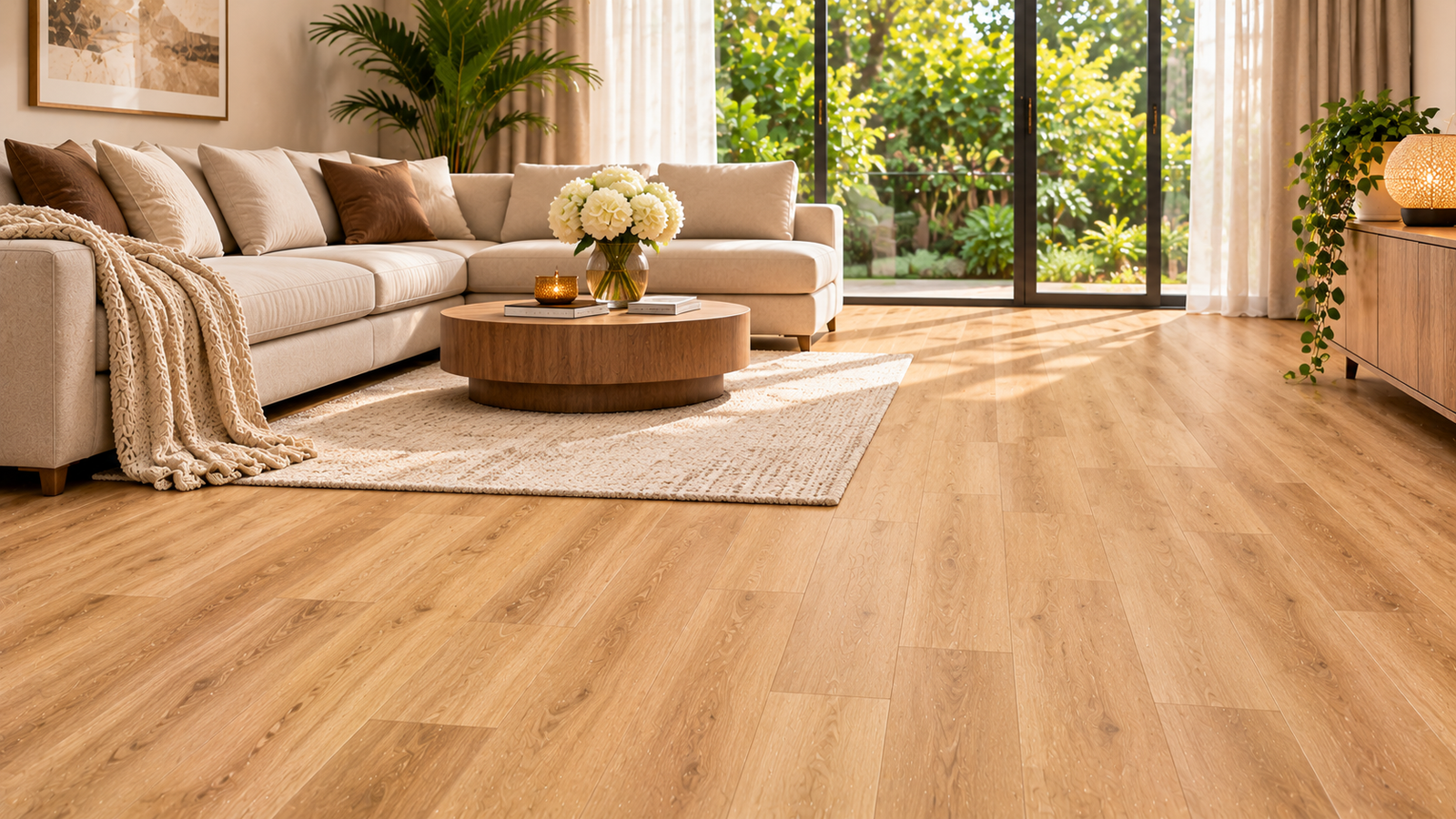
A laminate flooring visualizer is a digital tool that applies a plank design to a photo or 3D model of your room, so you can see the colour, grain and plank width in context. A floor visualizer works like a virtual changing room: you pick a floor, watch the room change, and swap it for another in one click. Because it uses your room's layout and lighting, it is more reliable than a small sample held against the wall.
This matters more than it sounds. Laminate covers every square foot you walk on, and returns are rarely simple. A laminate flooring visualizer lets you compare five or six options in ten minutes, show them to your partner, and settle the argument before the boxes arrive. I would treat it as step one, with a physical sample as step two.
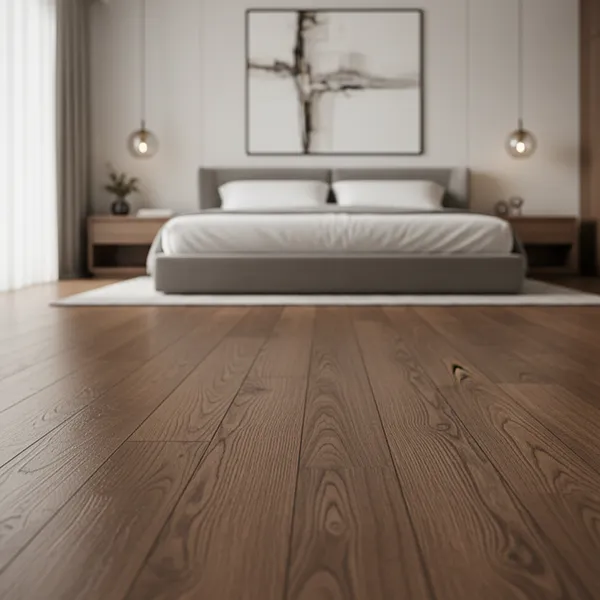
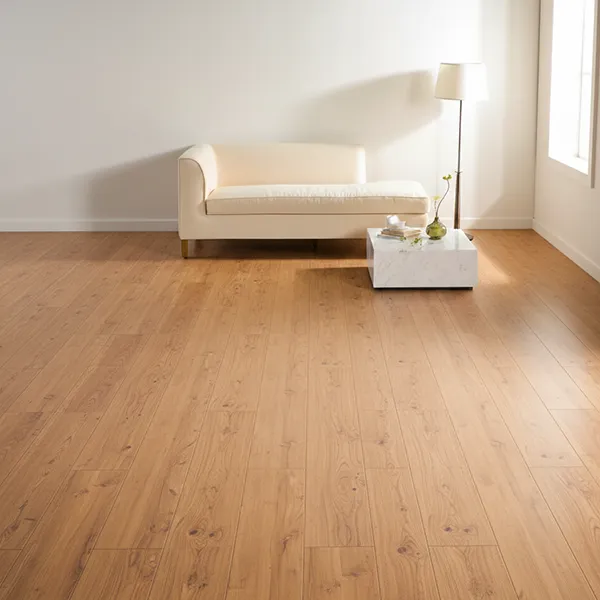
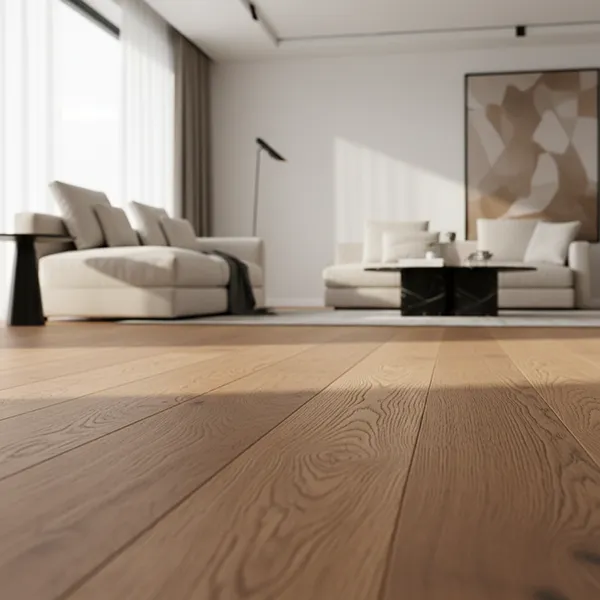
Laminate is built in layers: a hard-wearing top layer, a printed decorative layer, a dense fibreboard core and a backing layer. The printed layer creates the look, which is why wooden laminate flooring can imitate oak, walnut or even stone without being real wood. Modern wood look flooring has embossed grain you can actually feel, so most visitors will not notice the difference until they kneel down and knock on it.
Three choices shape your laminate flooring design. Plank width comes first: wide planks feel modern and make a room look larger, while narrow ones feel traditional. Finish is next, and matte hides footprints and dust better than gloss. Pattern comes last, where straight planks suit most rooms and herringbone adds a designer touch to open-plan spaces. Check the grain too, because a print that repeats every few planks becomes obvious across a large room. A good laminate flooring design should feel natural in your room, not shout from the floor.
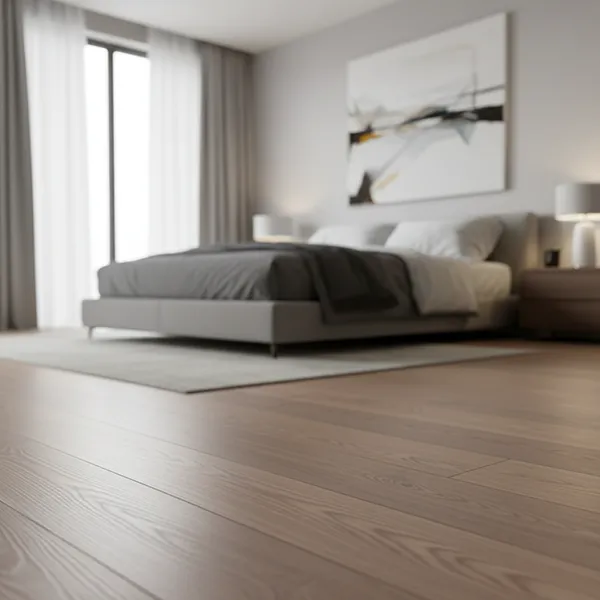
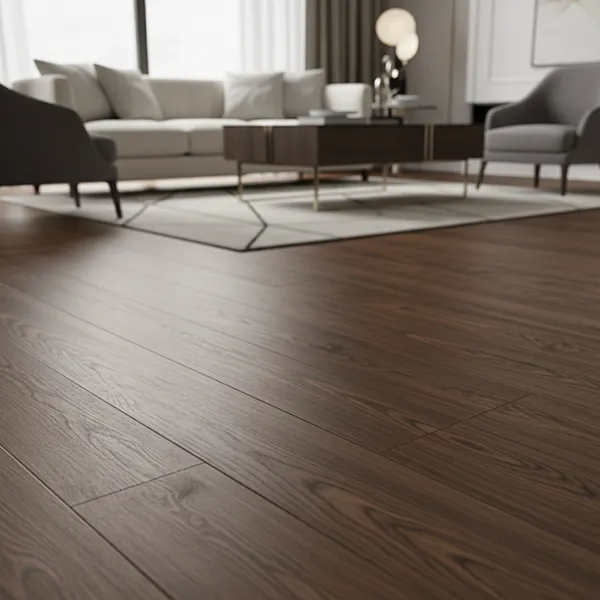
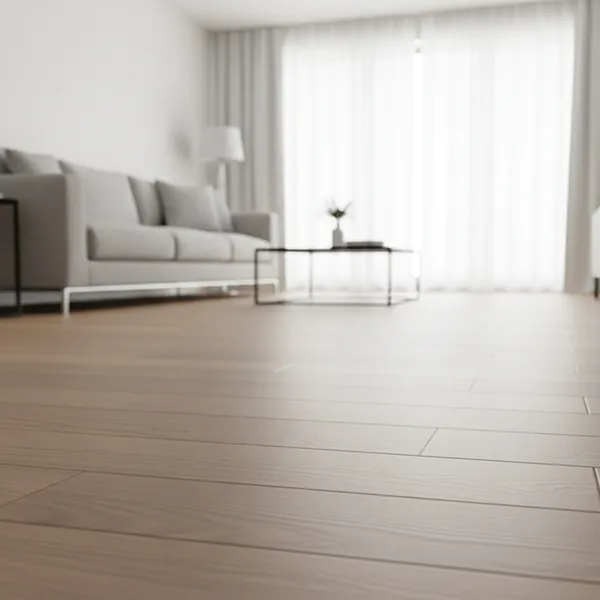
Laminate flooring colors fall into four families. Light oaks and white-washed tones open up small rooms and bounce daylight around. Mid-tone browns hide dust and feel warm, which is why they are popular in family homes. Dark walnut and espresso look dramatic but show every speck of dust and every pet hair. Grey tones suit modern, minimal spaces, although very cool greys can feel chilly in north-facing rooms.
Match the floor to the light in your room. In a bright space with big windows, almost any shade works. In a dim apartment, go lighter than you think, because dark floors soak up light. Then check the undertone: warm yellow or red floors can clash with cool grey walls, and the reverse is also true. This is where a laminate flooring visualizer earns its place, because undertones are very hard to judge from a small sample.
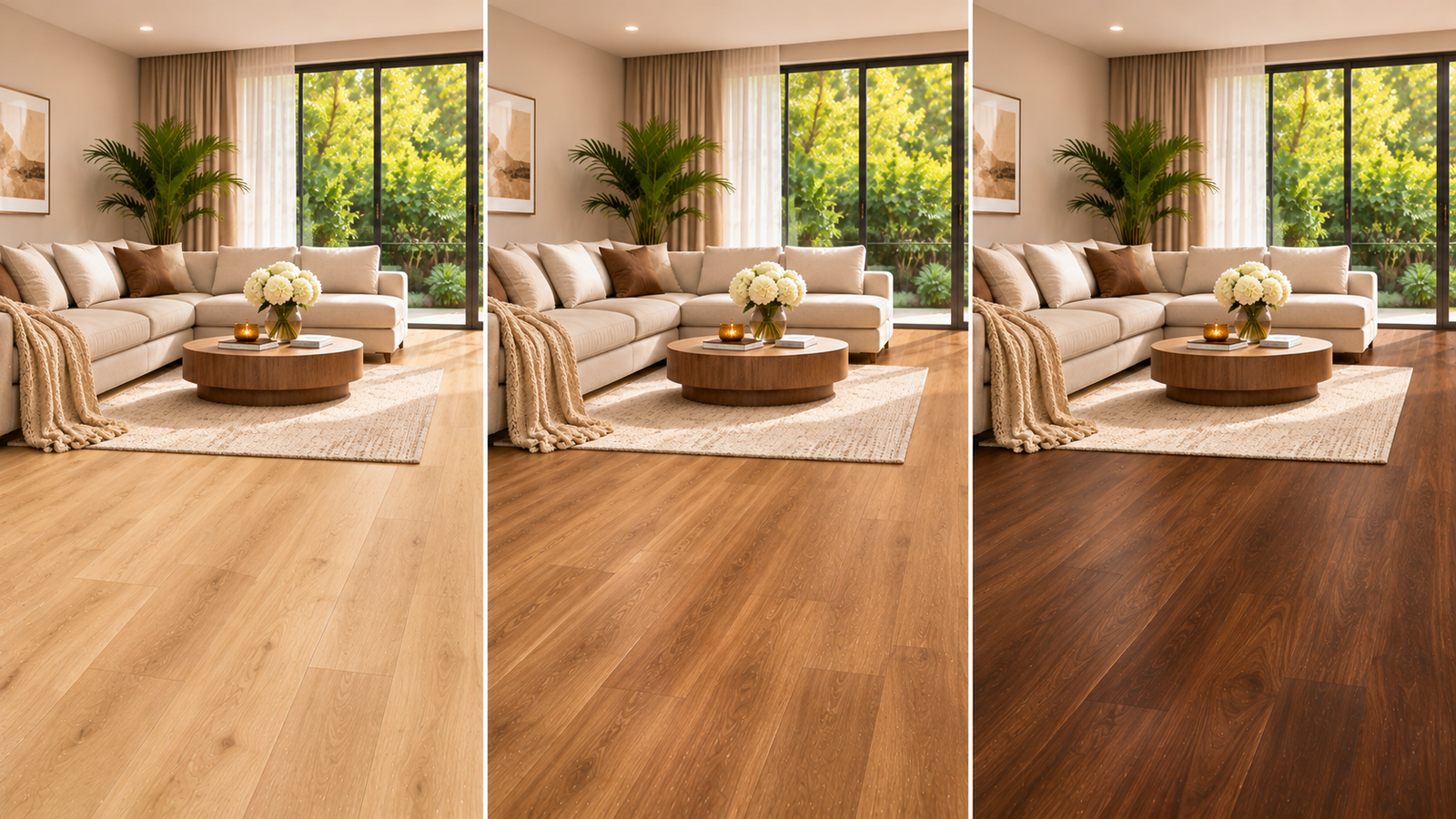
AC stands for Abrasion Class, a European scale that rates how well a surface resists wear. An AC rating laminate of AC3 is commonly sold for bedrooms and living rooms, AC4 for busy homes and hallways, and AC5 for heavy commercial traffic. Thickness matters as well, with 8 mm and 12 mm the most common choices for homes. Here is a quick guide.
|
AC rating |
Commonly used for |
Example spaces |
|
AC3 |
Moderate home traffic |
Bedrooms, living rooms |
|
AC4 |
Heavy home and light commercial traffic |
Hallways, family homes, small shops |
|
AC5 |
Heavy commercial traffic |
Offices, showrooms, cafés |
In the laminate vs vinyl flooring debate, water is the main dividing line. Laminate has a fibreboard core that can swell if water sits on it, so it is water-resistant at best and is better kept out of bathrooms. Vinyl, especially rigid-core types, is waterproof, so it suits bathrooms and laundry rooms. Laminate usually feels harder underfoot, and wooden laminate flooring often looks more convincing than vinyl, while vinyl feels softer and quieter. Price depends on the range, so compare similar quality levels rather than headline figures.
Indoor air quality deserves a thought too. Because the core is made of composite wood, the U.S. Environmental Protection Agency regulates its formaldehyde emissions, and reputable brands test and label compliance. Ask for the certification before you buy, especially for a bedroom or a nursery.
The best laminate flooring is not the most expensive one. It is the one that fits your room, your foot traffic and your budget. Before you order the best laminate flooring for your home, run through this checklist:
AC rating: AC3 for bedrooms, AC4 or higher for busy spaces.
Thickness: 8 mm suits most homes, while 12 mm feels more solid and quieter.
Water resistance: check edge sealing if the floor will sit near kitchens or entrances.
Joint quality: look for a click lock laminate system with tight, well-machined edges.
Safety and warranty: ask for emission certification and a clear written warranty.
If you are comparing laminate with tile for the same room, our guide to floor tile patterns shows how layout changes the look of a floor.
Laminate flooring price in India varies widely by brand, thickness and AC rating. As a rough guide, many homes pay about ₹60 to ₹150 per sq ft for the planks, with premium imported ranges costing more, and underlay, skirting and fitting adding to the total. Treat these as ballpark figures and ask two or three dealers for written quotes, because prices change by city and brand. Once you have chosen a look in the visualizer, you can compare similar shades at different price points and decide whether the premium is worth it.
Click lock laminate is the reason installation is quick. Planks snap together without glue and float over an underlay, with a gap of about 10 mm (3/8 inch) left around the walls so the floor can expand. On a flat, dry subfloor, a typical living room takes a day or two. Uneven or damp subfloors cause most gaps and squeaks, so level and dry the base first, and order about 10% extra for cuts.
Start with a bright, straight-on photo of your room, with as much floor visible as possible. Upload it and try your top three colours, noting how each one looks next to your walls, furniture and doors. Switch plank width if the tool allows it, because a wide plank can change the mood completely. Use a floor visualizer that lets you switch plank direction too, since planks running along the longest wall make a room feel longer. Then save screenshots and look at them on your phone, away from the screen where you were deciding.
Finally, order a physical sample and place it in the room for a few days. Check it in morning light and under evening lamps. When the sample and the laminate flooring visualizer agree, you can buy with confidence.
Yes. Laminate is affordable, scratch-resistant and quick to install, which makes it a practical choice for bedrooms, living rooms and hallways. It is less suited to bathrooms or areas with standing water, so choose vinyl or tile for those spaces.
Light to mid-tone oak suits most homes, because it hides dust, brightens rooms and works with many wall colours. Dark floors look dramatic but show dust and pet hair, so they need more upkeep.
With regular care, laminate flooring often lasts 15 to 25 years, depending on its AC rating and the traffic it sees. Wipe spills quickly, use felt pads under furniture and avoid wet mopping.
Often you can, as long as the tiles are firmly fixed, dry and fairly level. Fill deep grout lines, lay an underlay and leave the expansion gap at the walls. If the tiles are loose or uneven, level or remove them first.
It is a reliable guide to colour, grain and style in your room, but screens and lighting can shift shades slightly. Use the visualizer to narrow your choices, then confirm the final pick with a physical sample.
Laminate flooring gives you the look of wood at a friendlier price, as long as you choose carefully. Pick a colour that suits your light and undertones, match the AC rating to the room, keep it out of wet areas, and compare laminate vs vinyl honestly. Budget for underlay and fitting on top of the price per sq ft, and use a laminate flooring visualizer to test every option before you commit.
If you want help choosing a floor you will love, we would be glad to hear from you. Contact the Tilesdisplay team and let us help you see your space before you spend.